Friday, July 31, 2015

Styling The Seasons - July


Styling The Seasons, roses, blackberries, 495-USA, flower arrangement, floral arrangement, lavender, The Haeger Potteries, Shirokiya, Shirokiya brand, Shirokiya light, Shirokiya night light, Haeger vase, Haeger yellow vase, Haeger yellow flower vase, Haeger floral

During July, I've been having fun with flowers and floral arrangements, and so that's what I'm featuring for this month's Styling The Seasons post. As well as taking a memorable trip to a festival at a nearby lavender farm and getting to cut the bouquet in the yellow vase, I also applied some of the flower arranging skills I've learned lately, and came up with a lovely rose and blackberry floral display.
     
Flower arranging techniques have always seemed like an impossible mystery to me. When I started gardening a few years ago, I wanted to display flowers from my garden inside my home. That started me on a journey of discovery, to understand the methods involved in creating arrangements, and applying the skills I learned along the way. My greatest sources of inspiration have been Instagram and blogs. At Instagram, I discovered a whole new way of displaying and photographing flowers; and blogs, such as Design Sponge, have flower arranging tutorials. One such tutorial had an arrangement that utilized blackberries in this particular stage of growth, and I loved it so much that I wanted to give it a try. I liked how the coral pink roses have similar hues as the unripe berries, and decided to mix the two:

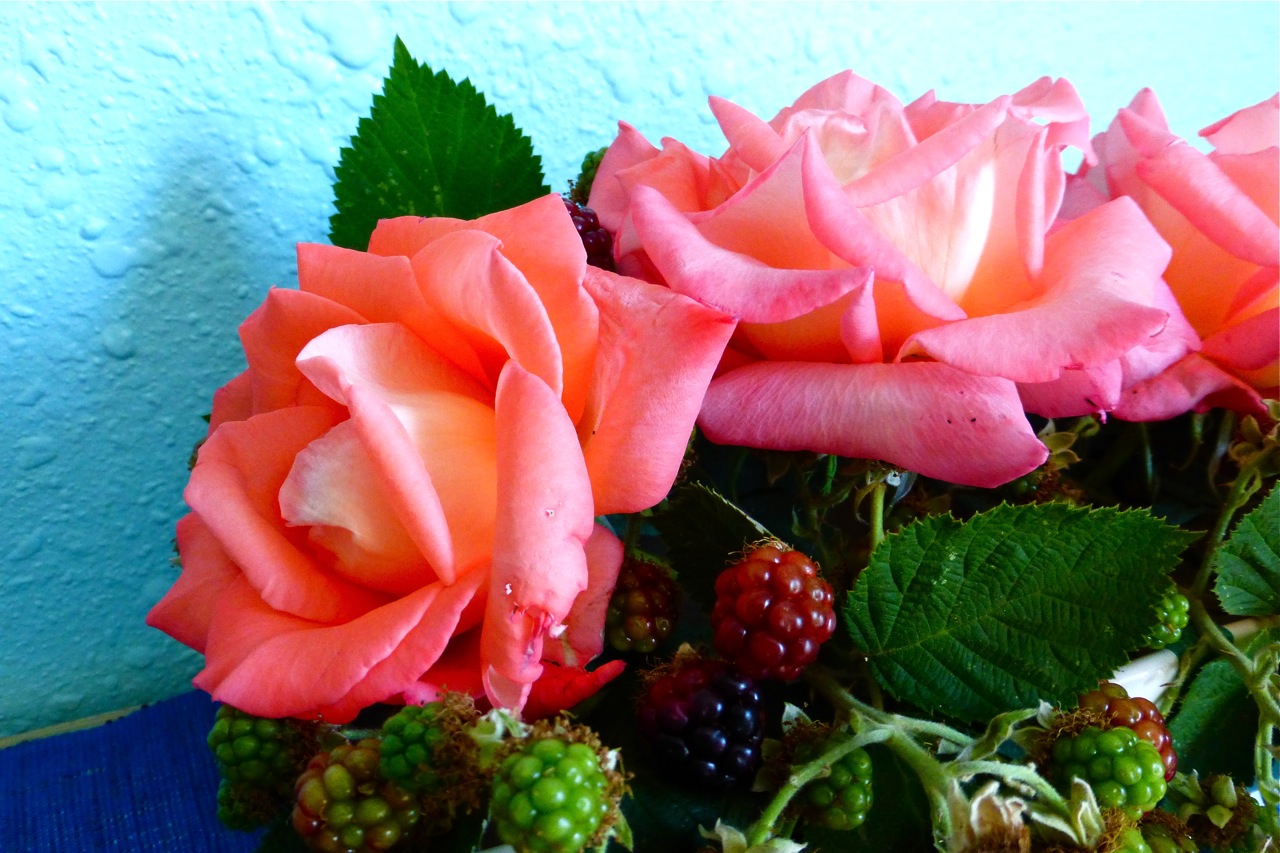
coral roses, blackberries, roses, 495-USA, flower arrangement, floral arrangement, roses and blackberries floral arrangement
roses, blackberries, rose and blackberry floral arrangement, floral arrangement
roses, blackberries, rose and blackberry floral arrangement, floral arrangment

The white rectangular ceramic container I used in the above arrangement is vintage, but the only marking on the bottom is '495-USA'.

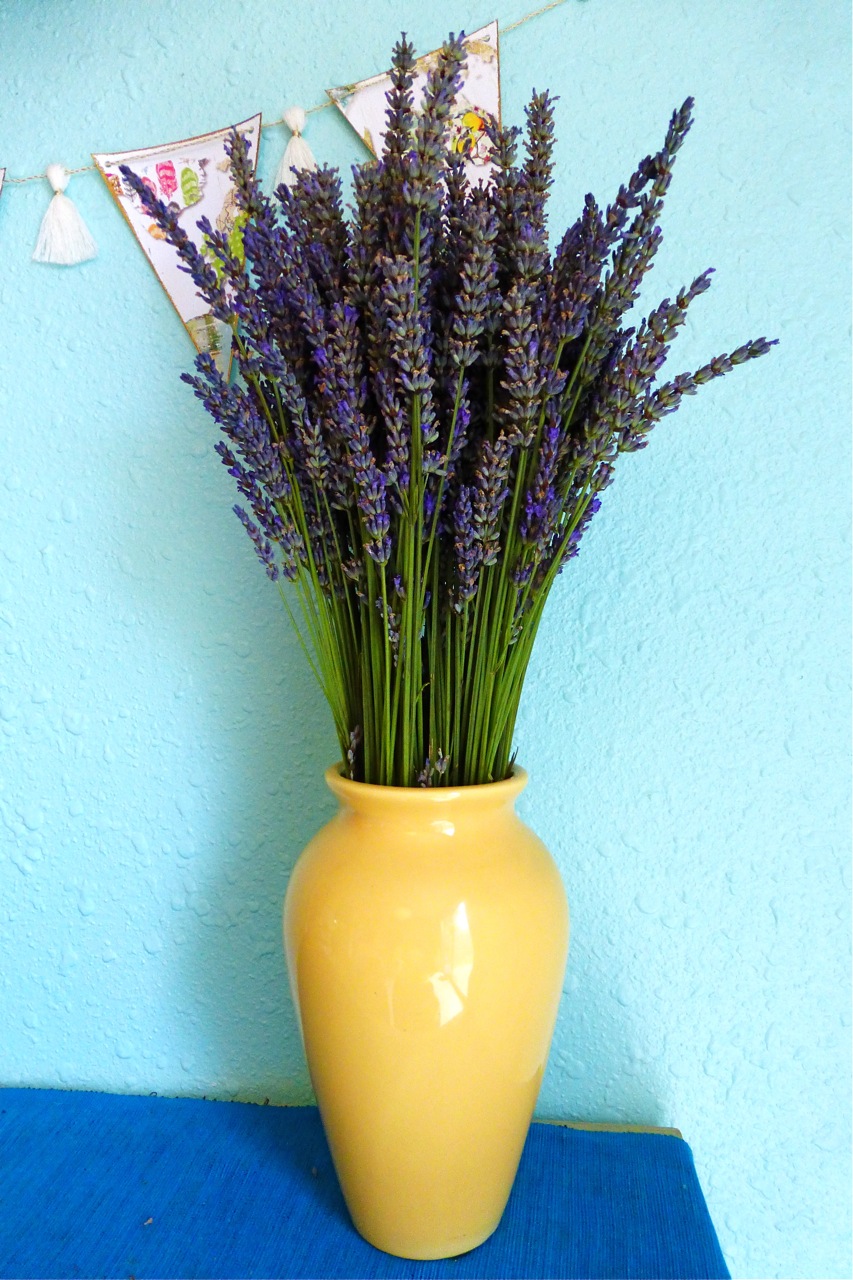
On a recent beautiful sunny Saturday we drove east of town, up the McKenzie River to a Lavender Festival held at the McKenzie Lavender Farm. As you might imagine, there was lavender everything in the booths that were around the flower fields - soaps, perfumes, essential oils - and even lavender soda! There were five varieties of lavender to choose from, and a helpful staff at the ready, handing out scissors for cutting the flowers, and floral wire to wrap it up into bunches. I decided to cut some of each of the five varieties, which created a richly toned bouquet of the various shades of purple.
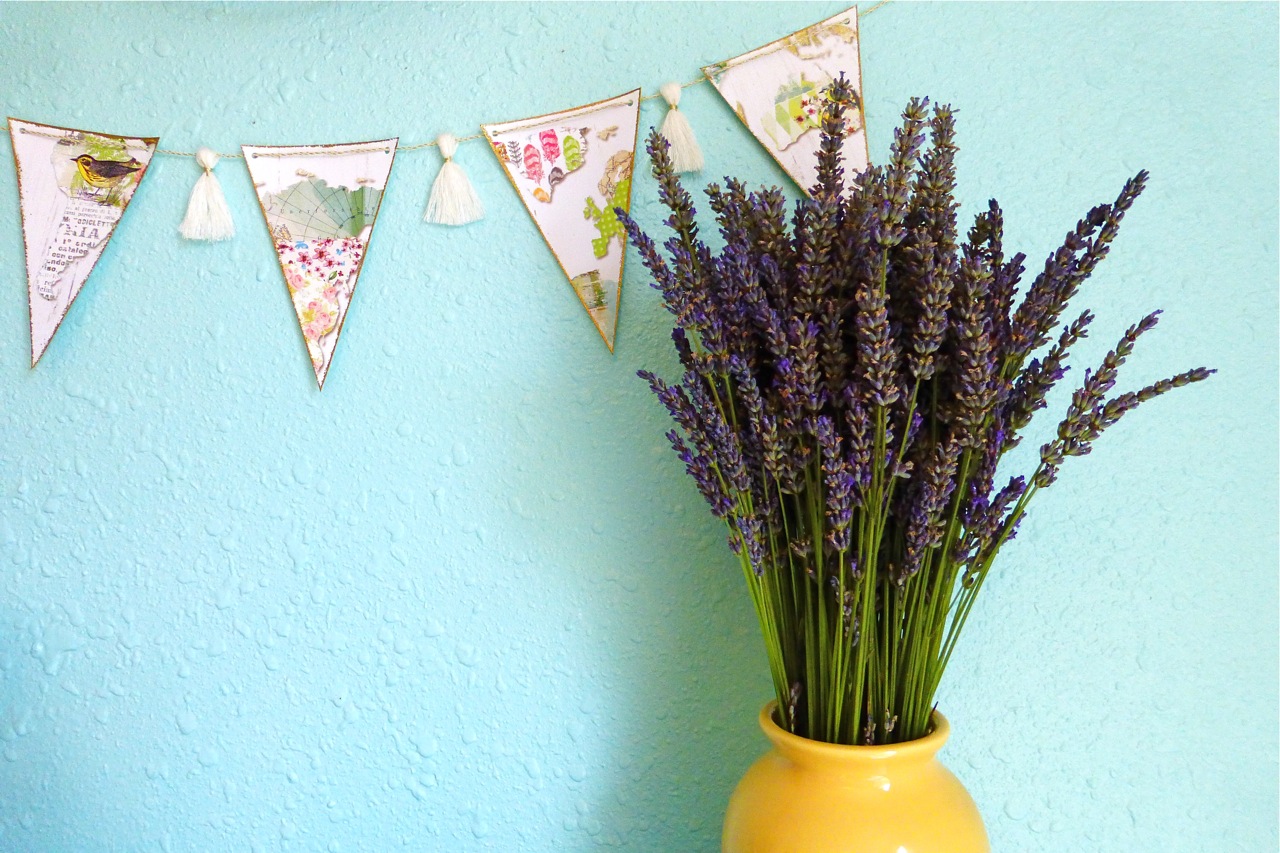
lavender, Haeger vase, Haeger floral vase, The Haeger Potteries, paper banner, decorative paper banner, Webster's pages, Webster's pages Nest, Webster's pages Brandi O'Neill, Webster's pages My Home

I placed the majority of the lavender bouquet in a yellow Haeger floral vase. The Haeger Potteries have been making artware here in the United States since 1871, and like Fiestaware, it's a brand I have always loved collecting, whether one of the newest pieces available today, or a lucky vintage find in a charity shop.

Haeger floral vase, yellow Haeger floral vase, The Haeger Potteries floral vase, The Haeger Potteries, lavender, summer lavender bouquet
Shirokiya lamp, Shirokiya lamp made in Japan, Japanese Shirokiya lamp, Shirokiya brand lamp, Shirokiya night light, Shirokiya brand night light, Shirokiya wooden lamp, Shirokiya wood light

Have I shown you this cute little wooden night lamp before? It may have appeared in some other post in the past, but I haven't yet talked about it.  
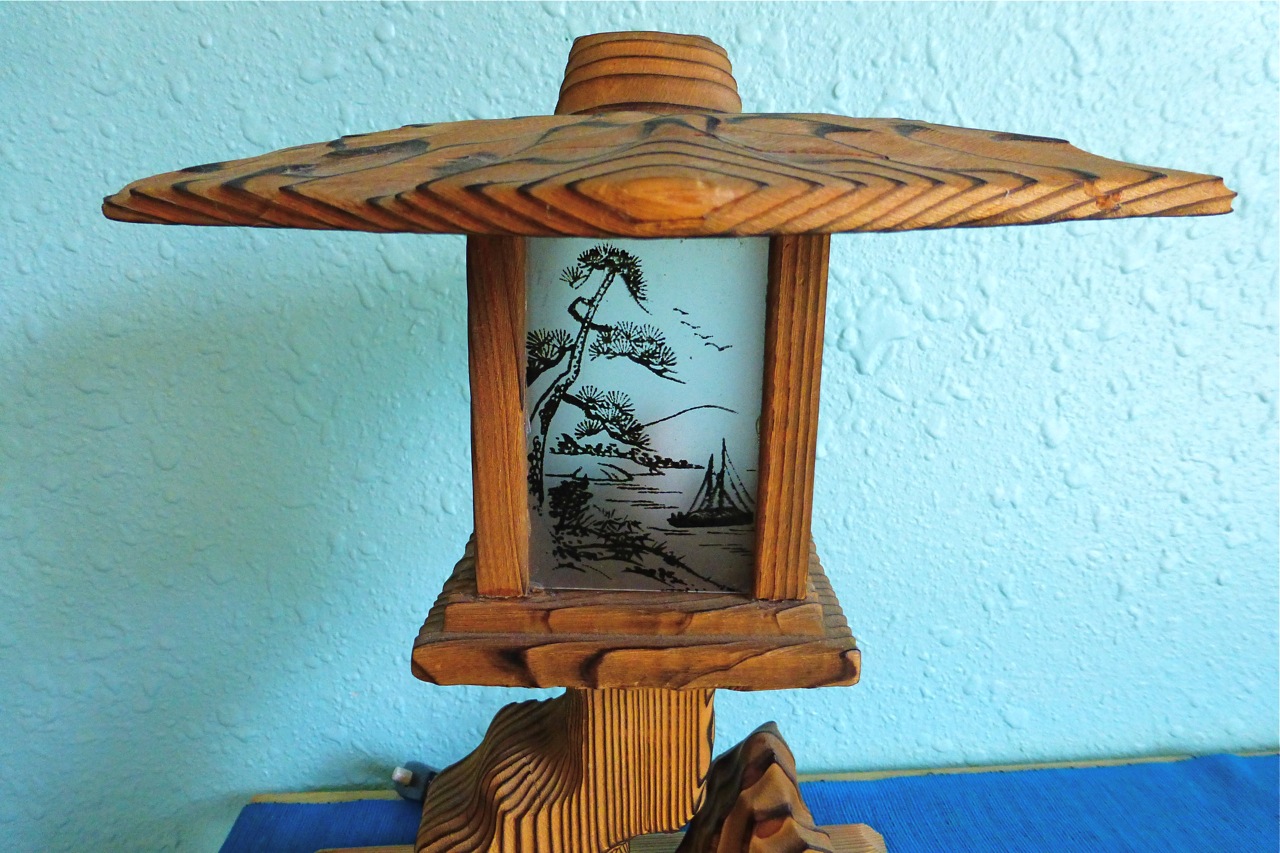
The Shirokiya company has been making decorative home furnishings, such as this lamp, ever since it was founded in Tokyo, Japan in 1662 - during the Edō period! Of course this particular lamp isn't that old, but my guess, based on the writing style of the sticker on it, is that it's from the 1960s or '70s. Our family has been using it as a night light in our kitchen/dining area, and the small bulb inside lights up an illustrated scenic panel, casting a very nice warm glow at night.

Shirokiya light, Shirokiya night light, Shirokiya brand wooden night lamp, Shirokiya wood light

The paper banner shown in the top photo, and the photo below, is one I made last month and featured in my Styling The Seasons post for the month of June. I'm still enjoying it a lot, and decided to leave it up for the summer months. I love how the white banner looks against the turquoise wall!

Shirokiya lamp, Haeger floral vase, Webster's pages Nest, Fiestaware, vintage birds in flight, flower arrangement, floral arrangement, roses, blackberries, lavender, Styling The Seasons

Thank you for joining me for this month's Styling The Seasons! If you would like to know more about Styling The Seasons, visit Katy Orme's blog Apartment Apothecary and Charlotte's blog Lotts & lots.  

SHARE:

Wednesday, July 22, 2015

Picasso And Primitivism: The Story Behind The Masks

Picasso, Primitivism, Les Demoiselles d'Avignon, 1907, art, art history, painting, African art, African sculpture, Iberian sculpture, modern art
Les Demoiselles d'Avignon, 1907
Over the years, there has been a lot of speculation concerning how Pablo Picasso conceived the ideas for his paintings, and what influences played a part in his departure from traditional representational art to a linear, more abstract style.  In Gardner's "Art Through The Ages", Fred S. Kleiner and Christin J. Mamiya refer to the "energetic, violently striated features of the two heads to the right" in Picasso's Les Demoiselles d'Avignon, seen above. But are they "violently striated heads", or are these two young ladies actually wearing masks?

Considered to be at the forefront of the modernist artistic movement, Picasso was greatly influenced by what is known as the 'plastic arts' (a reference to sculpture and its three dimensional interpretation of form), and is said to have been intensely committed to innovation, both materially and stylistically. As well, he was an avid collector of African arts.


During the early years of the twentieth century, as a direct result of European colonialism, anthropological and ethnographic museums had become well established in many of the major cities of Europe.  Displaying thousands of art objects made by the peoples of the Oceanic and African colonies, these museums provided an insight into parts of the world that previously most European people knew little about.  Unfortunately, the manner in which these artworks were displayed, referring to them as 'artificial curiosities' or 'primitive objects', reinforced to the public the idea that colonialism was justified.


Although the term 'Primitivism' appears to have been coined around this time (with similar notions going as far back as Socrates), it has both positive and negative connotations in the art historical record.  In its most basic usage, it refers to a certain simplicity of form, yet it can also insinuate a lack of intellectual reasoning or low level of artistic skill.  For the purposes of this essay, let us say that we are using the term 'primitive' as it relates to an art process or style.


For the artists of the first decade of the twentieth century, it can be argued that their main purposes for borrowing certain aspects of African art styles and techniques was because it not only shook up what was a long tradition of naturalism and Realist painting schools, but also it intermingled certain stylistic traits of African art with their own works. Thus they created a fresh new art that represented a welcomed departure from traditional styles, a departure that was already at work, for example in the later, Post-Impressionist paintings of Paul Gauguin.


That is not to say that the creators of these new works were not ethnocentric, but they were lacking in the specialized knowledge that would have been required to know the context of African art.  Plucked from the hands of the original artists, shipped hundreds or thousands of miles away, displayed in museums as curios and at flea markets as trinkets - these are the circumstances under which Picasso and his contemporaries encountered these fascinating objects.  If anything they can be faulted for attaching their own subjective meanings to these works, as artists tend to do with most any aspect of their own art process. 

In fact, the story is that in about 1905, Parisian artists Maurice de Vlaminck and André Derain made several trips to the Trocadéro Museum in Paris.  According to De Vlaminck, in the excerpted essay Portraits avant déce's in "Primitivism and Twentieth-Century Art", "We had become thoroughly familiar with the museum, having looked at everything with great interest. But neither Derain nor I viewed the works on display there as anything other than barbarous fetishes. The notion that these were the expressions of an instinctive art had always eluded us."  Yet he found himself one afternoon in a bistro after having spent the day painting alongside the Seine River, facing, "three Negro sculptures. Two were statuettes from Dahomey...and the third, from the Ivory Coast..."  Of these he stated, "These three sculptures really struck me.  I intuitively sensed their power.  They revealed Negro Art to me."  He further exclaimed, "These three Negro statuettes in the Argenteuil bistro were showing me something of a very different order entirely!  I was moved to the depths of my being."  He convinced the owner to sell him the statues and showed them to a friend of his father's. This friend offered to give him more African sculptures.  He states, "I went to his place, and I took a large white mask and two superb Ivory Coast statues."


African mask, Fang Gabon mask, Primitivism, Maurice De Vlaminck, André Derain, white mask, African sculpture, African mask, wood mask, wood mask sculpture

"I hung the white mask over my bed", De Vlaminck went on to say, further stating, "I was at once entranced and disturbed: Negro Art was revealed to me in all its primitivism and all its grandeur. When Derain visited me and saw the white mask he was speechless."  Derain immediately offered to buy the mask but De Vlaminck turned down the offer.  Several days later, Derain offered a higher amount and De Vlaminck accepted, saying, "He took the object to his atelier on the Rue Tourlaque and hung it on a wall. When Picasso and Matisse saw it at Derain's they were absolutely thunderstruck."  

studio of André Derain, Paris studio of André Derain, Paris studio of André Derain, 1912, 1913, African masks, African sculptures, African art, studio art
Corner of the studio of André Derain, Paris, circa 1912-1913
French artist Henri Matisse also had an interest in African sculpture.  In another essay, First Encounter With African Art, Matisse tells the story of frequently walking past a curio shop and seeing African statues.  In describing what he saw he stated, "I was astonished to see how they were conceived from the point of view of sculptural language... these Negro statues were made in terms of their material, according to invented planes and proportions."  Matisse eventually bought one of the sculptures and brought it to Gertrude Stein's apartment.  He states, "I showed her the statue, then Picasso came by, and we chatted.  That was when Picasso became aware of African sculpture."  Matisse also tells us that a large mask that Derain purchased, "...became something of interest for the group of advanced painters."

"Everyone always talks about the influence of the Negroes on me", states Picasso in Discovery of African Art (also excerpted in "Primitivism and Twentieth-Century Art").  "The masks weren't like other kinds of sculpture. Not at all.  They were magical things... intercessors... against everything; against unknown threatening spirits... I understood what the purpose of the sculpture was for the Negroes."  From this and other interviews given by Picasso, it has become clear that his understanding of African art came from an artist's perspective.  As an artist himself, he intuitively understood the function of artistic tradition in African society and related that to his own role as an artist within his own culture.  In other words, the process of creating a work of art and the role of the artist in that process, and in society as a whole, are interconnected spiritually and are a shared human dynamic amongst artists throughout the world.  He further states, "If we give form to the spirits, we become independent of them.  The spirits, the unconscious emotion, it's the same thing.  I understood why I was a painter."  He then claims that Les Demoiselles d'Avignon came to him, "not at all because of the forms: but because it was my first canvas of exorcism..."

Picasso studio, Bateau-Lavoir studio, Bateau-Lavoir Picasso, Picasso studio 1908, Picasso African sculpture, Picasso African art, Picasso studio Bateau-Lavoir Paris 1908, Picasso Paris studio, Picasso Paris studio 1908, Picasso studio African sculpture, Picasso Primitivism
Picasso in his studio in the Bateau-Lavoir, Paris, 1908
What Picasso was referring to was the process: the physical act of creating a work of art coupled with the psychological act of giving ideas physical form. After all, he is known to have stated that "I paint forms as I think of them", and that the African sculptures he collected and displayed in his studio were witnesses to his art process, rather than models for it.  Perhaps this is why there is no particular African mask that could be said to be the source for the masks in Les Demoiselles d'Avignon.    

Les Demoiselles d'Avignon is considered to be Picasso's first foray into a new, more dynamic way of depicting not only form, but space as well. This departure from tradition, while inspired by African sculpture, was also influenced by his earlier studies of ancient Iberian sculpture and by the paintings of Paul Cézanne, and is ultimately considered to be the beginning of Picasso's invention, with fellow artist Georges Braque, of Cubism.    

Once we understand the circumstances under which Pablo Picasso encountered African works of art, and view the art he created during this phase of his career, such as Les Demoiselles d'Avignon, we can agree with De Vlaminck when he says: "It was Picasso who first understood the lessons one could learn from the sculptural conceptions of African and Oceanic art and progressively incorporated these into his painting."
SHARE:

Monday, July 13, 2015

Magical Moments Through The Lens

Takeō explores Vista House (built in 1917) at Crown Point, on the rim of the Columbia River Gorge:
Vista House, 1917, Crown Point, Columbia River, Oregon, Pacific Northwest


Takeō meets a dinosaur from prehistoric China at Portland's Oregon Museum Of Science And Industry (also known as OMSI):
Prehistoric Chinese dinosaur, Chinese dinosaur, dinosaur from China, Oregon Museum Of Science And Industry, OMSI, Portland Oregon, Portland Oregon OMSI, Portland Oregon Museum Of Science And Industry

Takeō and Maxfield watch the fish at the Oregon Coast Aquarium in Newport:
Oregon Coast Aquarium, aquarium, aquatic fish, Newport Oregon Aqurium


All photos taken with either a Lumix L1 or a Lumix TZ-3 in 2008.  Click or tap on any picture to see larger images.
SHARE:

Friday, July 3, 2015

From Garden To Table: Blueberry Pie

blueberry pie, blueberries, garden, berries, pie baking, pie crust, pie filling, fresh blueberries, fresh berries, homemade, home made, made from scratch, do it yourself pie

Summer fruit pie making season has arrived here in Oregon, and I have found myself daydreaming about blueberry pie.  Sweetened berries inside a buttery pastry crust...  Yum! 

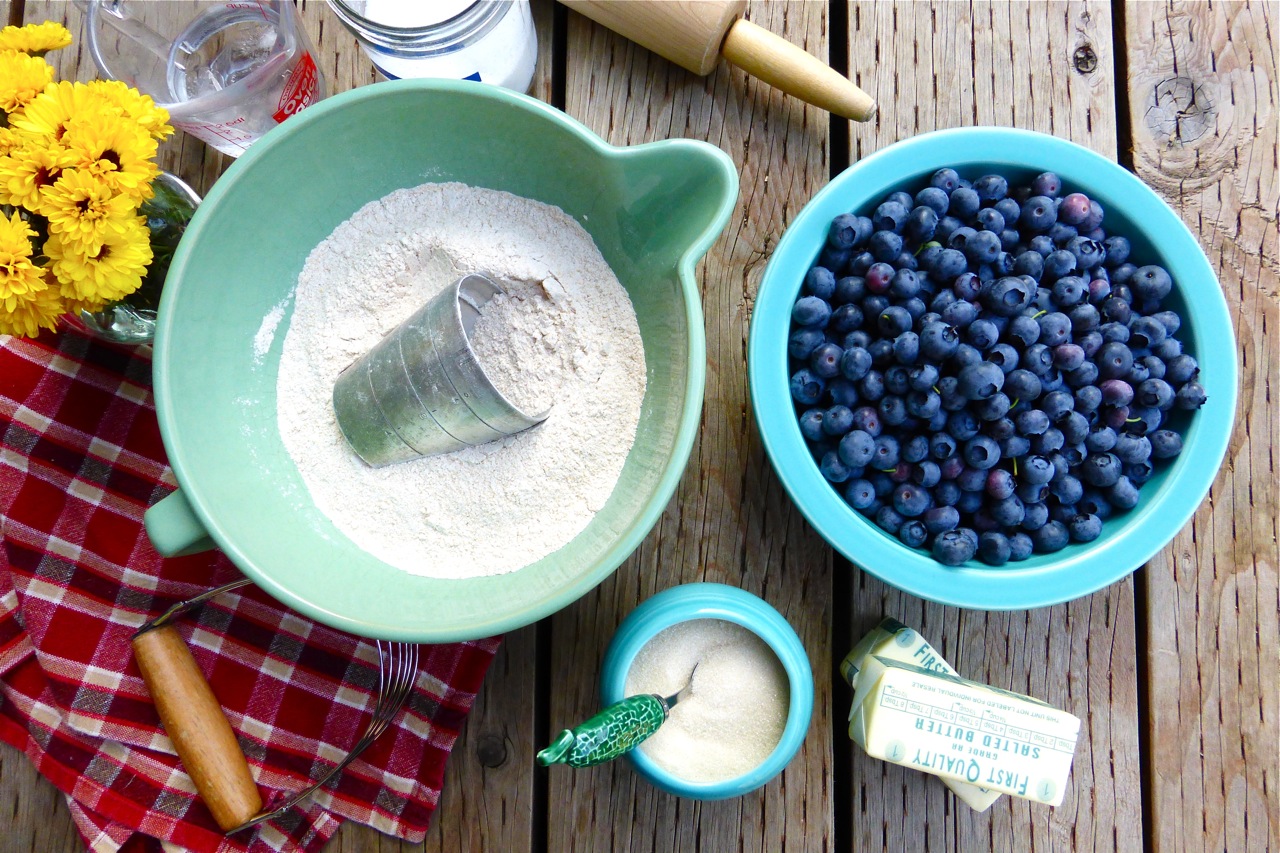
When the blueberry bushes in our small backyard garden began to flower, I was already thinking about the various ways in which we could eat them - besides just picking them straight from the bush, which of course is a delight in itself.  But the amount of berries that are ripe and plump and ready to be picked is what determines what can be done with them. A few days ago I picked enough fruit to make a pie, thus turning my daydream into reality.

flour, sugar, salt, butter, ice water, blueberries, making blueberry pie, pie crust ingredients, homemade pie, home made pie, do it yourself pie

The berry yield I obtained was just over a quart - maybe 5 cups in all.  It was enough to make the 10 inch pie you see in the top photo, plus another, smaller 6 inch pie (not shown).  

I know that most pie crust recipes call for unsalted butter and white pastry flour, but I never have anything but salted butter and whole wheat pastry flour around my kitchen.  So when using salted butter I go easy on the amount of added salt, and just use the flour on hand.  Using this type of pastry flour produces a crust that is a bit thicker and heartier than one made with white flour, and I think it tastes every bit as good.

So, here's the recipe I came up with:

Whole Wheat Pie Crust
makes 1 double-crust or 2 single-crust pies

2-1/2 cups whole wheat pastry flour
1/2 teaspoon salt
1 teaspoon sugar
2 sticks salted butter
1/4 to 1/2 cup ice water (about 2 ice cubes in the water is sufficient)

Measure the flour into a large bowl and add the salt and sugar.  Mix together.  Cut the butter into small pieces, adding to the flour mixture.  Work the butter into the flour mixture with a pastry blender until it is pea size.  Add 4 T. of the ice water and use your hands to mix it together.  Mix thoroughly before adding any more water.  What you are looking for is the formation of a ball of dough that holds together well.  Once this is achieved, stop handling it and divide it in half.  Shape each half into a disk and place in plastic wrap.  Chill at least 1 hour, or overnight.  I prefer to prepare the dough the night before, then take it out of the refrigerator about 1 hour before 'pie time' in the morning.  (Coffee, anyone?)  

Sprinkle some flour on your work surface and rub some on your rolling pin. Shape, then roll 1 disk of dough into your desired circumference and place it into your pie plate.  The reason I like this recipe is that it makes a generous amount of crust.  Sometimes I like to make the 10 inch pie, then roll out the rest of the dough, place it on a baking sheet, sprinkle cinnamon and sugar over it and bake it for an extra treat.

Once you have your dough shaped and placed into the bottom of your pie plate, put it in the refrigerator to keep the butter from melting too much, and make the filling:

Blueberry Pie Filling
yield 1 pie

1/4 cup flour
1 egg
1 tablespoon milk
1 quart blueberries, washed and stems removed
2 T. lemon juice
1/4 to 1/2 cup sugar


Have berries ready in a large bowl.  Add the flour, lemon juice, and your desired amount of sugar and mix until the flour is distributed evenly.  

Let sit while you shape, then roll out your second disk of pastry into a top crust.

Preheat oven to 425 degrees.

Stir the berries one more time, then fill the prepared bottom pie shell.  Place the top pastry over it, trim the excess, and press and crimp the edges together. Prick the top crust with a fork.  At this point if you think you've overworked the dough or if it is too soft, you could place the whole pie into the refrigerator until the dough firms up a bit more. 

Mix the egg and milk together, and brush this mixture over the top crust - this step isn't necessary, but it does make the pie a nice color.  

Bake at 425 degrees for twenty minutes, then reduce heat to 350 degrees and bake for an additional 30 to 40 minutes.  Let cool completely before cutting.

Now, it's time to enjoy your freshly baked summer fruit pie.  And since it is summer, what better place to share it than a nice cool shady spot in your own back yard?

Blueberry Pie, Fiestaware, Fiesta hack, Fiestaware turquoise pie baker, Fiestaware cobalt Hostess Bowl, Fiestaware lemongrass pie server, Fiestaware shamrock salad plate, Fiestaware peacock salad plate, flowers, fresh flowers, flowers on your table, table decorations, backyard, backyard eating, garden, blueberry bushes, Frigoverre, Bormioli Rocco
blueberries, garden, fresh blueberries, sunshine, blueberries in sunshine

What is your favorite summer pie you enjoy baking?   

          
SHARE:

Friday, June 26, 2015

3 Summer Flowers To Plant In Your Garden Now

hydrangea, summer garden, perrenial

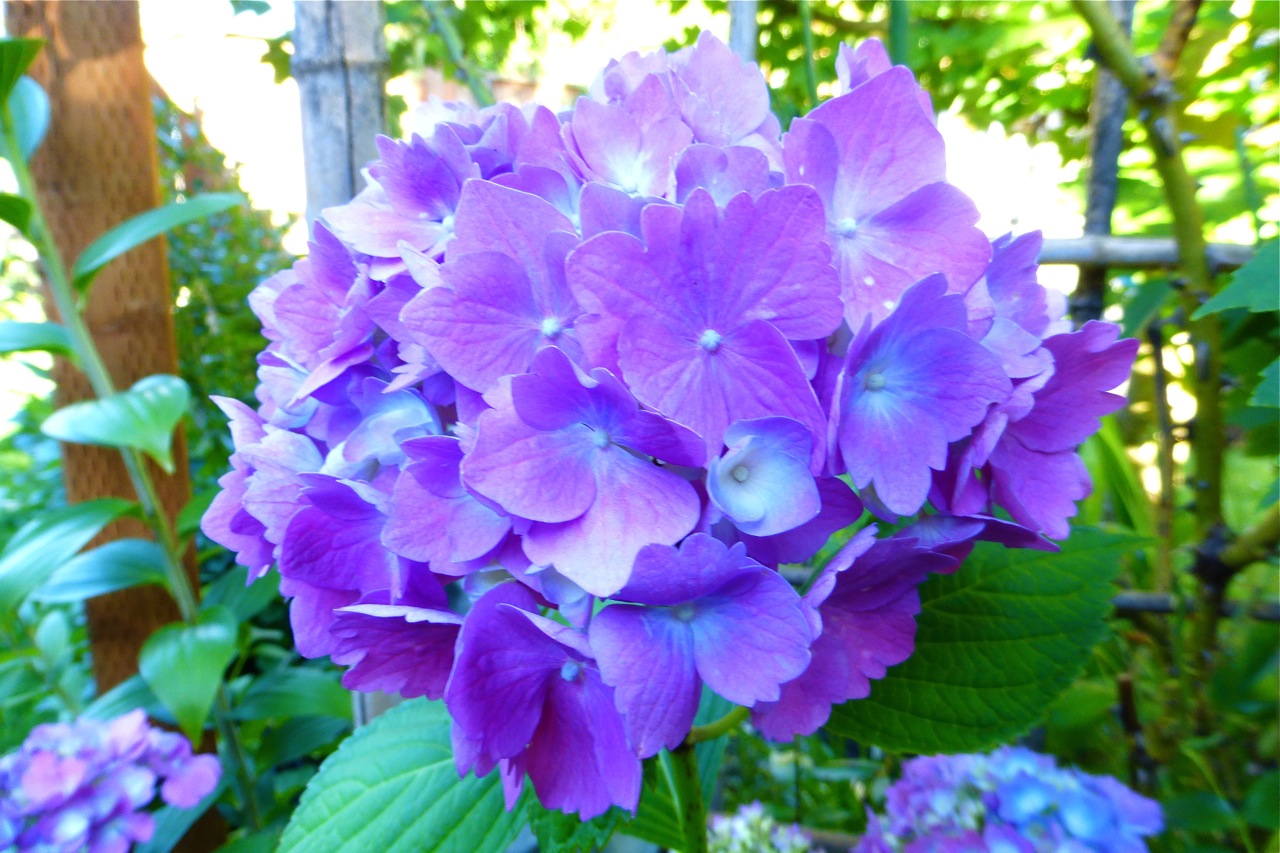
With summer in our part of the Northern Hemisphere not quite in full swing, I thought this would be the perfect time to tell you about three of my favorite summer flowers that are also very easy to grow - hydrangea (seen above), lily, and dahlia.  Any of these perennials might be available right now at your local nursery or grocery store in gallon pots, ready to plant.  This is a great way to add instant color to your yard and have beautiful flowers that grow back each season, producing more blooms in subsequent years.  

Hydrangeas come in several colors - white, blue, purple, and pink, and it truly is a flower for all seasons. In early summer they produce big beautiful showy blooms, with soft dreamy petals. Then in the autumn they can be cut and brought inside to display in your home. Once dried, they will last for a very long time.    

Lilies come in a range of colors as well; I think that the best lilies are the fragrant kind, such as this Oriental variety:

lily, summer garden, perrenial

When there are several of these blooming all at once, a heavenly scent fills the air.  What a pleasure it is to sit in the backyard on a warm night and take in this perfume!  Plus, you might see a hummingbird or two flitting around looking for some nectar!

lily, hydrangea, perennial, summer garden

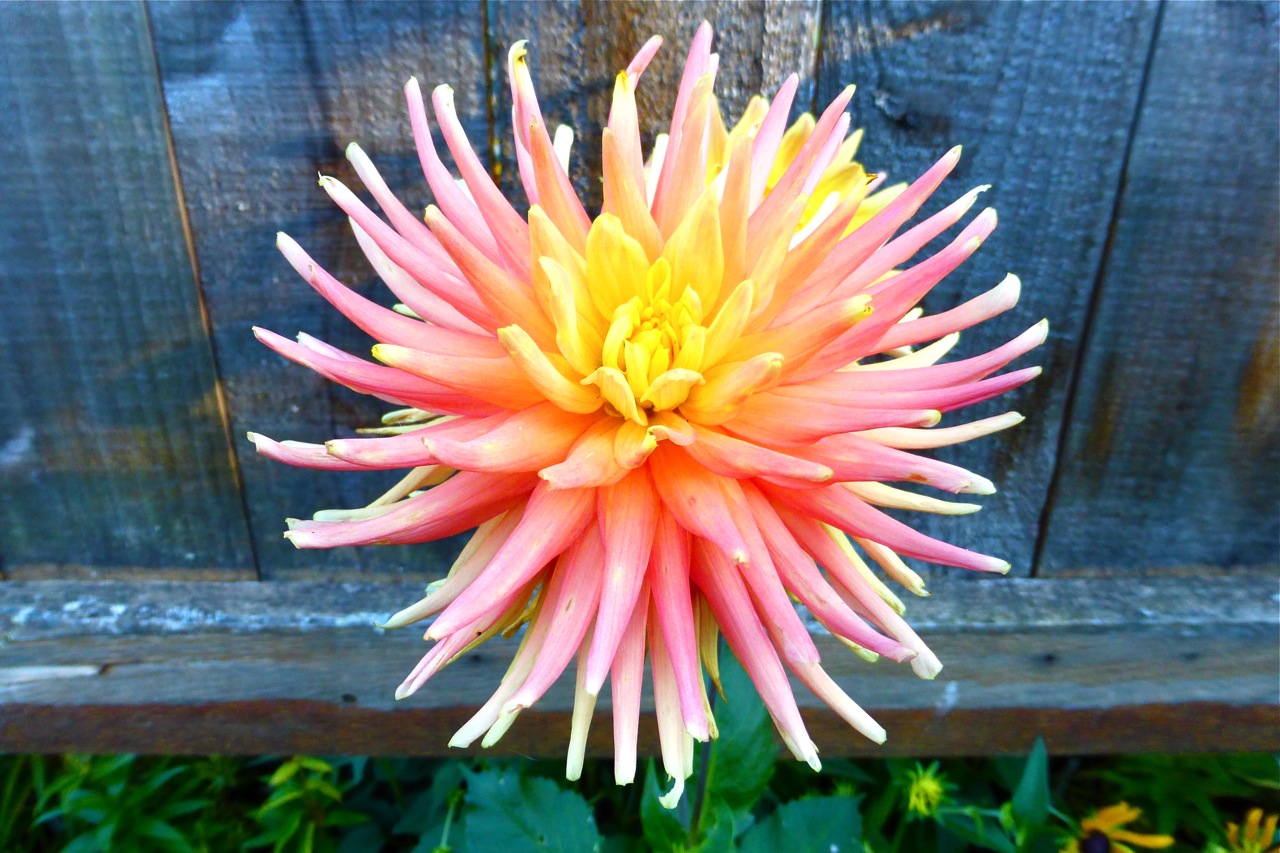
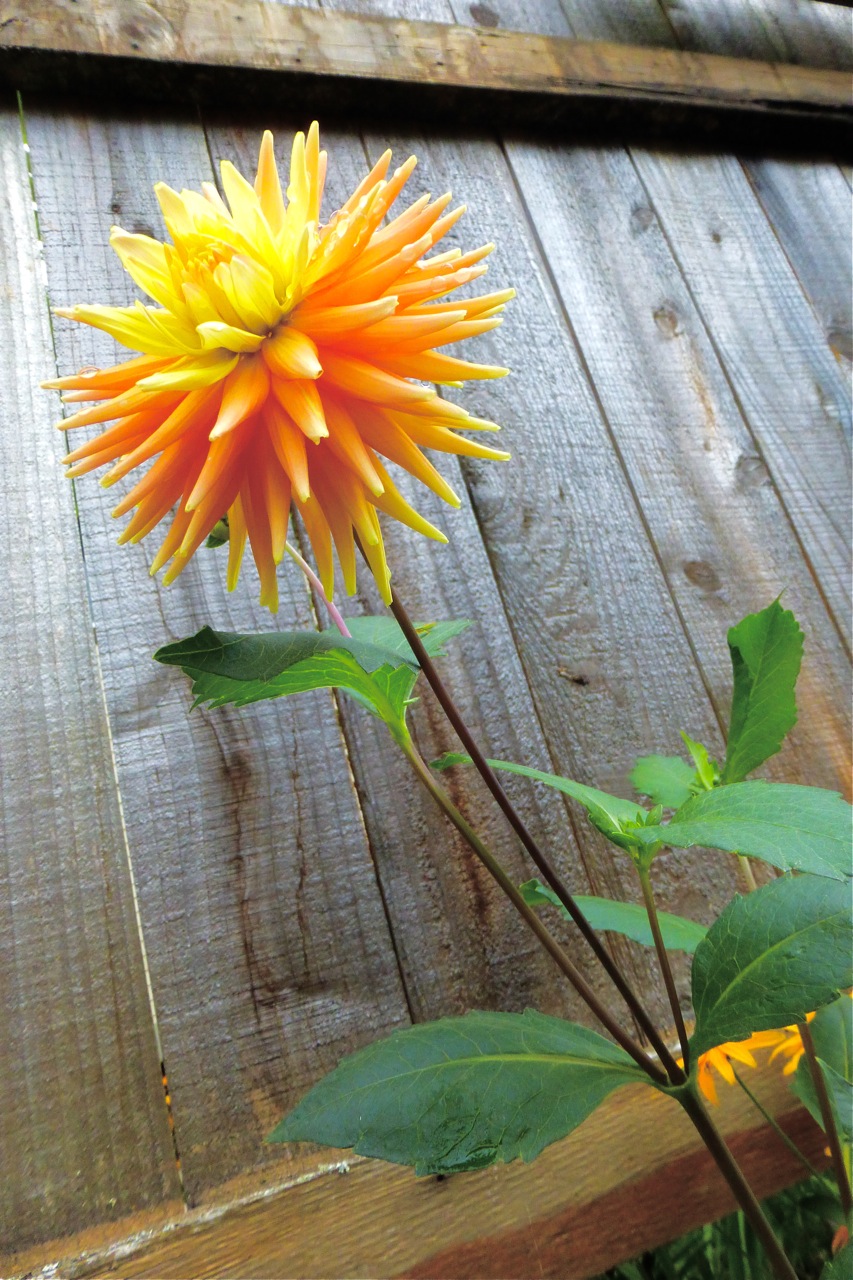
Dahlias come in what seems like an endless variety of sizes, shapes, and colors. My favorite type are these cactus, or spider-like ones shown below:

dahlia, perennial, summer garden

dahlia, perennial, summer garden

Not all dahlias are perennial, so reading the label is a good idea.  Although some of the first dahlia starts that I planted a few years ago were labeled as annuals, some of them have come up every year as if they were perennials.  So who knows?  It's all fun.

One thing I've learned about gardening in general, is that the seasonal potted flower starts you see available for purchase in stores are there because someone has already done the research, and figured out that those certain plants will grow in your particular zone.  So trust your local garden center or even your grocer, if they have plants for sale.  Chances are that once you've planted and watered and cared for your perennials, you'll see them again next season.
SHARE:

Tuesday, June 23, 2015

Late Spring, Early Summer Through The Lens

One Thousand Paper Cranes. 
One Thousand Paper Cranes, 1,000 paper cranes, paper cranes, origami, origami paper cranes, origami cranes

A Three Quarter Moon.
A Three Quarter Moon, moon, sky, trees, late spring moon, 3/4 moon, moon phase, blue sky moon, daytime moon

Hydrangea In Two Colors.
Hydrangea In Two Colors, hydrangea, blue hydrangea, purple hydrangea, summer flower, hydrangea


All images taken with my iPhone.
SHARE:

Friday, June 19, 2015

The Priestess Of Culture

The Priestess Of Culture, sculpture, Panama-Pacific Exposition, 1915, priestess, culture, cornucopia, San Francisco, Palace Of The Arts, California

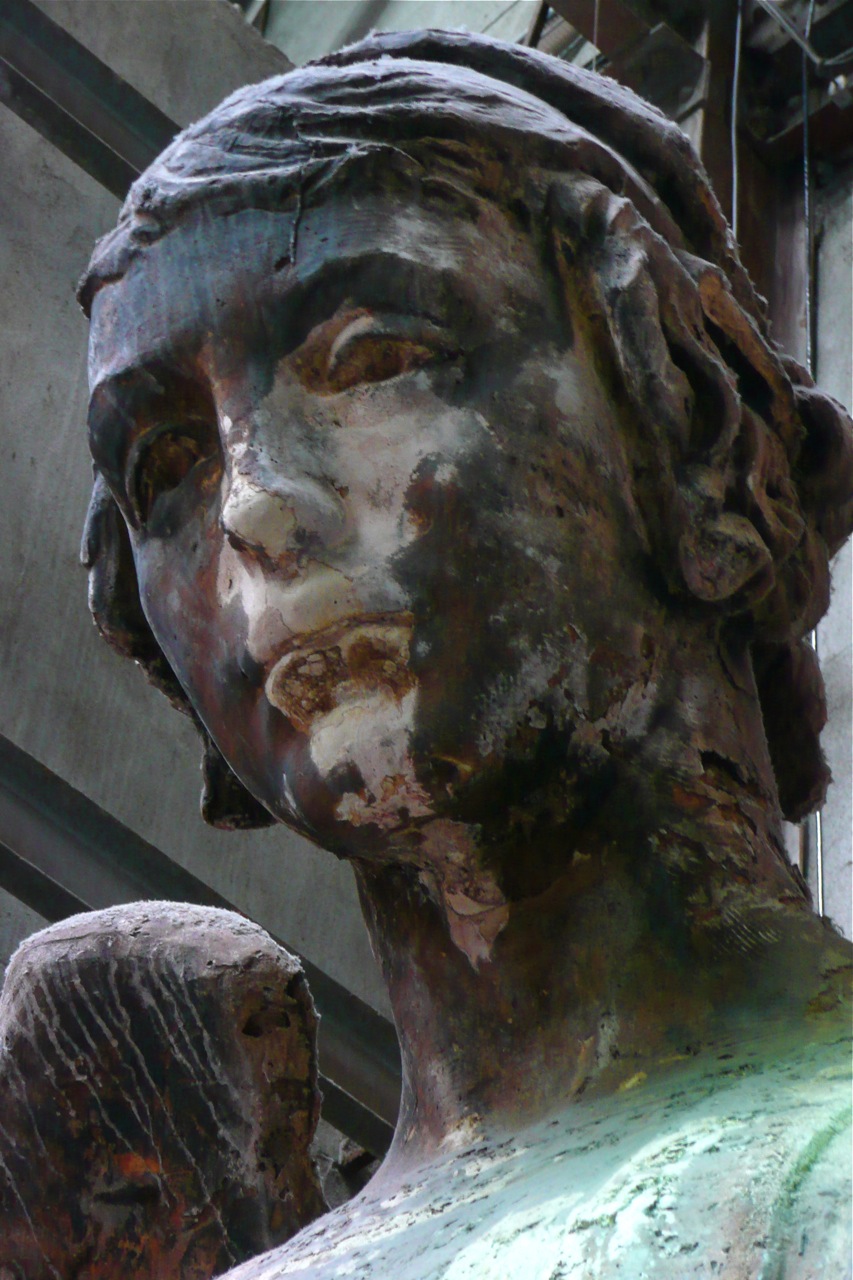
This is the face of The Priestess of Culture.  She symbolizes artistic awareness, and offers to you her abundant knowledge of the arts, which she shares in the hope that it will lead you to an understanding of the problems facing all of humankind.  Come along with me and explore her past...

One hundred years ago, sculptor Herbert Adams displayed his representational works of art, The Priestess of Culture statues, as part of the Panama-Pacific International Exposition, a 635 acre world's fair that took place in San Francisco, California from February to December of 1915.  Conceived as a celebration of the completion of the Panama Canal, the specific themes expressed through the art and architecture of the Exposition were those of aspiration, progress, achievement, and victory.  The people of San Francisco also viewed it as an opportunity to showcase their city, newly rebuilt after the devastating earthquake and fire of 1906 destroyed over eighty percent of the municipality.

The Priestess Of Culture, sculpture, Panama-Pacific Exposition, 1915, priestess, culture, cornucopia, San Francisco, Palace Of The Arts, California

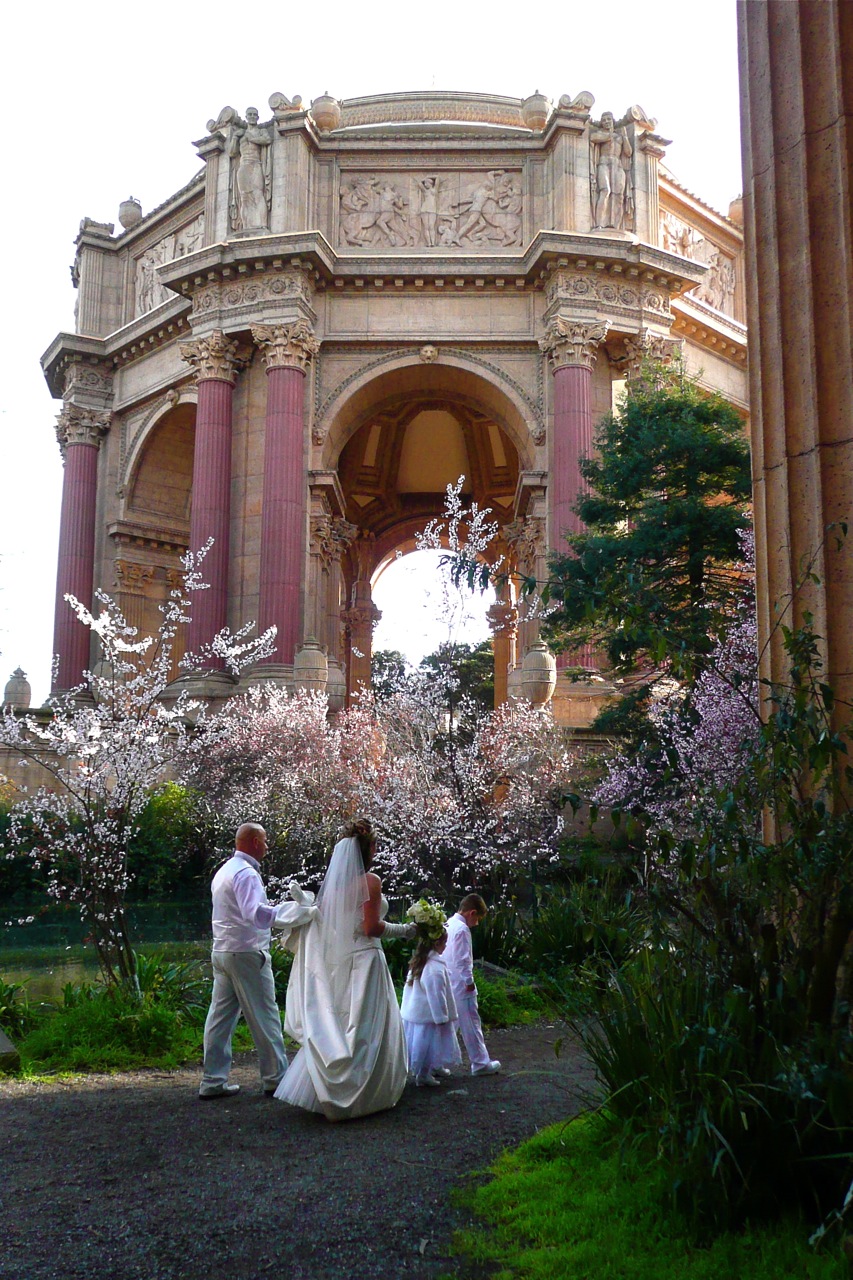
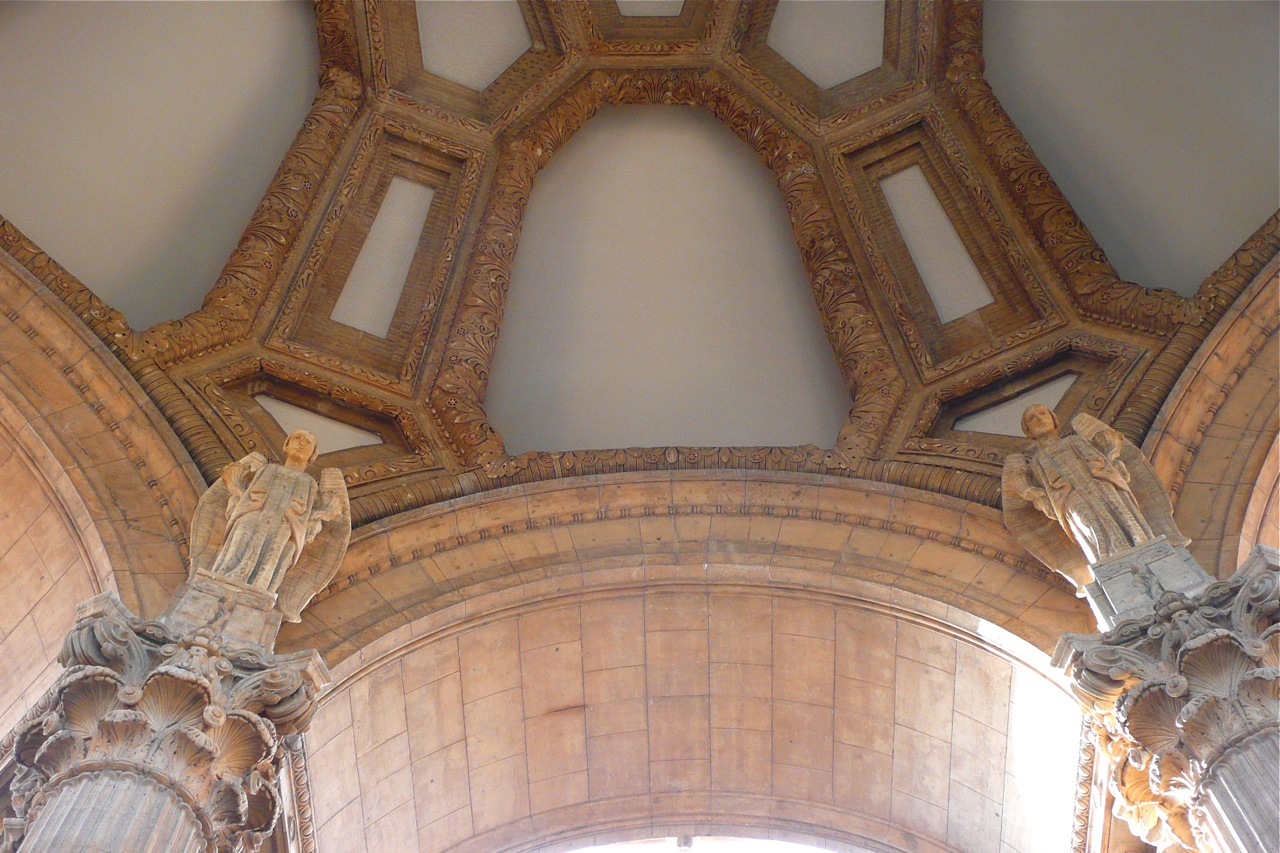
The eight Priestess of Culture statues were placed around the base of the dome within the rotunda of the Palace Of Fine Arts, the only remaining building of the eleven exhibition palaces originally built for the Exposition.  The Palace consists of four unconnected structures: the rotunda, shown below with its classic Roman style architecture, two detached peristyles, or open colonnades, one on either side of the rotunda, and an art gallery, situated at the back of the rotunda.

The Priestess Of Culture, sculpture, Panama-Pacific Exposition, 1915, priestess, culture, cornucopia, San Francisco, Palace Of The Arts, California

The Palace Of Fine Arts still stands today, thanks to the ongoing support of the citizens of San Francisco.  After the close of the Exposition, when the fair site was slated for demolition, they rallied in support of allowing it to remain, not only as a landmark embodying the spirit of the Exposition, but also as a visual symbol of the meaning of the arts in society.  Over the course of the past century, the Palace has undergone periodic rebuilding and refurbishing, and it appears that of the original eight Priestesses, only two still remain in existence, with their places under the dome of the rotunda taken by reproductions created for the rebuilding.

The Priestess Of Culture, sculpture, Panama-Pacific Exposition, 1915, priestess, culture, cornucopia, San Francisco, Palace Of The Arts, California

Imagine my surprise, when one day, while visiting family and friends in the San Francisco area, I came face to face with these two Priestesses!  They were temporarily housed in the art gallery, which at the time also contained the Exploratorium, a family science center.  I was standing on the second floor of the Exploratorium, looking out over the crowd onto the lower level when I noticed them.  At first I couldn't believe my eyes - they seemed very large, and even from a distance I could see that they were, if not ancient, at least from another era.  My curiosity got the better of me and I had to investigate.

The Priestess Of Culture, sculpture, Panama-Pacific Exposition, 1915, priestess, culture, cornucopia, San Francisco, Palace Of The Arts, California

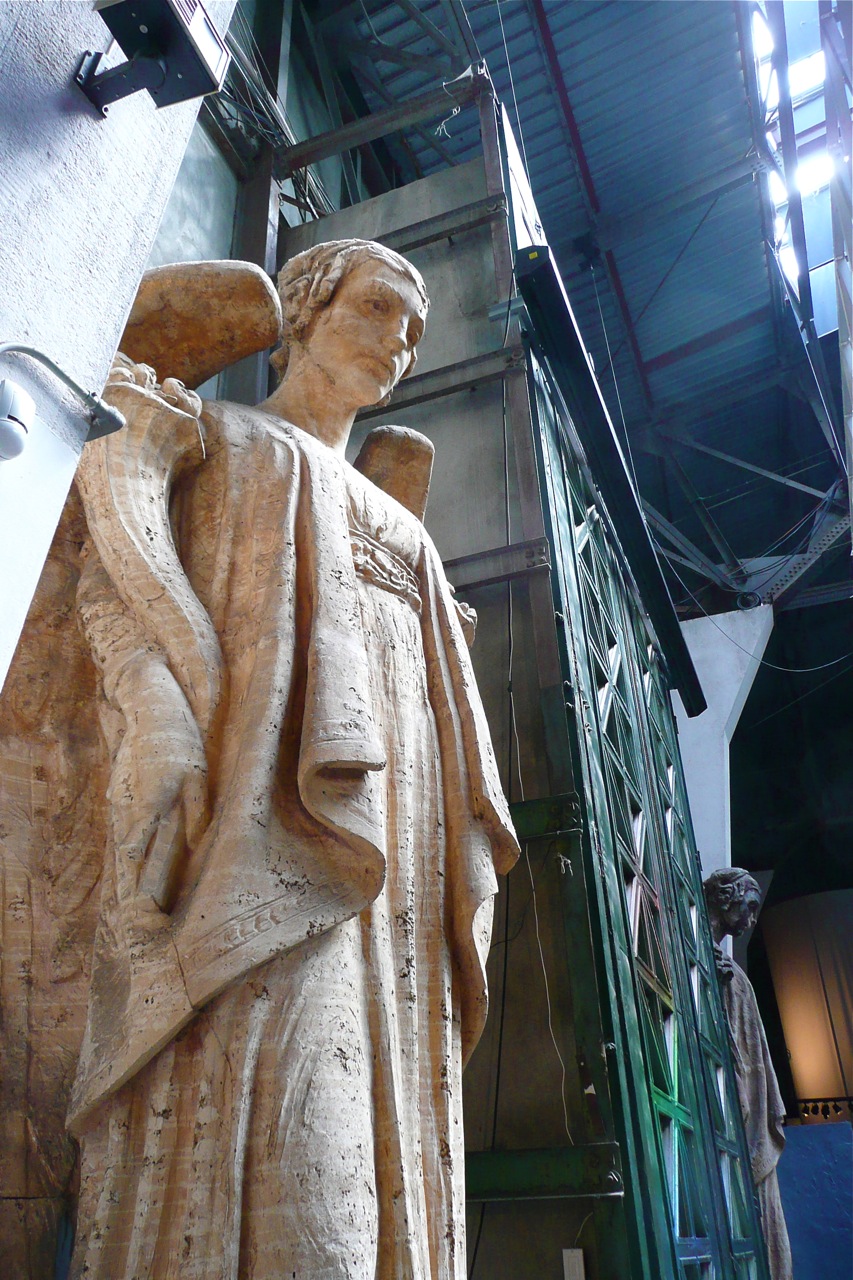
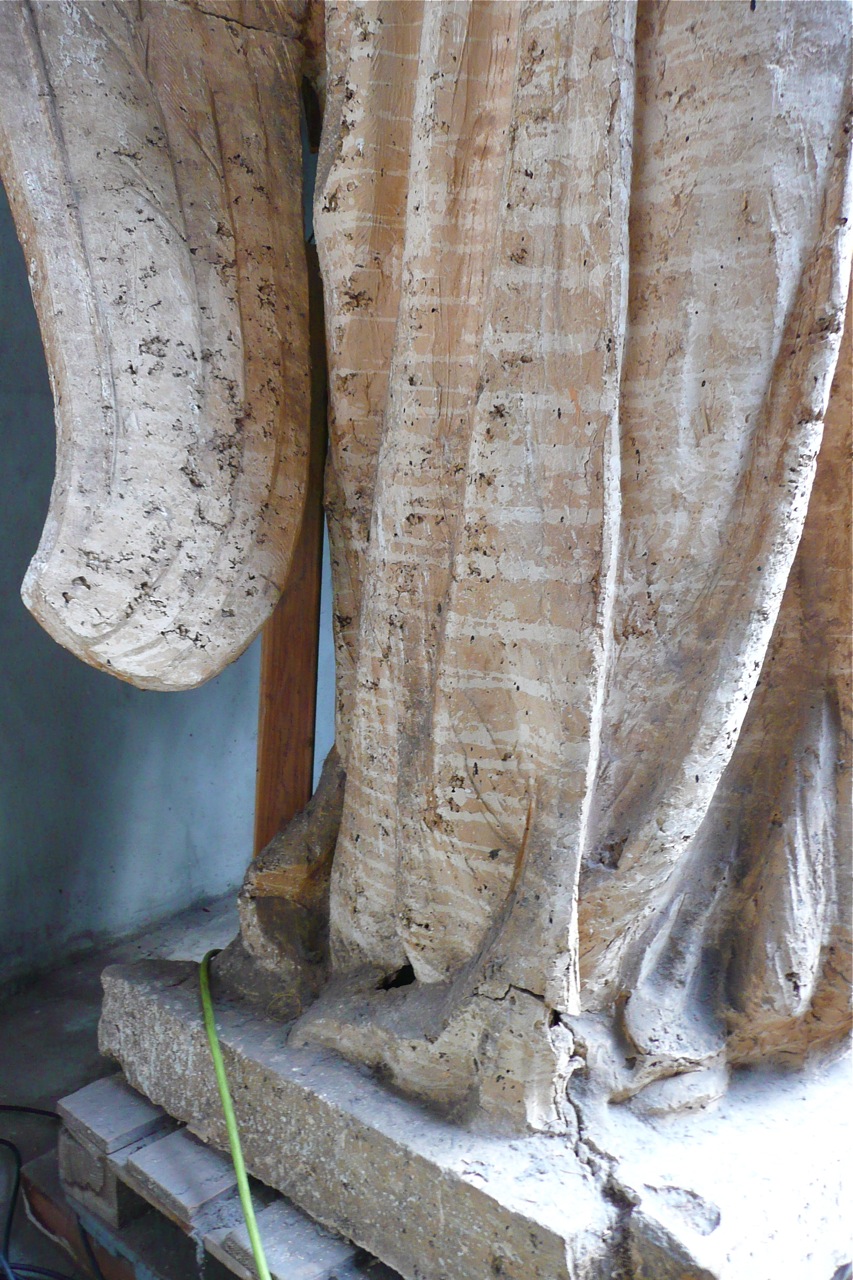
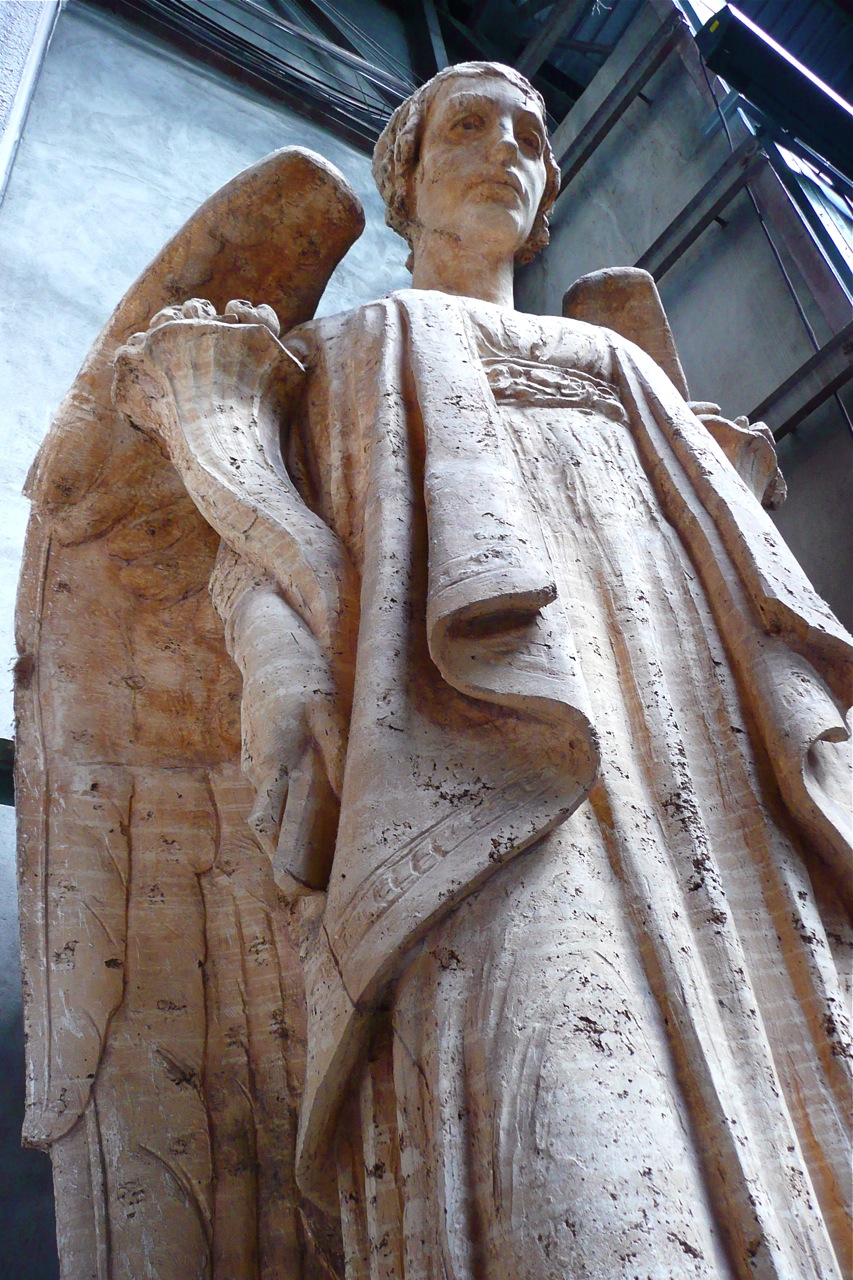
There they stood, flanking either side of a massive old ornamented metal door.  Facing this scene, I could see that the Priestess on my left appeared almost perfectly preserved, while the Priestess on my right was rather severely time worn. Their size was overwhelming; I think they are over 10 feet tall, with a width of about 4 feet.  And their faces!  Do you agree that it feels as if you are looking straight into the eyes of a real fellow human being?  I'm not sure I've ever seen such a realistic depiction of a human face on a statue at first hand.

The Priestess Of Culture, sculpture, Panama-Pacific Exposition, 1915, priestess, culture, cornucopia, San Francisco, Palace Of The Arts, California

Juliet James, author of Sculpture of the Exposition Palaces and Courts (1915), said of Herbert Adams: "There are few sculptors with greater refinement or more cultured reserve than Herbert Adams.  He understands the selection of the significant and in many ways seems most fitting to represent The Priestess of Culture."  

Indeed, the details of these sculptures are worthy of attention; not just the expressive faces, but also such features as the draping of the garments and the gentle curve of the wings.

The Priestess Of Culture, sculpture, Panama-Pacific Exposition, 1915, priestess, culture, cornucopia, San Francisco, Palace Of The Arts, California

Notable also are the graceful manner in which the Priestesses' hands ever so slightly curl around the ends of the cornucopias and the delicate flower-like detail of the cornucopias themselves.

The Priestess Of Culture, sculpture, Panama-Pacific Exposition, 1915, priestess, culture, cornucopia, San Francisco, Palace Of The Arts, California

Juliet James continues: "This figure at the base of the dome of the rotunda of the Fine Arts Palace, on the inside, is eight times repeated.  Simple, dignified, beautifully balanced, with elegance expressed in every line of her garment with its rich border sparingly used, she holds in either arm an overflowing cornucopia, the symbol of what she is able to give you."

The Priestess Of Culture, sculpture, Panama-Pacific Exposition, 1915, priestess, culture, cornucopia, San Francisco, Palace Of The Arts, Californai
Priestess Of Culture, sculpture, Panama-Pacific Exposition, 1915, priestess, culture, cornucopia, San Francisco, Palace Of The Arts, California
The Priestess Of Culture, sculpture, Panama-Pacific Exposition, 1915, priestess, culture, cornucopia, San Francisco, Palace Of The Arts, Califormia

These Priestesses, I've since learned, were among more than 1,500 sculptural works of art on display throughout the Panama-Pacific Exposition.  Sculptor A. Sterling Calder, appointed acting chief overseeing the sculptors and responsible for the overall character and harmony of the works, conveyed his thoughts about the role of sculpture within the Exposition in his essay, Illustrations and Descriptive Notes of the Sculpture and Mural Decorations of the Exposition (1915): " - it is not too much to claim that it supplies the humanized ideality for which the Exposition stands - the daring, boasting masterful spirits of enterprise and imagination - the frank enjoyment of physical beauty and effort - the fascination of danger; as well as the gentler, more reverent of our attitudes, to this mysterious problem that is Life."

Since this year marks the 100th anniversary of the Panama-Pacific International Exposition, and because I've become fascinated with these Priestesses, I thought it would be fun to share both the wonder and excitement I felt when I first discovered them, and what I've learned about them since that day.

Here is a video I found about the Exposition, made in the 1960s using film clips from 1915:


Have you ever attended a World's Fair or Exposition, or visited the site of a former one?  What impressed you the most?
SHARE:
© Under The Plum Blossom Tree | All rights reserved.
Blogger Template Created by pipdig