Thursday, July 28, 2022

Summer Garden: Flowers, Fruit and a Flying Fish!

Under The Plum Blossom Tree Summer Garden: Flowers, Fruit and a Flying Fish! Blog post about flowers and fruit grown in my garden and a new carp windsock.

Hello friends. It has been a very long time since I shared a peek into what's growing in my small backyard garden.

Have you ever tried to grow roses? They can be very challenging. I did not have very good luck with the bare root variety that I bought at a local discount box store so instead purchased two 'Easy Elegance' rose bushes from Grays Garden Centers. Neither have been a disappointment. Both are bushy, have lots of green leaves and an abundance of flowers. The 'Calypso', above, is one of them. It sprouts lovely dark pink buds that change to light pink blooms and as they age they turn a subtle blush pink.

Under The Plum Blossom Tree Summer Garden: Flowers, Fruit and a Flying Fish! Blog post about flowers and fruit grown in my garden and a new carp windsock.

The dahlia above was a surprise this year. I picked up one of those six packs of annuals last summer at The Kiva Grocery store. And out of the six one decided to come back for another visit this year. How lovely!

Under The Plum Blossom Tree Summer Garden: Flowers, Fruit and a Flying Fish! Blog post about flowers and fruit grown in my garden and a new carp windsock.

We have three mature blueberry bushes and a couple of younger ones also. They were just twigs when we first planted them so it feels very special to be able to gather up a good amount of berries for scones, pancakes and snacking.

Lilies are a must if you love having fragrant flowers in your garden. Their sweet smell is intoxicating and relaxing on a warm summer night.

The lilies shown here are the Van Zyverden brand which I have had a good amount of success with over the years.

This white lily is from a variety pack called 'Lily Oriental Mix'. Its yellow pollen has fallen from the stamens, creating stains on the petals. Watch out! If you dip your nose into the flower to smell it you might get pollen stains on your nose!

Under The Plum Blossom Tree Summer Garden: Flowers, Fruit and a Flying Fish! Blog post about flowers and fruit grown in my garden and a new carp windsock.

And isn't this 'Triumphator' with its white and pink color scheme delightful?

Under The Plum Blossom Tree Summer Garden: Flowers, Fruit and a Flying Fish! Blog post about flowers and fruit grown in my garden and a new carp windsock.

The 'Oriental Summer Wine' lily is quite the bright pink don't you agree? I've seen an orange variety of lily with the same spot pattern and they are called tiger lily.

Under The Plum Blossom Tree Summer Garden: Flowers, Fruit and a Flying Fish! Blog post about flowers and fruit grown in my garden and a new carp windsock.

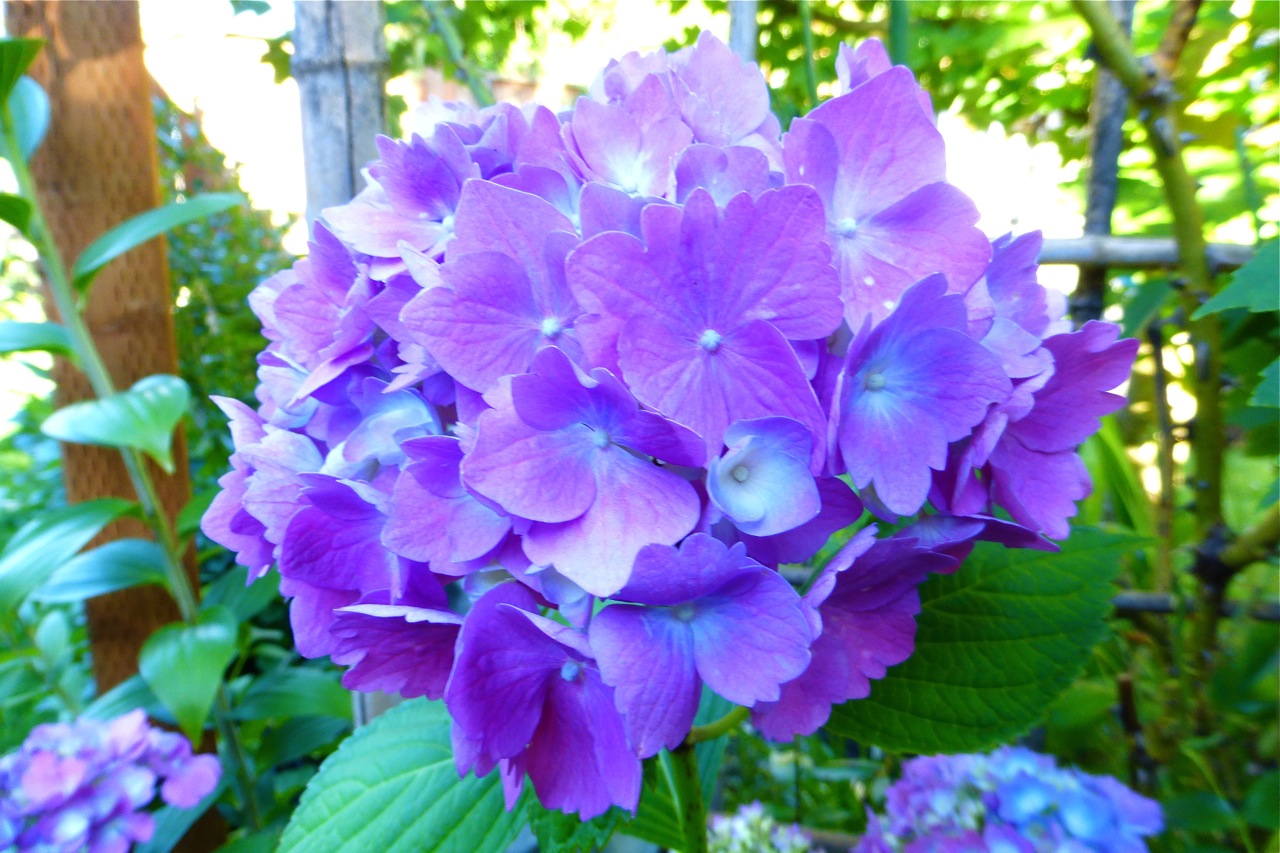
So do you prefer pink or blue hydrangeas? I prefer blue however there is a bit of effort required to achieve this. Maybe you've heard of it already but the idea is to lower the soil pH by applying a blueing formula. I use the Growmore brand. The link provided is the best price I found at about $10.00 for a two pound container. Here's an example of my results.

Under The Plum Blossom Tree Summer Garden: Flowers, Fruit and a Flying Fish! Blog post about flowers and fruit grown in my garden and a new carp windsock.

I started the blueing process late this season yet the results might be the best I've ever had.

If you have seen dried hydrangeas, either stems or wreaths, in the florist shop or at an upscale grocery store you know how expensive they can be. But did you know you can dry your garden hydrangeas yourself?

If you're interested in this, I wrote two blog posts. In DIY: Drying Garden Hydrangeas for Wreath Making I explain what to look for when preparing to cut your flowers and tips about the preservation process. And in DIY: Autumn Hydrangea Wreath I give step-by-step instructions on how to make a dried hydrangea wreath using a grapevine wreath purchased at the craft store.

And at last here is our new flying fish!

Under The Plum Blossom Tree Summer Garden: Flowers, Fruit and a Flying Fish! Blog post about flowers and fruit grown in my garden and a new carp windsock.

It's silly but everyone in our family loves having a carp windsock in the backyard. The first one we had was green and flew for many summer seasons until it got wind-ripped and could fly no longer. I found this new one at Eugene Toy & Hobby.

May our new blue flying carp merrily dip, spin and twirl for many summers to come!

That's all for now. Thanks for reading and see you again soon.
 

SHARE:

Thursday, September 24, 2015

Summer Garden In Shadow And Light

iris, bulb, flower, purple iris

Now that the autumnal equinox has arrived here in the northern hemisphere, I am beginning to lament my summer garden. Although there are still plenty of flowers to enjoy, the slow change into fall has begun, and the various plants, bushes and trees are turning from the many shades of summer green to the reds, yellows and oranges of autumn.

Throughout the summer I had fun taking photos of my garden on various days during the magic hour. The magic hour is that time of day when the sun is near the horizon, (roughly the first or last hour of daylight), and the light from the sun travels through a greater depth of atmosphere, creating brilliant colors and long shadows which add texture and depth to your photos. The intensity of direct light is diffused, and the result is an illuminated indirect light. These conditions, and the fact that I have a very small backyard and many trees in the neighborhood, make for a lot of variety in the kinds of light in my garden.  

Let's have a bit of fun here! See if you can guess which time of day each of my photos were taken - morning or evening - and at the end, I'll tell you. For example, the iris photo above was taken at 6:06 p.m.  Ready?

Almost everyone's favorite flower - at least on Instagram - a hydrangea:
hydrangea, pink hydrangea, blooming hydrangea, blooming pink hydrangea

Delicious strawberries:
strawberries, red strawberries, ripe strawberries, red ripe strawberries

This potted plant of an unknown variety:
potted plant

Here's one of my echinacea plants with some sweet peas behind it:
echinacea, white echinacea, coneflower, white coneflower

Next are some blackberries:
blackberries, blackberry, summer blackberries, summer blackberry

Then the same blackberries in a more distant shot with some Shasta daisies and another kind of iris:
blackberries, iris, Shasta Daisy, blackberry, irises, dasies

How about some roses?
roses, rose, pink roses, pink rose, summer rose

Then those Shasta daisies again, on a different day and from a different perspective:
Shasta Daisy, daisies, summer daisy, summer daisies

We're back to the blackberries again, this time just some of the leaves, and a week later than the last shot of them:
blackberry leaves, blackberry leaf

And now a blueberry branch that has happily snuck under the fence:
blueberry, blueberries, blueberry bush, blueberry bush branch, blueberry branch

Here are those sweet peas again, a couple of weeks later:
peas, climbing peas, fat peas

I think this is the same hydrangea, about a month later:
hydrangea, pink hydrangea, summer hydrangea

I love this yellow daisy - in the autumn the birds, such as warblers and finches, come and eat the seed clusters:
daisy, daisies, yellow daisy, yellow daisies

And who can resist the intoxicating scent of a Summer Wine lily?  Not me!
Summer Wine lily, lily, pink lily, pink Summer Wine lily

And last but not least - a dahlia:
dahlia, yellow dahlia

So, starting from the top - the first hydrangea, the strawberries and the unknown potted plant were all photographed on the same June evening between 5:57 and 6:20 p.m.

Moving into the month of July, the echinacea was photographed at 6:55 p.m.

Then both of those blackberry pictures were taken in the morning at 7:31 and 7:33 a.m. 

The roses and the Shasta daisies - 9:15 and 9:16 p.m.! Can you sense that warm pinkish-orange ambience? This was one of those evenings when the sky was glowing those colors and when you looked out at the light, all you would see is an amazing orange glow - a phenomena I've never seen anywhere else I've ever lived, except right here in Oregon. See the sky, below:

We're in the middle of July now with the blackberry leaves and the blueberry branch - both 7:32 and 7:39 p.m.  

The pea vines with bursting pods were photographed at 6:39 p.m.

The second hydrangea photo, along with the yellow daisies and Summer Wine lily - were all taken on July 24th at 7:42, 8:10, and 8:17 a.m.

And finally, moving into August, I photographed the dahlia at 5:53 p.m.

I hope you've enjoyed this exercise in shadow and light.  Do you enjoy photography? What are your experiences in capturing interesting light conditions?

SHARE:

Friday, July 3, 2015

From Garden To Table: Blueberry Pie

blueberry pie, blueberries, garden, berries, pie baking, pie crust, pie filling, fresh blueberries, fresh berries, homemade, home made, made from scratch, do it yourself pie

Summer fruit pie making season has arrived here in Oregon, and I have found myself daydreaming about blueberry pie.  Sweetened berries inside a buttery pastry crust...  Yum! 

When the blueberry bushes in our small backyard garden began to flower, I was already thinking about the various ways in which we could eat them - besides just picking them straight from the bush, which of course is a delight in itself.  But the amount of berries that are ripe and plump and ready to be picked is what determines what can be done with them. A few days ago I picked enough fruit to make a pie, thus turning my daydream into reality.

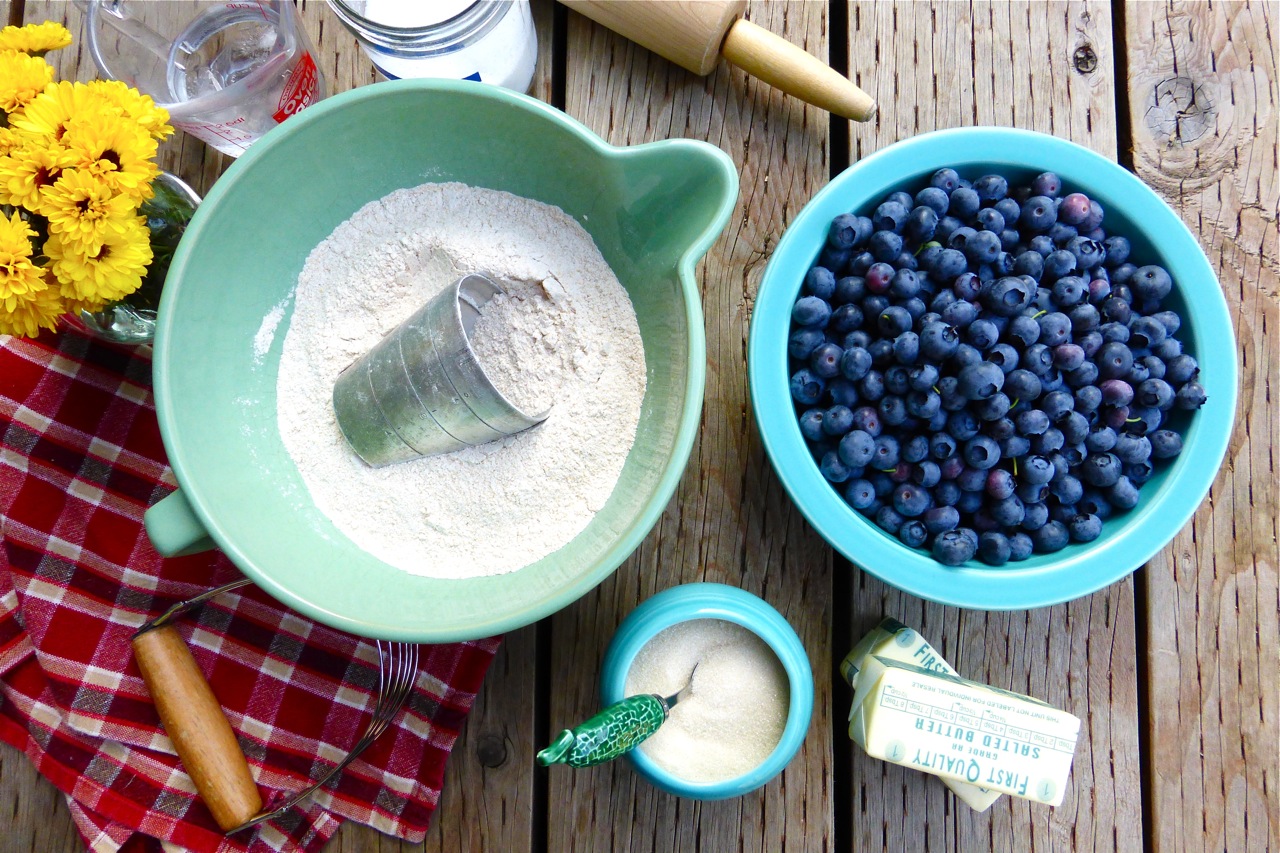
flour, sugar, salt, butter, ice water, blueberries, making blueberry pie, pie crust ingredients, homemade pie, home made pie, do it yourself pie

The berry yield I obtained was just over a quart - maybe 5 cups in all.  It was enough to make the 10 inch pie you see in the top photo, plus another, smaller 6 inch pie (not shown).  

I know that most pie crust recipes call for unsalted butter and white pastry flour, but I never have anything but salted butter and whole wheat pastry flour around my kitchen.  So when using salted butter I go easy on the amount of added salt, and just use the flour on hand.  Using this type of pastry flour produces a crust that is a bit thicker and heartier than one made with white flour, and I think it tastes every bit as good.

So, here's the recipe I came up with:

Whole Wheat Pie Crust
makes 1 double-crust or 2 single-crust pies

2-1/2 cups whole wheat pastry flour
1/2 teaspoon salt
1 teaspoon sugar
2 sticks salted butter
1/4 to 1/2 cup ice water (about 2 ice cubes in the water is sufficient)

Measure the flour into a large bowl and add the salt and sugar.  Mix together.  Cut the butter into small pieces, adding to the flour mixture.  Work the butter into the flour mixture with a pastry blender until it is pea size.  Add 4 T. of the ice water and use your hands to mix it together.  Mix thoroughly before adding any more water.  What you are looking for is the formation of a ball of dough that holds together well.  Once this is achieved, stop handling it and divide it in half.  Shape each half into a disk and place in plastic wrap.  Chill at least 1 hour, or overnight.  I prefer to prepare the dough the night before, then take it out of the refrigerator about 1 hour before 'pie time' in the morning.  (Coffee, anyone?)  

Sprinkle some flour on your work surface and rub some on your rolling pin. Shape, then roll 1 disk of dough into your desired circumference and place it into your pie plate.  The reason I like this recipe is that it makes a generous amount of crust.  Sometimes I like to make the 10 inch pie, then roll out the rest of the dough, place it on a baking sheet, sprinkle cinnamon and sugar over it and bake it for an extra treat.

Once you have your dough shaped and placed into the bottom of your pie plate, put it in the refrigerator to keep the butter from melting too much, and make the filling:

Blueberry Pie Filling
yield 1 pie

1/4 cup flour
1 egg
1 tablespoon milk
1 quart blueberries, washed and stems removed
2 T. lemon juice
1/4 to 1/2 cup sugar


Have berries ready in a large bowl.  Add the flour, lemon juice, and your desired amount of sugar and mix until the flour is distributed evenly.  

Let sit while you shape, then roll out your second disk of pastry into a top crust.

Preheat oven to 425 degrees.

Stir the berries one more time, then fill the prepared bottom pie shell.  Place the top pastry over it, trim the excess, and press and crimp the edges together. Prick the top crust with a fork.  At this point if you think you've overworked the dough or if it is too soft, you could place the whole pie into the refrigerator until the dough firms up a bit more. 

Mix the egg and milk together, and brush this mixture over the top crust - this step isn't necessary, but it does make the pie a nice color.  

Bake at 425 degrees for twenty minutes, then reduce heat to 350 degrees and bake for an additional 30 to 40 minutes.  Let cool completely before cutting.

Now, it's time to enjoy your freshly baked summer fruit pie.  And since it is summer, what better place to share it than a nice cool shady spot in your own back yard?

Blueberry Pie, Fiestaware, Fiesta hack, Fiestaware turquoise pie baker, Fiestaware cobalt Hostess Bowl, Fiestaware lemongrass pie server, Fiestaware shamrock salad plate, Fiestaware peacock salad plate, flowers, fresh flowers, flowers on your table, table decorations, backyard, backyard eating, garden, blueberry bushes, Frigoverre, Bormioli Rocco
blueberries, garden, fresh blueberries, sunshine, blueberries in sunshine

What is your favorite summer pie you enjoy baking?   

          
SHARE:

Friday, June 26, 2015

3 Summer Flowers To Plant In Your Garden Now

hydrangea, summer garden, perrenial

With summer in our part of the Northern Hemisphere not quite in full swing, I thought this would be the perfect time to tell you about three of my favorite summer flowers that are also very easy to grow - hydrangea (seen above), lily, and dahlia.  Any of these perennials might be available right now at your local nursery or grocery store in gallon pots, ready to plant.  This is a great way to add instant color to your yard and have beautiful flowers that grow back each season, producing more blooms in subsequent years.  

Hydrangeas come in several colors - white, blue, purple, and pink, and it truly is a flower for all seasons. In early summer they produce big beautiful showy blooms, with soft dreamy petals. Then in the autumn they can be cut and brought inside to display in your home. Once dried, they will last for a very long time.    

Lilies come in a range of colors as well; I think that the best lilies are the fragrant kind, such as this Oriental variety:

lily, summer garden, perrenial

When there are several of these blooming all at once, a heavenly scent fills the air.  What a pleasure it is to sit in the backyard on a warm night and take in this perfume!  Plus, you might see a hummingbird or two flitting around looking for some nectar!

lily, hydrangea, perennial, summer garden

Dahlias come in what seems like an endless variety of sizes, shapes, and colors. My favorite type are these cactus, or spider-like ones shown below:

dahlia, perennial, summer garden

dahlia, perennial, summer garden

Not all dahlias are perennial, so reading the label is a good idea.  Although some of the first dahlia starts that I planted a few years ago were labeled as annuals, some of them have come up every year as if they were perennials.  So who knows?  It's all fun.

One thing I've learned about gardening in general, is that the seasonal potted flower starts you see available for purchase in stores are there because someone has already done the research, and figured out that those certain plants will grow in your particular zone.  So trust your local garden center or even your grocer, if they have plants for sale.  Chances are that once you've planted and watered and cared for your perennials, you'll see them again next season.
SHARE:

Friday, September 19, 2014

Summer Garden: Dahlias

dahlias, red dahlia, Dazzling Dreams Blend, Dazzling Dreams Blend dahlia, garden
    As autumn approaches here in the Northwest U.S., I thought it would be fun to have a last hurrah, or a sort of showcase of my very favorite summer flower - the dahlia.  I'm thinking this is my garden's summer swan song as it begins to fade and the signs of autumn creep in, and maybe perhaps the new acquaintances I'm beginning to meet on Instagram will have some inspiration for their summer gardens yet to come. 

One of my main goals in the garden from the beginning about three years ago was to curate flowers which have an Asian aesthetic; those that are known not only for their beauty, but for qualities such as peace, quiet, and calm.  Lilies definitely fit that description, and when our family visited the Portland Japanese Garden a couple of years ago, I saw a few hydrangeas there and decided those would go in my garden as well.  

As for the dahlias, most of the time when I've seen them used in Asian inspired floral design, I usually see those that are completely round and ball or pompom shaped, so I started with that type.  A funny thing happened however - after I started growing them, I began to notice how incredibly popular dahlias are right here in my town.  There is a Lane County Dahlia Society that shows and sells these beauties, and dahlia lovers also sell their bulbs at the Oregon Plant Fair.  Suddenly I found myself fascinated with these lovely flowers in all their infinite variety.  

I don't know the names of all of the dahlias in my garden, but for starters the red one at the top of this post and the orange one below are from a package called 'Dazzling Dreams Blend'.  The package card stock shows three varieties, but so far only these two have grown.

dahlia, orange dahlia, Dazzling Dreams Blend, Dazzling Dreams Blend dahlia, garden
This second orange ball-like one looks very much like the first, however I purchased this bulb at one of the local plant fairs:
 
dahlia, orange dahlia, pompom dahlia, ball dahlia, garden
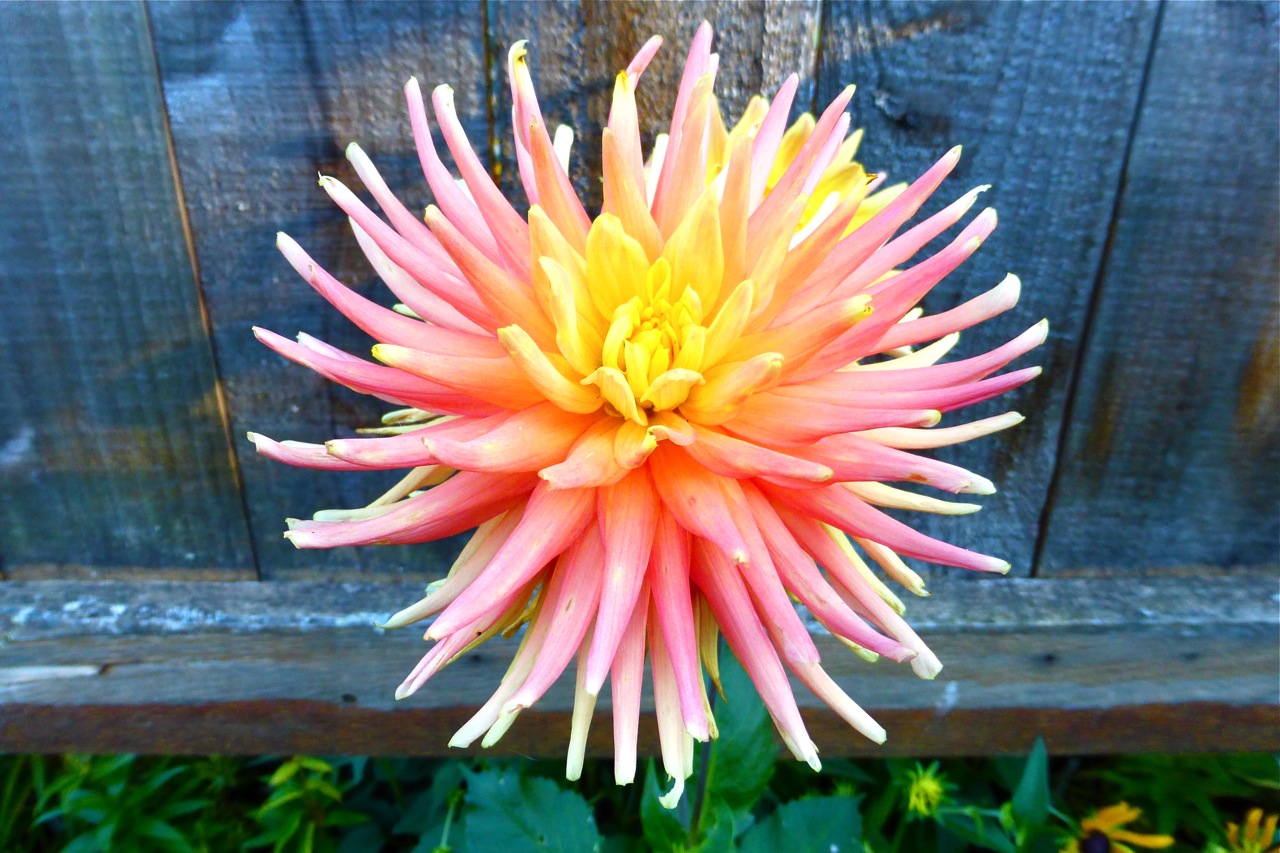
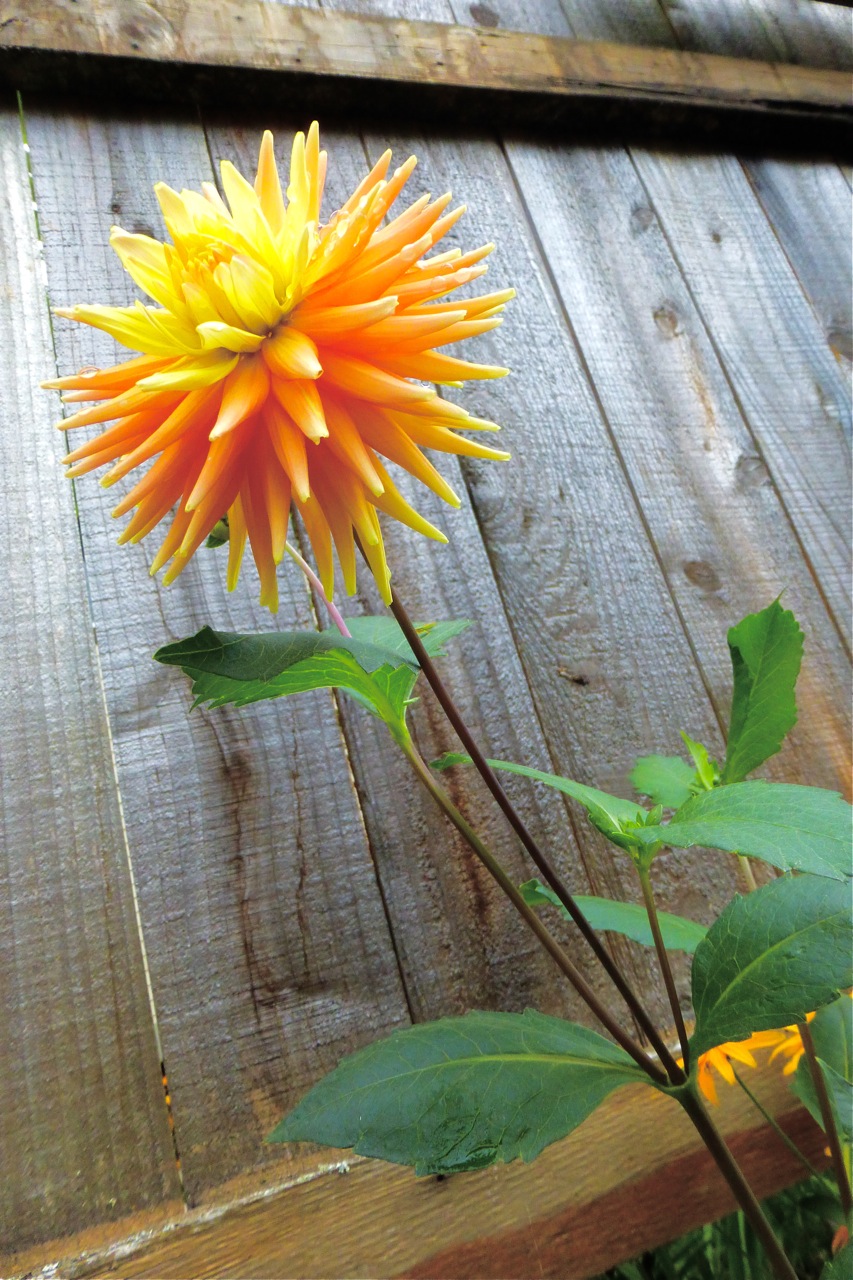
This next variety, which is known in general as the cactus dahlia, has become my most treasured for its spiny, spiky petals that resemble a sea urchin, of all things!  Notice the various combinations of color: yellow-orange, yellow, orange-yellow, pink-yellow. Delightful!

dahlia, cactus dahlia, orange yellow dahlia, yellow orange dahlia, garden

dahlia, cactus dahlia, yellow dahlia

dahlia, cactus dahlia, orange yellow dahlia, yellow orange dahlia

dahlia, cactus dahlia, orange yellow dahlia, yellow orange dahlia, garden

dahlia, cactus dahlia, yellow dahlia, garden


dahlia, cactus dahlia, pink yellow dahlia, yellow pink dahlia, garden
Also of the cactus-type variety is this 'Dutch Explosion' (shown below), with its shaggy appearance and bright fuchsia color.  I actually planted this bulb about two years ago and it never came up - until this year.

dahlia, Dutch Explosion, Dutch Explosion dahlia, pink white dahlia, white pink dahlia, garden


Unfortunately I don't know the type or name of this next one, but I can say that I chose it for its lovely orange color:

dahlia, orange dahlia, garden

I don't want to forget these last dahlias, which are an annual variety called a Collerette, because I purchased them at the very beginning of my gardening days, and even though they were labeled as annuals, every year a few still come back:
  
dahlia, Collerette, Collerette dahlia, yellow dahlia, garden
Are you crazy for dahlias?  Share a story with me!
SHARE:

Monday, August 25, 2014

Summer Garden: Lilies

calla lily, lily, pink, pink calla lily, pink lily

    Recently I talked about the splashes of color in my garden when some early summer lilies bloomed (link here), and now, before the summer completely slips away, I would like to share more of these favorite flowers of mine.  The blooming time for each of these three varieties shown is very short - just a few weeks from bursting buds to fragrant blooms to a faded memory.  One reason why I am passionate about photography is because things can change so fast, and it's nice to have a record of those changes.  
 
The Calla Lily above is one that I purchased as a potted start, and it has been growing slowly, yet steadily, for three years.  The cluster of leaves that grow out of the ground has definitely gotten bigger, and I see one or two flower blooms every summer. 

These two Oriental Summer Wine blooms, below, came from a variety package I planted last year, and I am happy to report that all six not only managed to grow, but bloomed as well. And although they are fragrant, their scent is no comparison to the Star Gazer Lily. 

Oriental Summer Wine Lily, Oriental Lily, Oriental, Lily, white lily, White Oriental Summer Wine Lily
Oriental Summer Wine Lily, lily, pink lily, Pink Oriental Summer Wine Lily, Summer Wine,

The Star Gazer, below, another of the Oriental-type lilies, has that wonderful scent that I've come to think of as a quintessential fragrance of summer, along with the Night Blooming Jasmine that my mother had in her garden when I was young.  So, if you're looking to add a romantic fragrance to your garden, look no further than this beauty.  If you look very closely, you can also see the spider that surprised me by its ability to mimic this flower; you can read about that experience here.

Star Gazer Lily, Oriental Star Gazer Lily, Pink Star Gazer Lily, Pink Oriental Star Gazer Lily, Pink Lily
Thanks for stopping by!  My plans for upcoming posts include Pocket Scrapbooking, Summer Garden: Dahlias, and Exercises In Collage.  See you again soon! 

SHARE:
© Under The Plum Blossom Tree | All rights reserved.
Blogger Template Created by pipdig