Thursday, February 25, 2021

Introducing Plum Blossom Vintage: Chinoiserie, The Orient, Midcentury

Hello Friends! Well it's been almost one year since the corona virus struck the United States and our lives fell into a tail spin. But now that there is a vaccine and a new president in the White House, I'm feeling hopeful about the future. I hope you are as well.

I'm excited to share some news with you! I'm starting a new shop! Plum Blossom Vintage will offer inspiring vintage chinoiserie, oriental and midcentury homewares for anyone looking to add some asian or midcentury (or both!) inspired flair to their home decor.

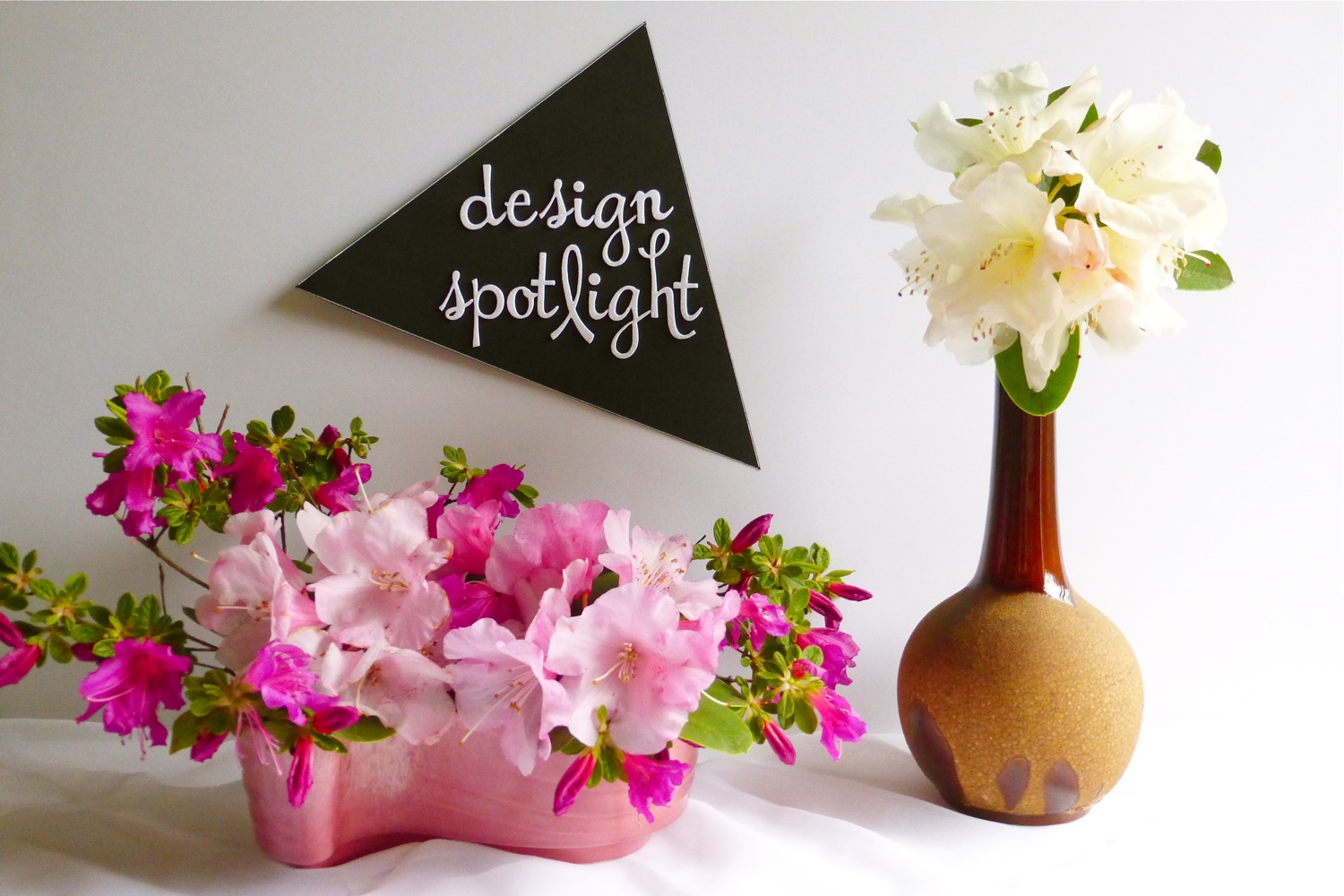
I'm still selling vintage tea ware in my Etsy shop Vintage Tea Treasures. This new endeavor will be on Instagram. I'll be utilizing my Vintage Tea Treasures Instagram account where the name has been changed to Plum Blossom Vintage. Shown above is a sneak peek of the first collection for Plum Blossom Vintage. It is almost ready for a flash sale which will be happening very soon and I will announce it here. 

So wish me luck and I hope you will join me for the sale!

SHARE:

Tuesday, April 21, 2020

Flattening the Curve, Day 34

flatten the curve, flatten the coronavirus curve, flatten the COVID-19 curve, flatten the coronavirus COVID-19 pandemic curve, Vintage Finds Hedi Schoop Art Creations, Hedi Schoop ceramics designer, vintage 13 inch tall asian male figurine, vintage chinoiserie figurine, vintage male ceramic asian figurine, Hedi Schoop Hollywood California

Hello friends. Today marks thirty-four days since I went on mandatory leave from my government job due to the coronavirus (COVID-19) pandemic.

Since The Great Pause began I have been naming every blog post after the number of days I have been away from my work site. But the real title of this post is Vintage Finds: Hedi Schoop Art Creations Ceramic Figurine.

Every February the Asian American Counsel of Oregon sponsors the Asian Festival here in Eugene. And in honor of that event, my favorite charity shop, The Assistance League, puts on a special Asian Celebration sales event, offering asian-themed clothing, art and home wares.

flatten the curve, flatten the coronavirus curve, flatten the COVID-19 curve, flatten the coronavirus COVID-19 pandemic curve, Vintage Finds Hedi Schoop Art Creations, Hedi Schoop ceramics designer, vintage 13 inch tall asian male figurine, vintage chinoiserie figurine, vintage male ceramic asian figurine, Hedi Schoop Hollywood California

In fact, I'm on the email list for the shop and I get a 'sneak peek' notice with photographs once the store has been reset for a new sale. That is how I found this green clad gentleman. He stands 13" tall and carries a small bucket.

flatten the curve, flatten the coronavirus curve, flatten the COVID-19 curve, flatten the coronavirus COVID-19 pandemic curve, Vintage Finds Hedi Schoop Art Creations, Hedi Schoop ceramics designer, vintage 13 inch tall asian male figurine, vintage chinoiserie figurine, vintage male ceramic asian figurine, Hedi Schoop Hollywood California

As soon as I saw him in the photo I knew I would be heading to the shop at my first opportunity to see if he was still there. I have been actively working on my home decor goals for a couple of years now and knew that this vintage figurine would fit my chinoiserie-themed home perfectly.

Hedi Schoop was a ceramics designer from 1940 to 1958. Born in Switzerland in 1906, she emigrated to California after a career as a dancer and cabaret artist. Hedi opened a ceramics production line in 1940, creating home ware items such as flower pots, candle holders, figures of rural people in national costumes, bowls and lamps. By the late 1940s her company had more than 50 employees and produced more than 30,000 pieces.

flatten the curve, flatten the coronavirus curve, flatten the COVID-19 curve, flatten the coronavirus COVID-19 pandemic curve, Vintage Finds Hedi Schoop Art Creations, Hedi Schoop ceramics designer, vintage 13 inch tall asian male figurine, vintage chinoiserie figurine, vintage male ceramic asian figurine, Hedi Schoop Hollywood California

This piece will be added to several other asian-themed people figurines I've already collected. It's become a thing...

flatten the curve, flatten the coronavirus curve, flatten the COVID-19 curve, flatten the coronavirus COVID-19 pandemic curve, Vintage Finds Hedi Schoop Art Creations, Hedi Schoop ceramics designer, vintage 13 inch tall asian male figurine, vintage chinoiserie figurine, vintage male ceramic asian figurine, Hedi Schoop Hollywood California

If you like this figurine and would like to see more of Hedi Schoop's designs, I've created a Pinterest 'Hedi Schoop Ceramics' board for you.

Thanks for looking and I hope you are having a quiet, peaceful stay at home week. See you next time.

P.S. The backdrop I used is a leftover piece of Waverly Mandarin Prose wallpaper, purchased from Mahone's a couple of summers ago when I wallpapered my dining area. 


SHARE:

Thursday, May 23, 2019

Faffing With Vintage Tea Treasures - Georges Briard 'Peony' Teapot

Georges Briard Peony teapot, vintage Georges Briard Peony teapot, Georges Briard Imari teapot, midcentury modern teapot, vintage Imari teapot, vintage blue peony teapot, vintage stylized peony teapot, vintage Imari teapot, Japanese Imari teapot, reproduction Japanese Imari teapot

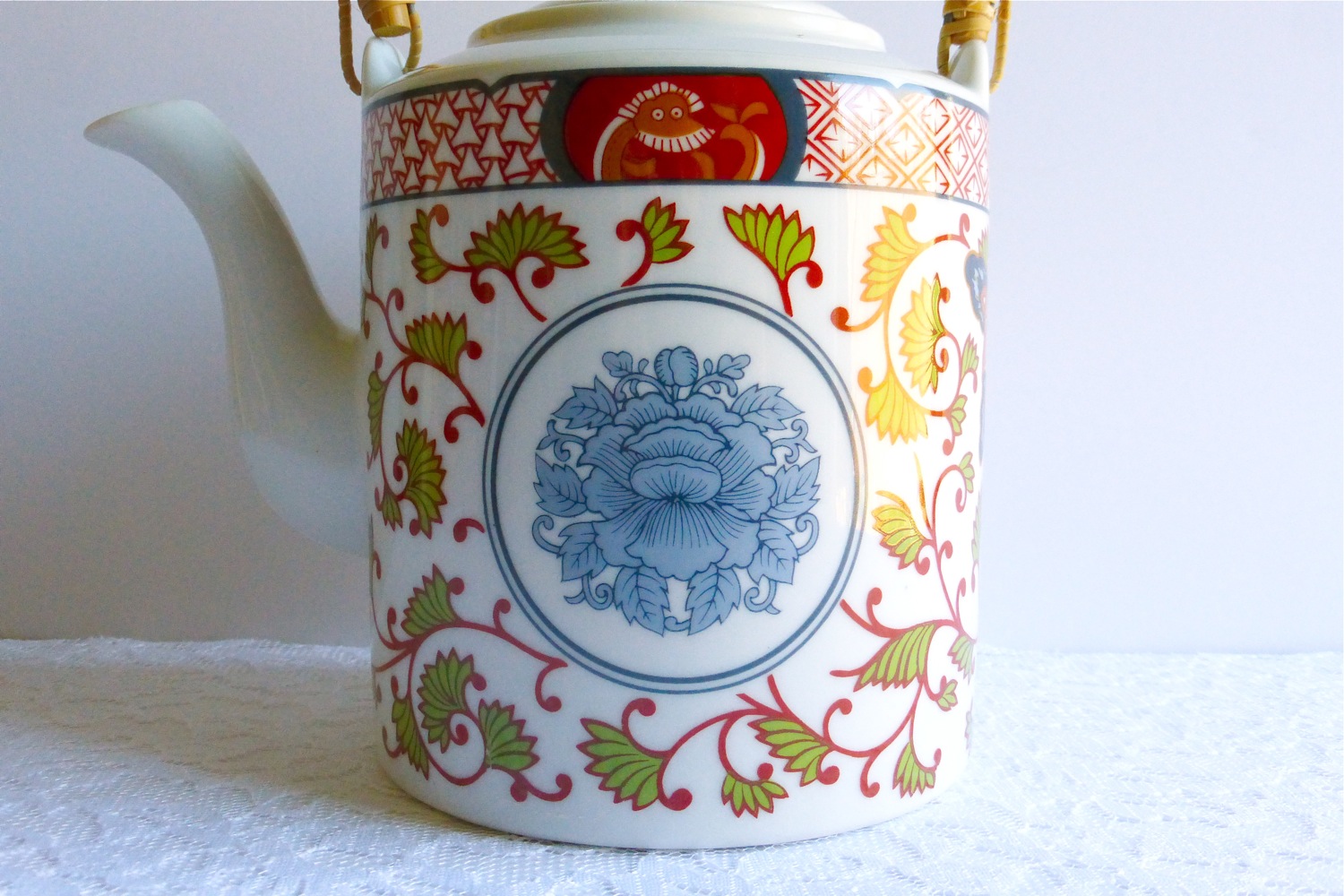
Hello friends! This past weekend I had the pleasure of saying goodbye to another piece of vintage tea ware when Marie in California purchased this lovely Georges Briard 'Peony' teapot from my Etsy shop Vintage Tea Treasures.

Georges Briard Peony teapot, vintage Georges Briard Peony teapot, Georges Briard Imari teapot, midcentury modern teapot, vintage Imari teapot, vintage blue peony teapot, vintage stylized peony teapot, vintage Imari teapot, Japanese Imari teapot, reproduction Japanese Imari teapot

Ukrainian born American designer Georges Briard (1917-2005) came to the United States from Poland in 1937. After earning an MFA at the Art Institute of Chicago Briard began what would eventually become a successful career in commercial home ware design. His style is best described as whimsical and modern with a touch of elegance.

I'm sure you would agree that this 'Peony' teapot, with its dancing green leaves outlined in red, its fully bloomed stylized blue and red peonies, and the abstract red and blue border pattern all serve to incorporate the above described design qualities.

Georges Briard Peony teapot, vintage Georges Briard Peony teapot, Georges Briard Imari teapot, midcentury modern teapot, vintage Imari teapot, vintage blue peony teapot, vintage stylized peony teapot, vintage Imari teapot, Japanese Imari teapot, reproduction Japanese Imari teapot

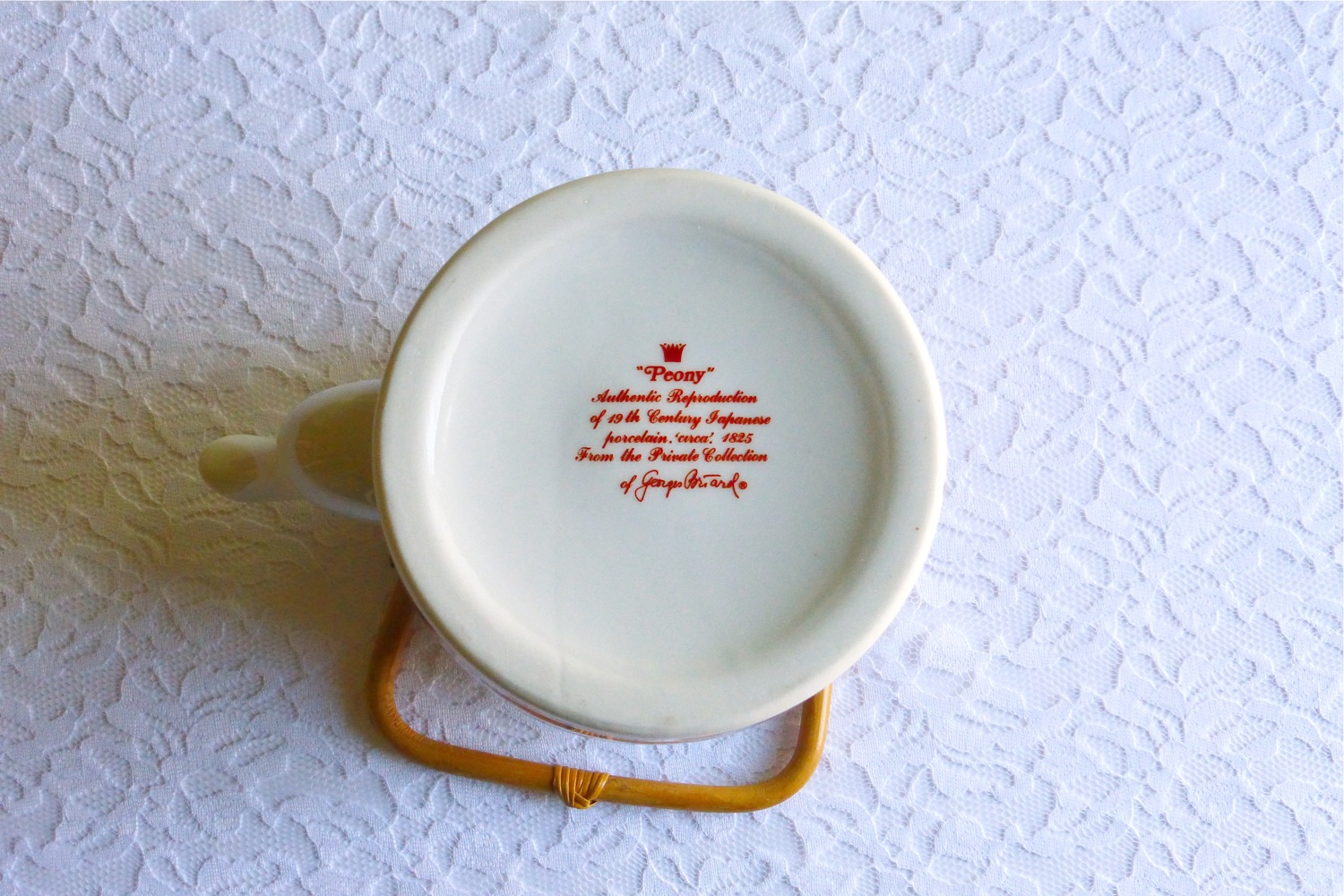
Furthermore, according to the inscription on the bottom of the teapot, this design is Briard's homage to a traditional 18th century Japanese design known as Imari.

Georges Briard Peony teapot, vintage Georges Briard Peony teapot, Georges Briard Imari teapot, midcentury modern teapot, vintage Imari teapot, vintage blue peony teapot, vintage stylized peony teapot, vintage Imari teapot, Japanese Imari teapot, reproduction Japanese Imari teapot
   
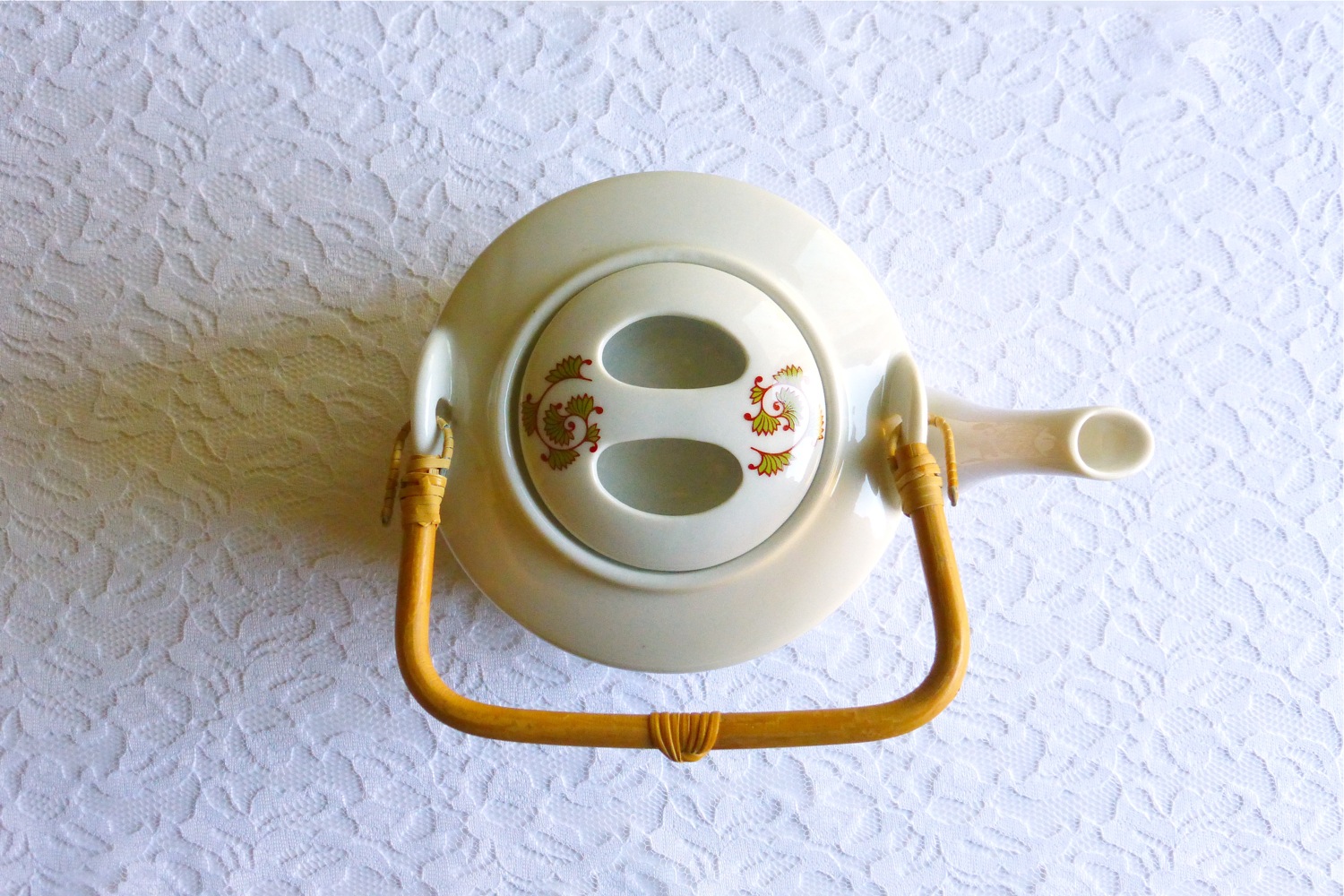
An interesting feature of the teapot is Briard's modern twist away from the traditional teapot lid. The lid lays flat within the top opening and has two grasp holes.

Georges Briard Peony teapot, vintage Georges Briard Peony teapot, Georges Briard Imari teapot, midcentury modern teapot, vintage Imari teapot, vintage blue peony teapot, vintage stylized peony teapot, vintage Imari teapot, Japanese Imari teapot, reproduction Japanese Imari teapot

And the classic bamboo handle reminds me of all the Japanese teapots I've ever had over the years.

I hope you've enjoyed this small peek into a whimsical, modern and elegant piece of vintage tea ware as well as learning a little something about its designer and historic design influence.

If you love midcentury modern home ware design, and would like to see more of Georges Briard's creations, I made a Georges Briard Pinterest board just for you.

And, if you are interested in purchasing any of the items in my Etsy shop Vintage Tea Treasures, you can save 10% off your purchase with code PLUMBLOSSOM10.

Thank you for reading!
SHARE:

Wednesday, May 8, 2019

Design Spotlight: Vintage Haeger Pottery

Haeger Potteries, Inc., Haeger pottery, vintage Haeger pottery, Haeger floral containers, Haeger planters, Haeger USA, vintage Haeger pink planter, Haeger 3770 pink planter, vintage Haeger earth toned brown floral vase, Royal Haeger, tall brown vintage Royal Haeger flower vase, vintage Royal Haeger

In 1871, the same year of the great Chicago fire, German immigrant David H. Haeger became a part owner in the Dundee Brickyard. The brickyard was located along the clay-rich banks of the Fox River, 45 miles northwest of Chicago, in Dundee, Illinois.

Although just a small town volume brickmaker, Dundee Brickyard contributed significantly to the rebuilding of Chicago by firing the first of millions of bricks needed to help rebuild the city.

In their desire to transition the company from brick making to the production of artisan wares, David Haeger and his son Edmund H. Haeger began planning their future development. Over the next thirty years David Haeger expanded the business by adding two more brick and tile factories to his holdings.

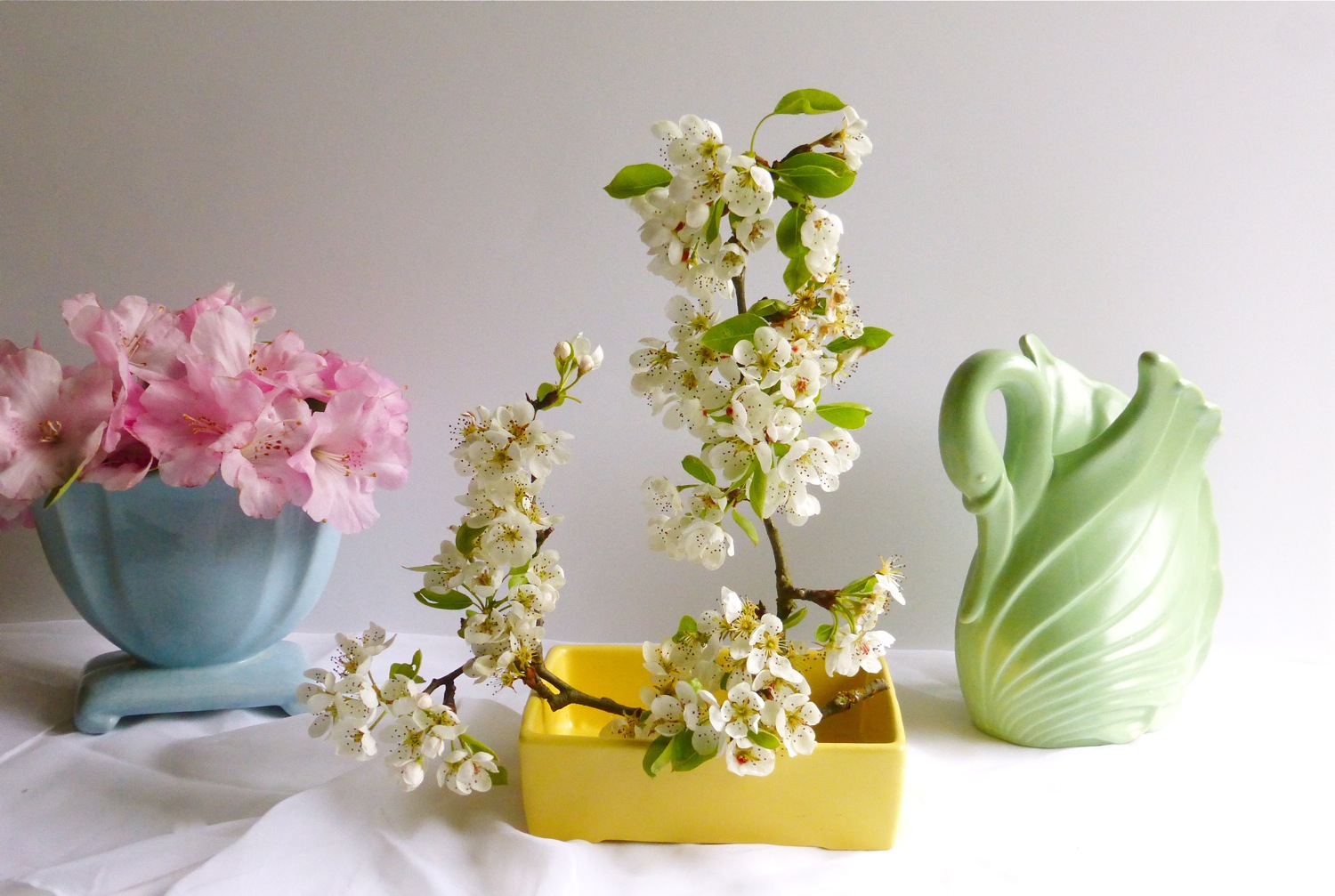
Haeger Potteries, Inc., Haeger pottery, vintage Haeger pottery, Haeger floral containers, Haeger planters, Haeger USA, Haeger blue fan shaped pedestal vase, Haeger blue fan shaped pedestal floral conttainer, Haeger 3470 yellow ikebana container, Haeger 3470 yellow planter, Haeger mint green swan vase, Haeger pastel green swan floral container, Haeger bird vase, vintage Haeger swan

When David Haeger passed away in 1900 the company was already producing simple red clay flower pots for the florist trade. With David's passing Edmund took over the management of the business and transformed Haeger Bricks into Haeger Potteries.

By 1912 Edmund introduced a more sophisticated line of glazed art ware incorporating fine design and craftsmanship. When a shipment of the new pottery arrived at Chicago's premiere department store, Marshall Field and Company, it was widely accepted. 

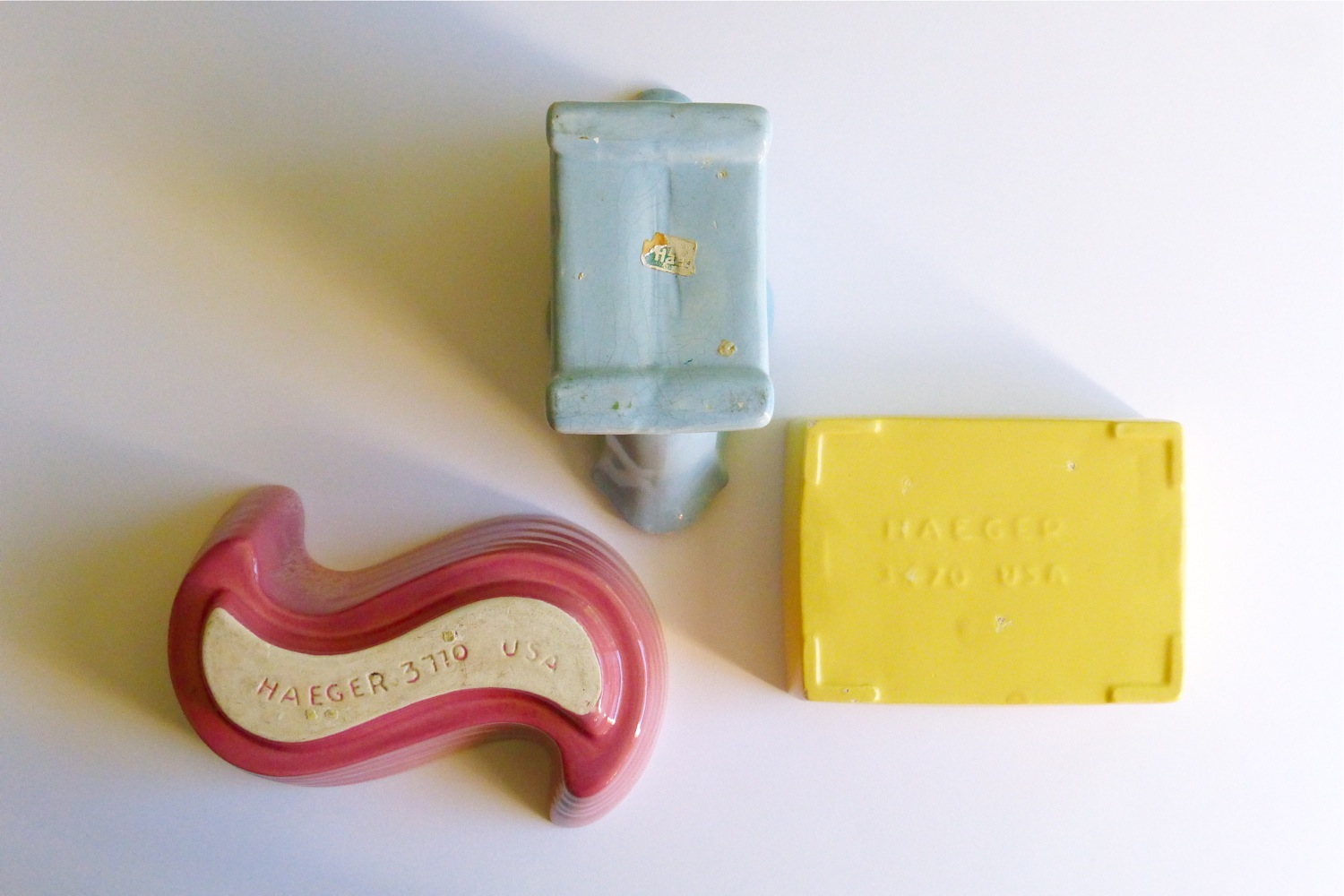
Haeger Potteries, Inc., Haeger pottery, vintage Haeger pottery, Haeger floral containers, Haeger planters, Haeger USA, vintage Haeger pink planter, Haeger 3770 pink planter

In 1919 Edmund doubled the factory output by purchasing the Dundee pottery business from the family holdings and adding another kiln.

By the 1920's production included tea ware, luncheon ware, crystal and glassware.

In 1939 Haeger Potteries, Inc. took over another pottery factory located in Macomb, Illinois, about 200 miles southwest of Dundee, and converted the output to art ware. A second kiln was added to the Dundee plant in 1941.

A pivotal moment in the history of Haeger Potteries occurred in 1934 when Edmund Haeger built a complete working ceramic factory on the grounds of the Chicago World's Fair 'Century of Progress' exhibition. Indeed, the fair was an historic event for a city that just 50 years earlier had burned to the ground. Furthermore, the city's reunion with the once volume brick maker turned art pottery business, which played an important role in helping to revitalize Chicago, is highly notable.

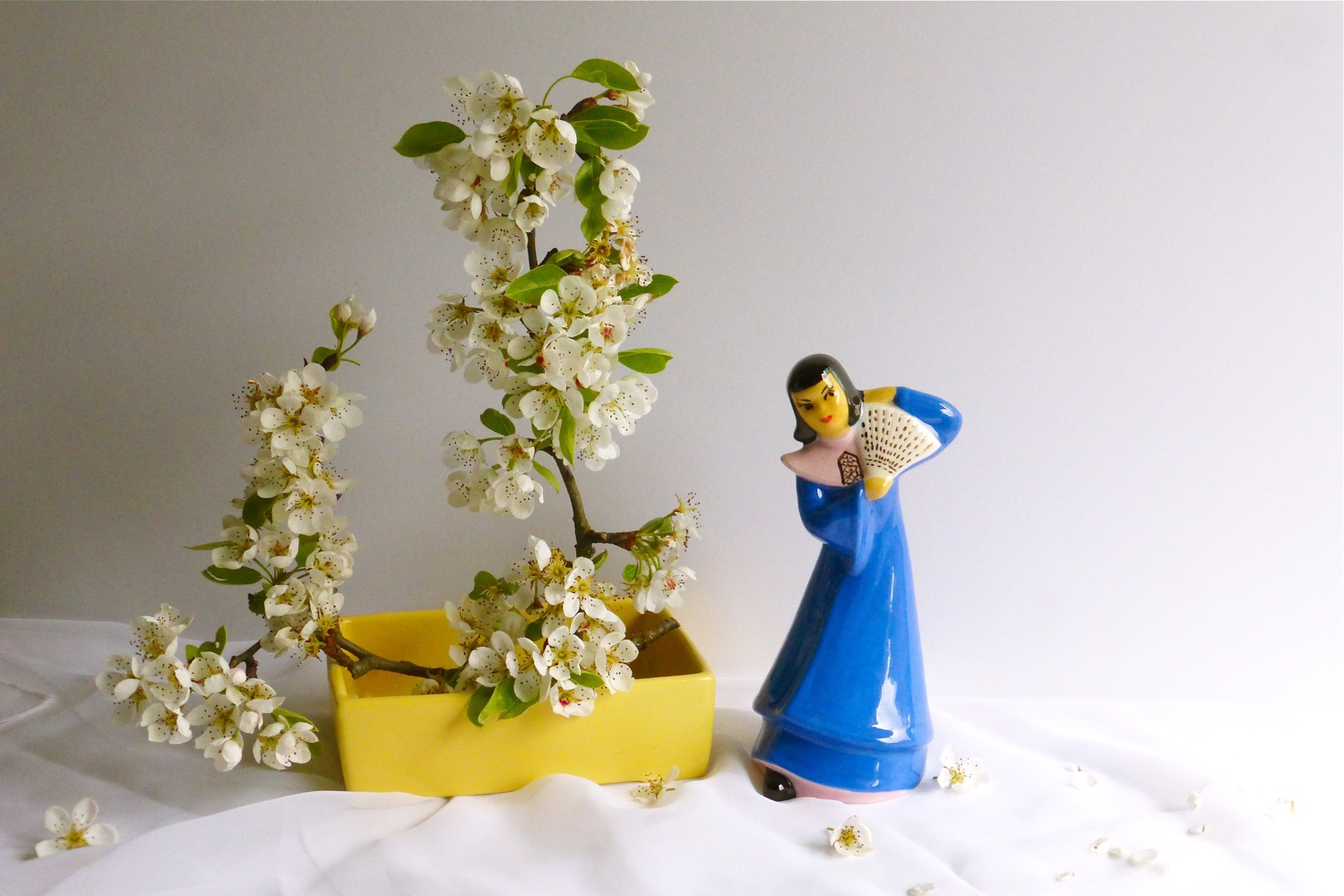
Haeger Potteries, Inc., Haeger pottery, vintage Haeger pottery, Haeger floral containers, Haeger planters, Haeger USA, Haeger 3470 yellow ikebana container, Haeger 3470 yellow planter

More than four million visitors attended the exhibit. There were demonstrations of both ancient and modern production techniques and the factory produced commemorative souvenirs.

Over the years there were several prominent designers that contributed to the legacy of the Haeger Potteries line of art wares. For example, J. Martin Stangl worked with Edmund Haeger to develop commercial florist ware. Royal Hickman introduced the 'Royal Haeger' line featuring intricate smooth flowing lines and highly original glazes. His signature piece was a sleek elongated black panther, introduced in 1941. Eric Olsen contributed a red bull figure to the Royal Haeger line in 1955.

The work of the designers played a pivotal role in the growth and evolution of Haeger Potteries for many decades. Their creations helped to broaden the Royal Haeger range into exquisite vases, figurines, miniature animals, birds, flowers and lamps.

Haeger Potteries, Inc., Haeger pottery, vintage Haeger pottery, Haeger floral containers, Haeger planters, Haeger USA, vintage Haeger pink planter, Haeger 3770 pink planter, Haeger blue fan shaped pedestal vase, Haeger blue fan shaped pedestal floral conttainer, Haeger 3470 yellow ikebana container, Haeger 3470 yellow planter

Unfortunately, after 145 years of production, Haeger Potteries, Inc. succumbed to the economic pressures of our modern age and went out of business in 2016.

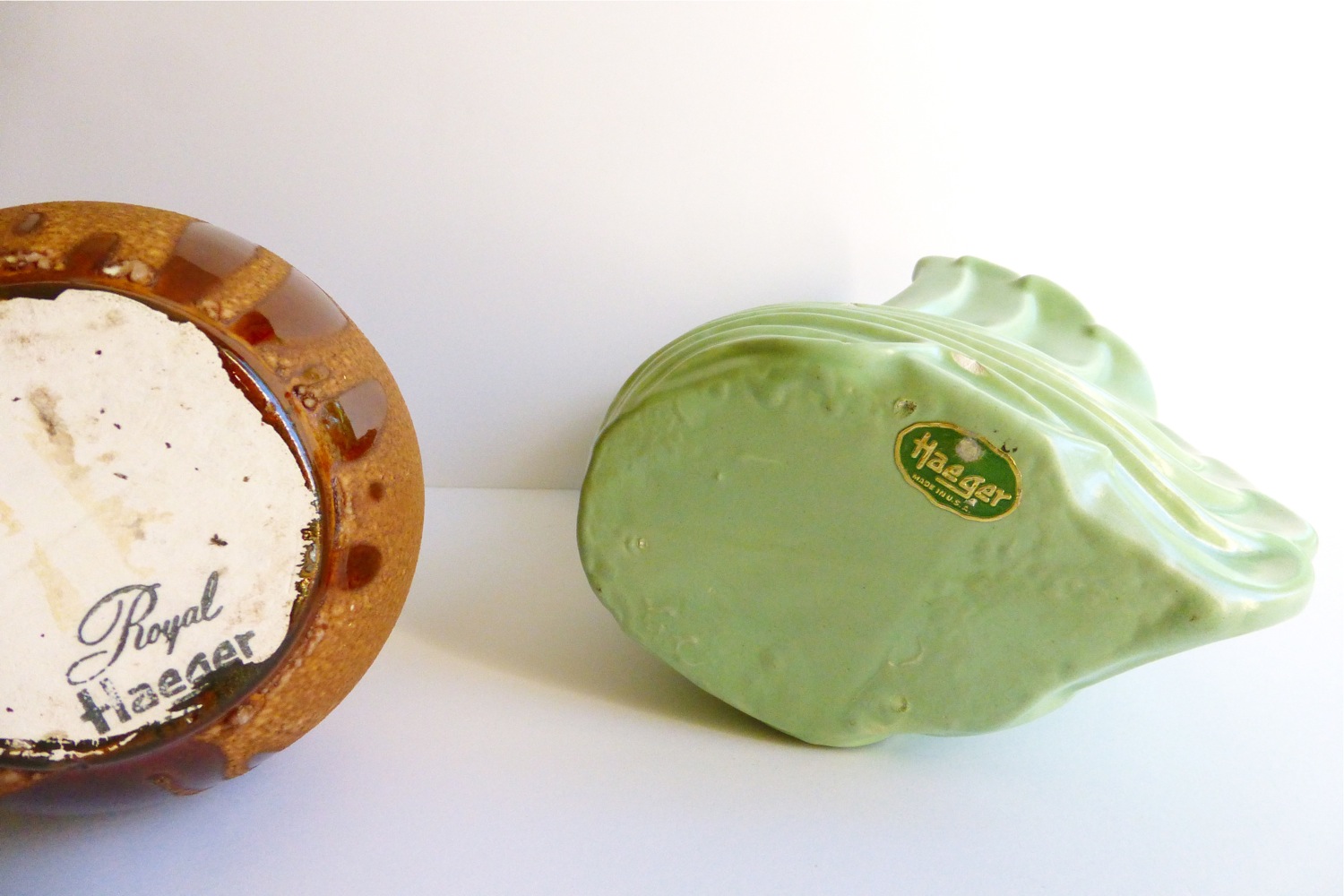
Haeger Potteries, Inc., Haeger pottery, vintage Haeger pottery, Haeger floral containers, Haeger planters, Haeger USA, vintage Haeger earth toned brown floral vase, Royal Haeger, tall brown earth toned vintage Royal Haeger flower vase, vintage Royal Haeger, Haeger mint green swan vase, Haeger pastel green swan floral container, Haeger bird vase, vintage Haeger swan

As an avid thrift shopper I have managed to find the few Haeger pieces shown here. I had fun arranging some 'urban foraged' spring blooms in them from my walk around downtown and in my neighborhood. I hope you agree that they do make lovely containers for all sorts of floral arrangements.

If you would like to see more containers similar to mine as well as vases, planters and even a few of their lamps, you may want to check out this Haeger Potteries Pinterest board I made just for you.

Do you have any vintage Haeger pottery? I'd love to hear about it.

Thanks for reading!

SHARE:

Wednesday, January 18, 2017

Vintage Tea Treasures: An Etsy Shop Update

Etsy vintage, Etsy seller, vintage Etsy, Etsy, vintage Fred Robert Company teacup and saucer, vintage Fred Robert Company San Francisco, vintage Noritake Rose China teacup, saucer and cake plate set, vintage midcentury Santa Anita Ware 'Vreni' coffeepot

Hi Everyone! It's a new month and a few more tea treasures have been added to my Etsy shop, and so that calls for a Vintage Tea Treasures update. 

The coffeepot on the left is a classic midcentury work of modern art. During the 1950's the Santa Anita Potteries in Los Angeles, California had their top stylist, Swiss designer Vreni Wawra, create a line of ceramic table ware that I'm sure you will agree is as timeless in its function, as it also is in style. Signed by the designer, this unique piece is surely a conversation starter!

Did you know that during the United States' occupation of Japan after World War II, the Noritake China Company was called Rose China? In the background is an on-trend white china trio, consisting of a footed teacup, saucer and cake plate, which features an elegant gold trim, and is backstamped 'Rose China' and 'Made in Occupied Japan'. The stamp itself includes greenery and a pretty rose. There are three trio sets available in the shop.

In the foreground is another example of fine Japanese ceramic craftsmanship: a delicate floral teatime duo by the Fred Roberts Company, featuring a beautiful tapered teacup. The Fred Roberts Company was a San Francisco, California based importer. Priced at just $15.00 plus shipping, this set is perfect for the lover of vintage chintz!

For all the details about any of these items, including sizes, prices and shipping costs, visit Vintage Tea Treasures on Etsy.

And as always, thank you for visiting Under The Plum Blossom Tree, and Vintage Tea Treasures!

  
SHARE:

Wednesday, January 11, 2017

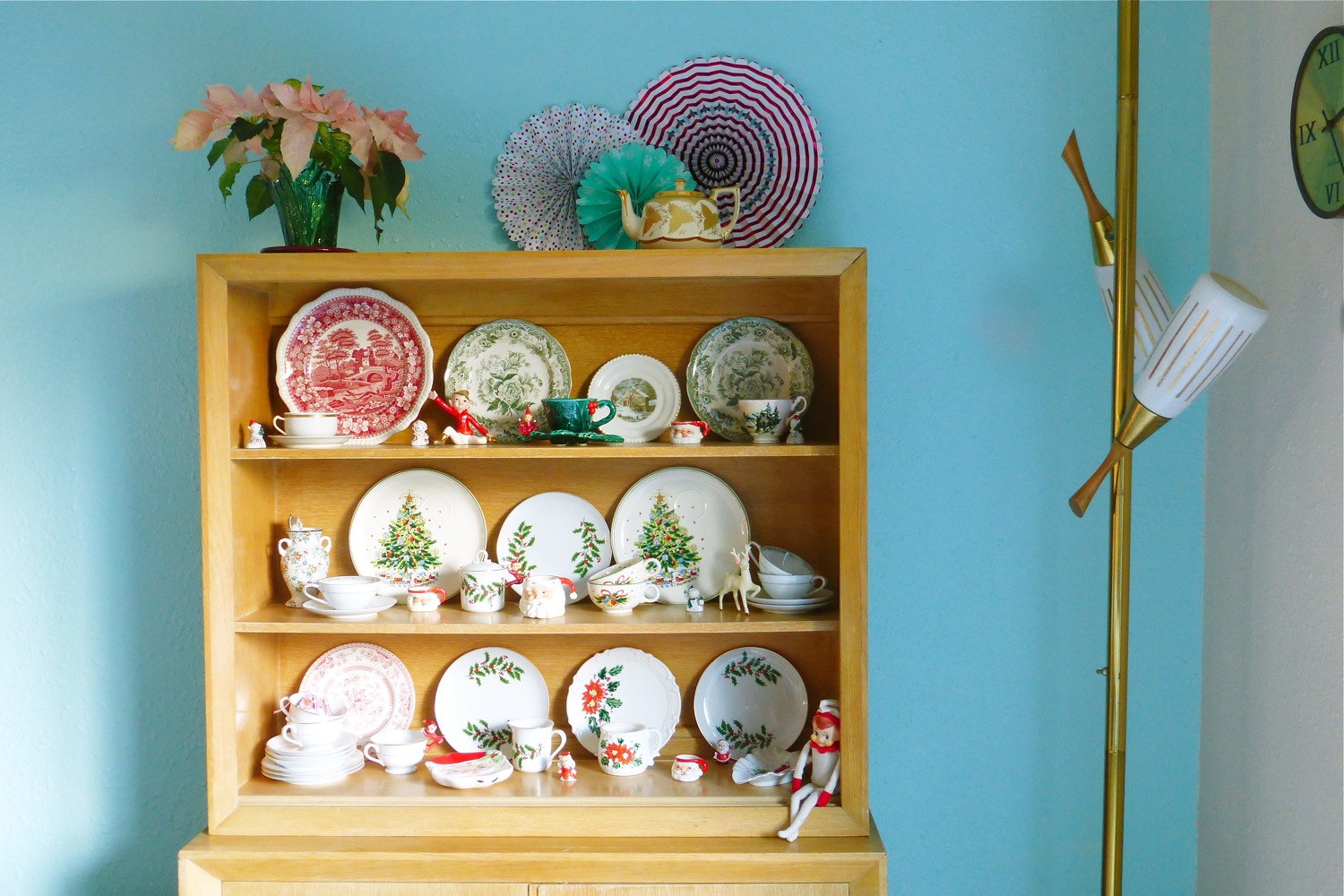
Styling A Vintage Hutch: The Christmas Season

James Mont Chinoiserie Hutch, Chinoiserie hutch, how to style a James Mont chinoiserie style hutch, styling the Christmas season

Hi Friends! Ever since I purchased a limed oak James Mont chinoiserie-style hutch last spring, I've been wanting to style it on a regular basis and share it here with you on this blog.

As it happened, 'Life got in the way', as it often does, and for the most part this hutch became a repository for various tea ware items offered in my Etsy shopWhile that's still true to some extent, this is my first attempt at purposefully arranging the collectibles in my hutch in a manner that more characteristically reflects who I am. After giving it some thought, I decided that a good approach would be styling through the use of pieces that vary in type, shape, and size, yet are still consistent in color and style. Luckily, I collect a huge variety of 'stuff', and I thought that picking items with my styling decisions in mind would be a fun challenge for myself!

James Mont chinoiserie limed oak hutch, vintage James Mont chinoiserie limed oak hutch, vintage chinoiserie hutch, styling a vintage chinoiserie hutch


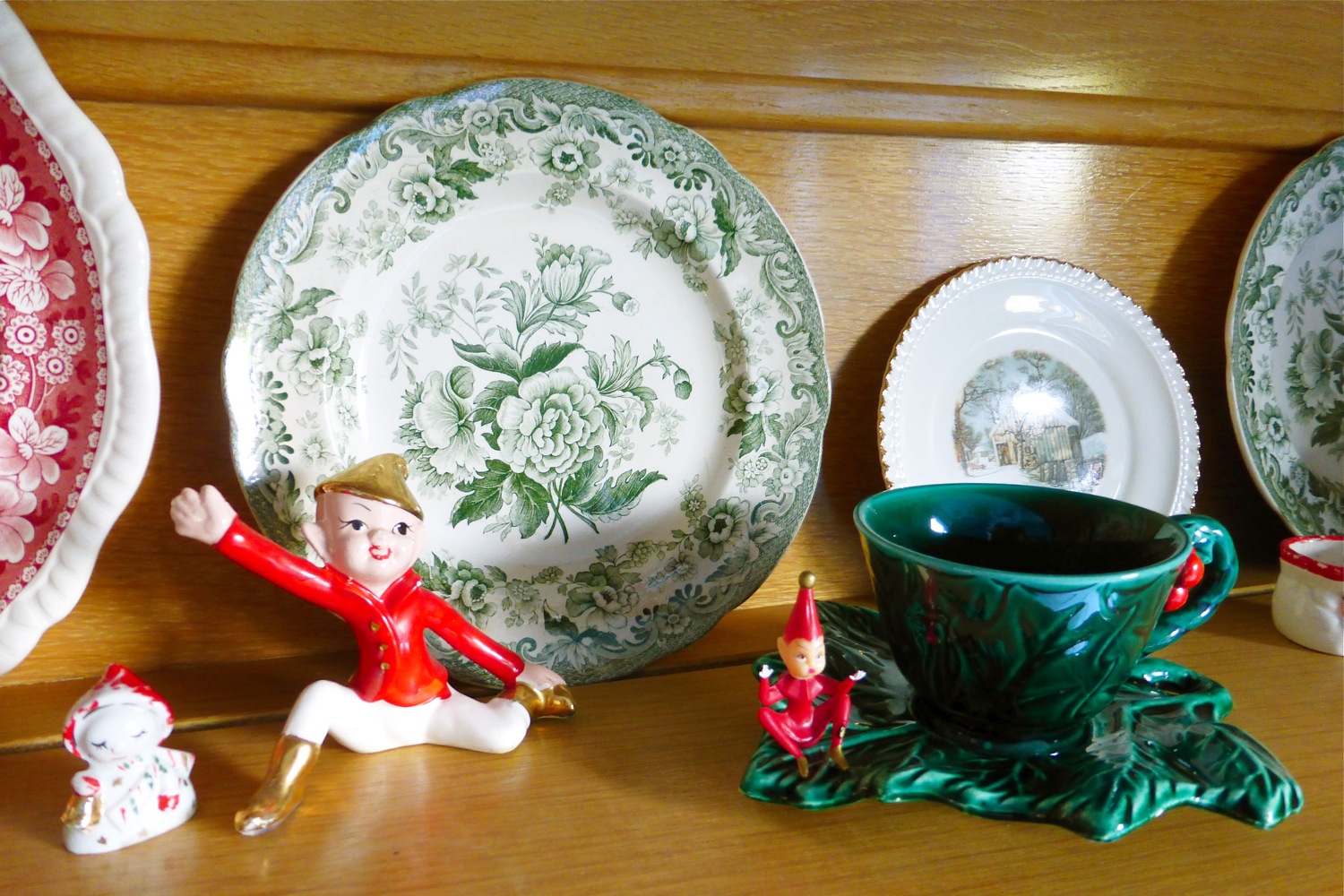
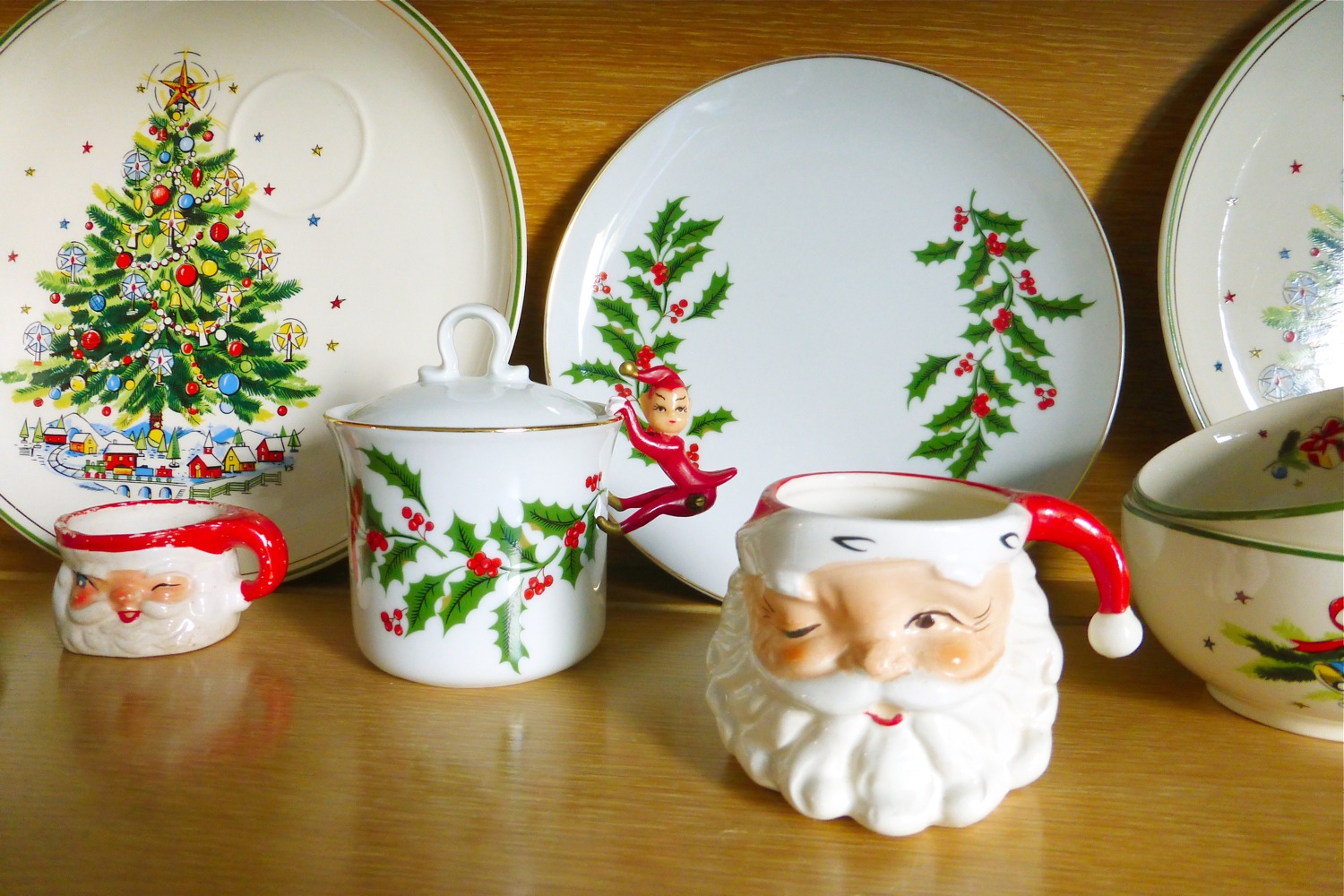
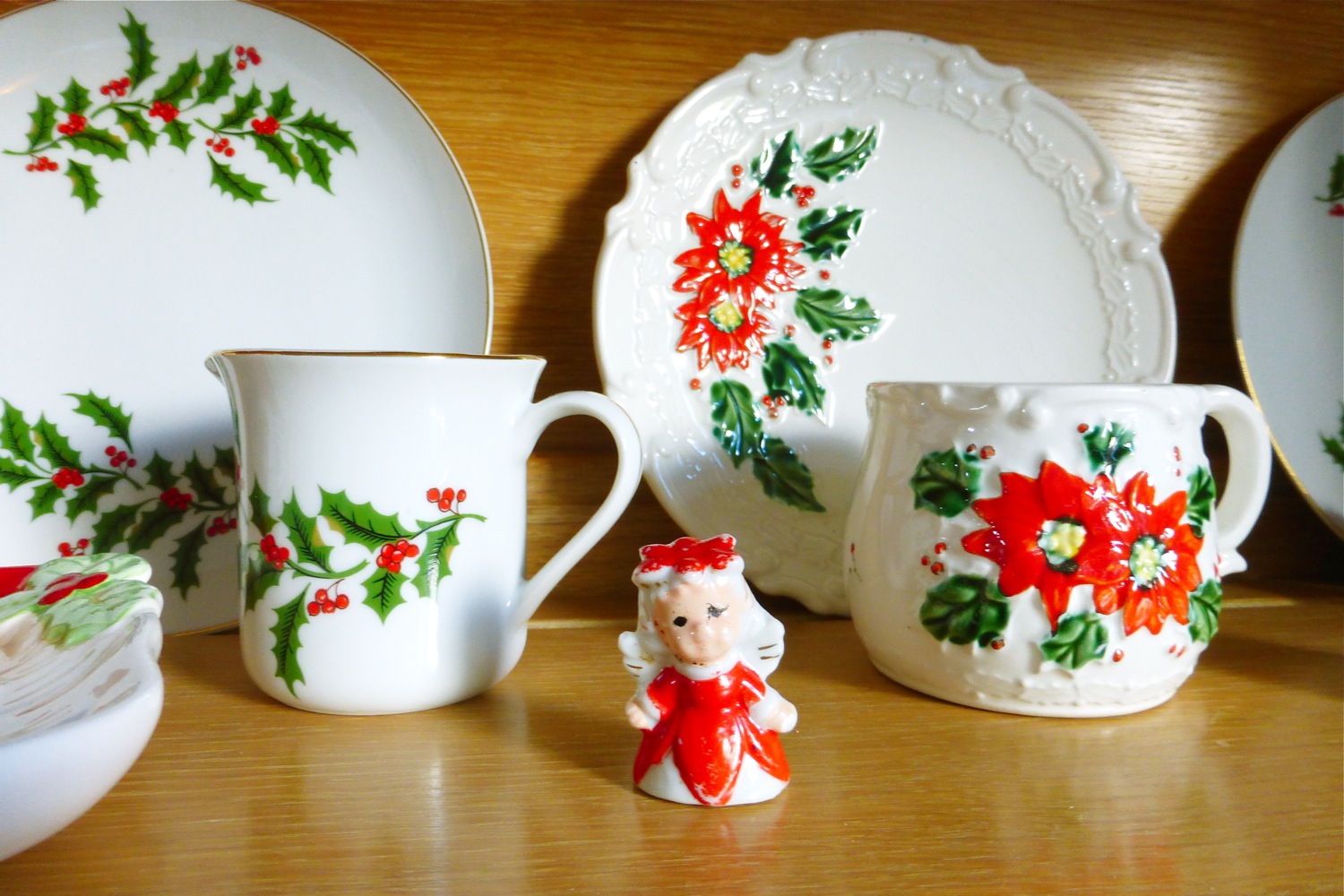
Choosing a color scheme of white, green and red, and a Christmas or seasonal theme, using all vintage items provided a consistent look. And having a variety of items - plates and teacups and saucers that vary in shape, size, and manufacturer - helped to tie together a miscellaneous collection of fun Christmas kitsch, such as the Santa mugs, elves and guest card holders (like the small 'Mrs. Claus' figurine), into a harmonious whole. Adding a touch of the modern world is a great way to bridge the past with the present; the paper fans (purchased at a Target department store) and the poinsettia plant displayed alongside a vintage teapot on the very top of the hutch help to accomplish that.

Here are a few close up shots, one from each shelf:

James Mont Chinoiserie Hutch, Chinoiserie hutch, how to style a James Mont chinoiserie style hutch, styling the Christmas season


I enjoy recording family memories, and took these photographs on Christmas Eve as part of a holiday story for a pocket photo album project. And now that I have taken down all of the Christmas decorations, and also begun putting away most of the items pictured, I realized that the photos I had taken were the beginnings of a new blog post series on styling a vintage hutch! And now, I can begin the process of figuring out what will go on these shelves next. What fun!

Thanks for reading. Soon, I hope to be able to once again share another post featuring the styling of my vintage James Mont hutch.


SHARE:

Wednesday, December 14, 2016

Vintage Tea Treasures: An Etsy Shop Update

Vintage Tea Treasures on Etsy, Spode's Tower Pink Transferware 10 3/4" dinner plate, Viktor Schreckengost Christmas Eve Snack Sets, M8 26 Christmas poinsettia teapot USA, vintage tea party, vintage tea ware, classic vintage tea ware, classic teatime teaware

Hello Friends! Tea and cake is a timeless tradition. Equally timeless are the one of a kind vintage and antique tea treasures you can find in my Etsy shop, Vintage Tea Treasures. Here's a quick update on a few of the holiday themes and colors currently for sale over there:

Collecting vintage can be especially fun when you not only mix and match your pieces, but repurpose as well. The antique Spode transferware 10 3/4" plate, pictured above center, was originally a dinner plate, but it also makes an attractive serving plate for a 6" holiday chocolate cake.

Tea and cake, or maybe tea and cookies - either way, the whimsical pair of Viktor Schreckengost Christmas Eve snack plate and tea cup sets, to the left and right of the Spode plate, are sure to please children of all ages!

Lastly, a unique cube-shaped 'M8 26' teapot, made in USA, featuring a lovely poinsettia-spray decal and an Asian inspired natural woven rattan handle. A lovely addition to a holiday vintage tea party. With a capacity of 40 ounces, you'll be able to make about six 6 oz. cups of tea. Just $15.00 plus shipping. [Update 12/17/16 - SOLD]

For all the descriptive details, prices and shipping information on these and other distinctive items for sale, visit Vintage Tea Treasures on Etsy!

Thank you for stopping by!


SHARE:

Thursday, December 8, 2016

Vintage Finds: Christmas Bits and Bobs

Vintage Finds, thrift store vintage, Christmas vintage finds, vintage Christmas decorations, vintage holly teacup and saucer, vintage made in Japan tree ornaments, vintage Josephs Originals, Joshephs Originals, Josephs Originals Santa decorative dish, Josephs Originals santa decorative dish, vintage Lefton China, vintage Lefton made in Japan, vintage Lefton soap dish, vintage Lefton Christmas soap dish, Target Wondershop paper fans, Target Wondershop Christmas paper fans, Target Wondershop Christmas decor, Target Wondershop holiday decor, Target Wondershop brightly colored paper fans

Hi Friends! Where has the time gone? I intended to share a few of my latest Vintage Finds last month, but November slipped by and I never got the chance.

Now that it's December, I'm excited because it's that time of year when the volunteers at my favorite local charity shop, Assistance League of Eugene, have stocked their shelves with loads of holiday decor, including some fun vintage Christmas bits and bobs. Also, every December the Assistance League sells tickets to their exclusive holiday event, giving its patrons a chance to shop the newly stocked holiday merchandise before the general public. And the best part, of course, is that the Assistance League serves children in need through several philanthropic programs, such as Operation School Bell, Children's Dental Center, and Operation Heritage.

So here's a quick post with the items I've found so far:

The star of the show in this vignette is the stylized holly teacup and saucer. What a wild thing, right? I love the unusual texture and the dark green color - a quintessentially 1950s shade. Unfortunately there is not much information about who made it. The saucer has a 'U.S.A.' incised stamp and the bottom of the teacup is stamped '1363' in ink. This set will definitely be showing up in my Instagram feed soon! Laying on the saucer is a '50s Lauffer teaspoon made in Norway. It features a classic midcentury modern design coupled with a primitive style wood handle. This spoon is part of a cutlery set which has not only the usual knife, fork and teaspoon, but also salad forks and soup spoons.   

The pair of colorful birds and the 'snowgirl' in the yellow dress are tree ornaments made in Japan. Each of the three ornaments shown has a hard plastic body covered with a stiff colored fabric. The feathers and eyes of the birds are made of felt that has been pieced together and glued on, and their beaks are a hard plastic, also glued into place. The dress and orange hat of the snowgirl are also made of felt, plus she has a cute pink pearl nose and painted-on eyelashes. I love how little ornaments such as these have a very homemade look and no doubt, a lot of handwork was involved in their making.

The glass ball ornaments were all made in USA except for the little pink one on the bottom left, which was made in Japan. Here's a cleaning tip about these old relics: to remove dust, dirt and other debris, very gently wipe them with a soft dry cotton cloth only! I learned the hard way that if you try to clean these with a wet sponge, you may actually remove the painted finish!

And lastly, two decorative dishes: The jolly Santa with the friendly eyes is a Josephs Originals, made in Korea. The leaf shaped dish on the right, featuring a child dressed in a festive red outfit carrying sprigs of holly, is a hand painted soap dish, made by Lefton China, in Japan.

Oh, and if you are wondering about the three paper fans, I got them at Target last week. Definitely not vintage! I enjoy mixing vintage and modern. 

As always, thanks for stopping by, and I'll see you next time, for more Vintage Finds!


SHARE:

Sunday, October 23, 2016

Vintage Finds: Colorful Roosters!

vintage California pottery, vintage pottery made in California, vintage made in California orange rooster wall pocket, vintage rooster wall pocket, vintage wall pocket, vintage Norcrest battling roosters, pair of vintage Norcrest rooster wall hangings, 2 vintage Norcrest rooster wall hangings, two vintage Norcrest multicolored rooster wall hangings

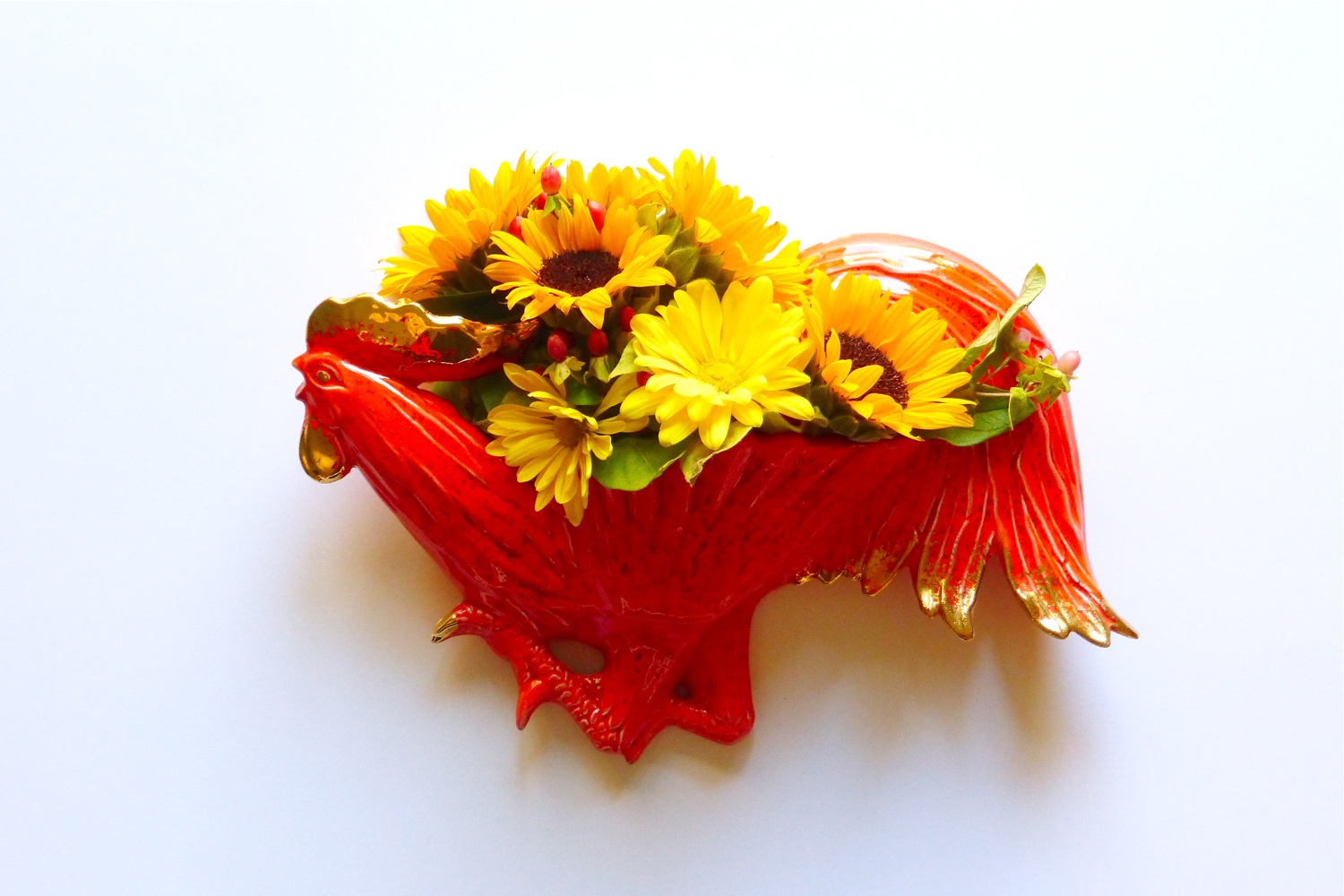
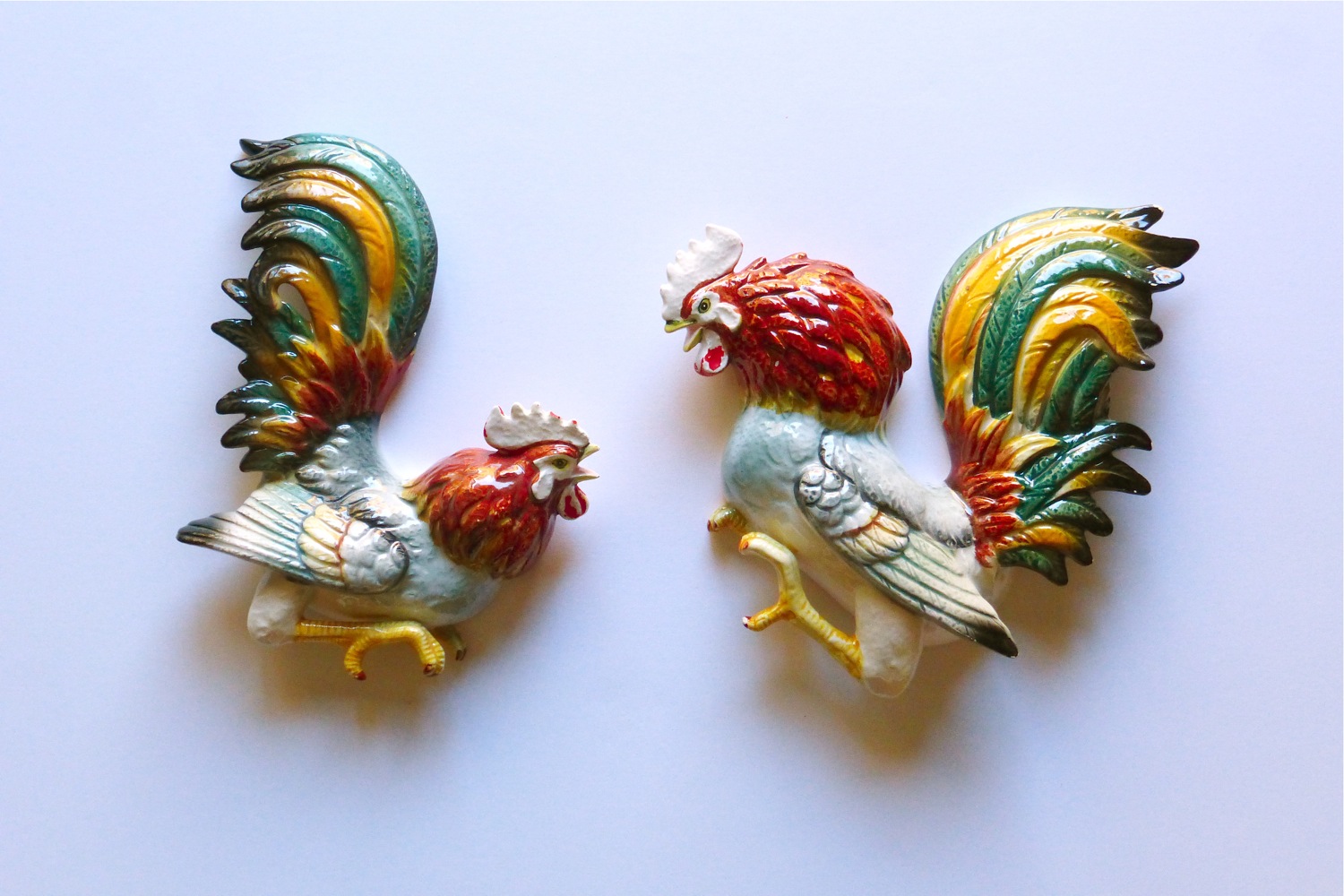
Hi Friends! Here in Oregon, we've already had the change of seasons, and it's been cloudy and grey and raining for over a week straight, so let's have fun with some rich autumnal colors and tones, to balance it all out. October's Vintage Finds is a colorful rooster theme; a pair of Norcrest ceramic wall hangings on the left are a recent find while the large orange California pottery wall pocket rooster was purchased awhile back. Although very different in style, shape, color and manufacturer, the subject matter is quite interestingly similar.

Once upon a time here in the United States, decorative household ceramics production were very popular, a trend beginning in the 1930s and lasting through the 1960s. During that time, Los Angeles, California was the largest center for makers of colorful ceramics, with as many as 300 manufacturers in those early years. After World War II began, imports from Europe and Asia were discontinued, and the California ceramics industry reached its pinnacle in the post war era with over 800 small family and larger company businesses in existence. In the 1950s the US began importing ceramic wares again, leading to a decline in the number of California potteries. Sadly, only a few have survived into the 21st century. 

No doubt, this abstract orange rooster was made during the post war heyday of the California pottery makers. It bears an impressed stamp that says 'Made in Calif. USA' along with three letters which are hard to read. It looks like 'CHP' - California something Pottery? What attracted me to this rooster was its modern abstract design, and the fact that it functions as a wall pocket, which allows for some fun floral arranging, resulting in a captivating statement piece!

vintage made in California abstract orange rooster wall pocket

Norcrest China Company has its roots right here in the state of Oregon. The story begins with Hide and Fukiye Naito, who emigrated to America in 1912 from Tara, Japan, a farming community near Tokyo. The couple had two children, Bill and Sam, both born in Oregon. 

In 1920, Hide opened a Japanese imports shop on Washington Street in Portland, selling Japanese goods to the general population, which was considered unconventional at the time because Japanese owned businesses were usually only located in Japan-town, and sold their goods to other Japanese. When the Depression hit, Hide's business savvy was in full gear, running a variety of different small businesses, while at the same time expanding the import business. In 1938 Mr Naito opened an import warehouse in Portland, which at the time was a major West Coast seaport. 

Once the United States entered into World War II, Japanese families, including the Naitos, were forced to give up their homes and businesses and were relocated to internment camps in various isolated areas around the western interior. Although the Naito family was scheduled to go to one of these camps, they were instead allowed permission to go to Utah and live with family.

After the war, the Naito family returned to Portland, and Hide and his son Sam reestablished their family business, which became known as Norcrest China Company. Interestingly, one of the ways in which Sam worked to reestablish their business was to bring pottery up to Oregon from California, most likely sourced  from those very same pottery concerns from which my abstract orange rooster came from! The family continued importing goods from Japan, and due to popular demand for English tea ware, they also began importing bone china teacups and saucers from the United Kingdom.

In the 1960s Hide's son Bill expanded Norcrest China Company into several other businesses, including the "Made In Oregon" retail stores and Import Plaza. These holdings allowed the Naitos to invest in Portland's run-down area then known as "Skid Road", revitalizing the district that they then renamed Old Town. Bill's son Bob joined his father after finishing college, and together they worked on other historic development projects in the Portland area. Bill Naito died in 1996 and Bob has carried on his fathers legacy of historic preservation and sustainable development.    
Considering the humble beginnings this pair of Norcrest stylized dueling roosters represent, I've come to appreciate their striking dynamic appearance, kitschey energetic design and rich color palette even more. I'm already very fond of Japanese vintage collectables, and now look forward to finding additional Norcrest pieces.
  
Norcrest China Company, vintage Norcrest China Company, vintage Norcrest roosters, pair of vintage Norcrest roosters, vintage Norcrest China Company roosters, two vintage Norcrest China Company roosters

Thank you for letting me share my favorite vintage finds. See you next month! 
SHARE:

Saturday, June 4, 2016

Vintage Finds: c.1950 James Mont Chinoiserie Limed Oak Hutch

mid century modern, mid century, James Mont, James Pess, Demetrios Pecintoglu, James Mont Chinoiserie Limed Oak Hutch, oriental hutch, asian styled hutch, blonde 1950s hutch, mid century blonde hutch, vintage hutch, vintage oriental hutch, mid century oriental hutch, limed oak mid century hutch, Asian style furniture, Chinoiserie, Oriental, Oriental Spice,

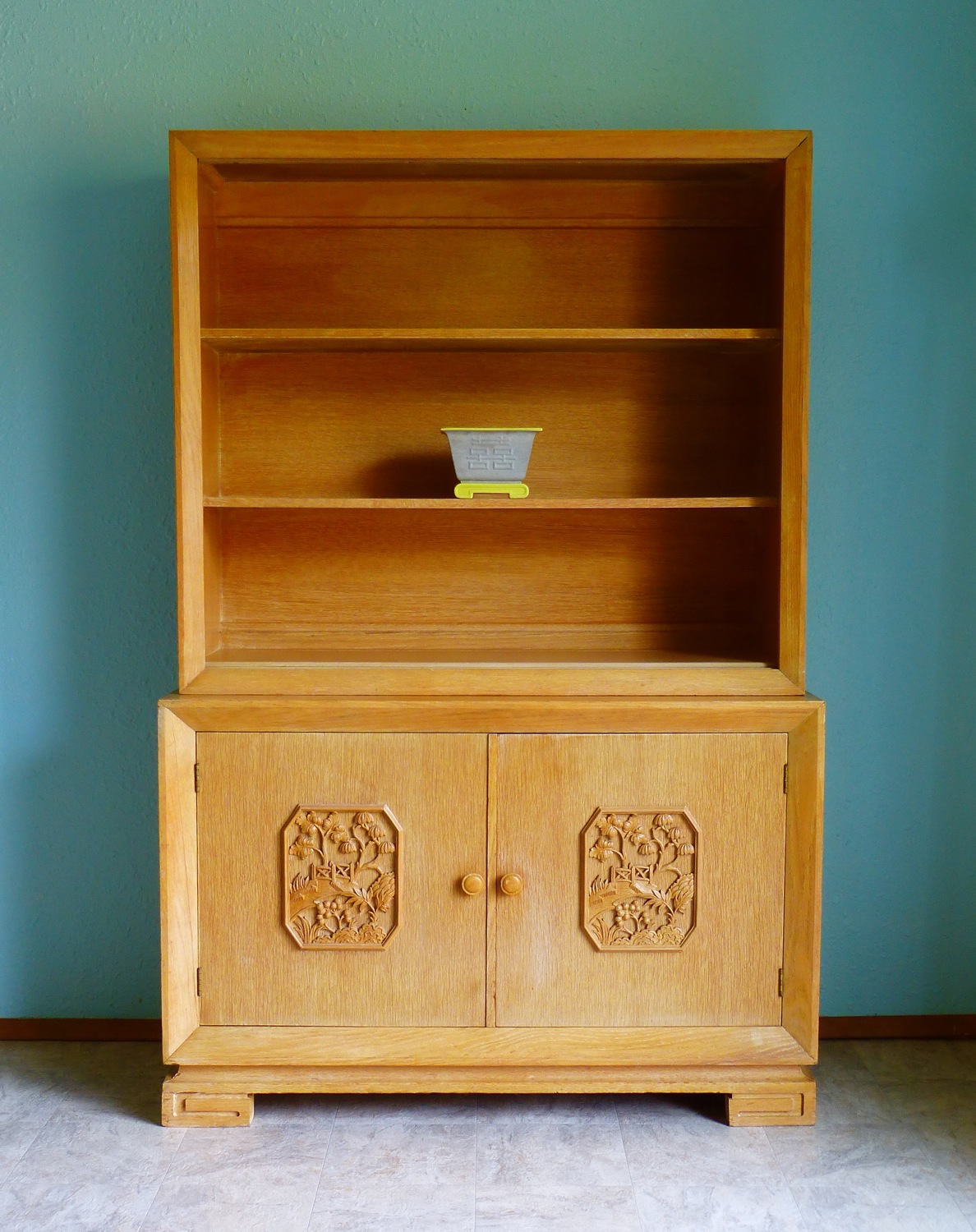
Hello vintage lovers and collectors! Have you ever dreamt of owning a certain piece of furniture, in a distinct style from a particular era, and wondered if you would ever find it? That's been me, for the past twenty years. When I first started getting serious about collecting vintage, I saw an ad in a 1950s magazine that featured a blonde finish dining room suite, and all of the matching pieces had beautiful Asian decorative elements. I was immediately drawn in and knew that this was my dream furniture.

Last week as I was poking around in one of the charity shops downtown, I saw a gem of a hutch tucked sideways in amongst several pieces of run of the mill, nondescript furniture. I walked over to it to get a closer look, and for a moment I stood there awestruck, not believing what I was seeing! I ran my hands over the wood, felt the finish, looked closely at the construction, all in an effort to determine the quality and condition of this unique piece of furniture. My conclusion was that it was well constructed and just needed a bit of elbow grease. What sweetened the deal for me was that it was on a half price sale! 

I was tempted to buy the hutch on the spot. Instead, I brought the story of my discovery home to James and the next day we went to take a good hard look at it and make the decision together. We weighed the pros and cons of this purchase:

PROS:
  • It has 'good bones'
  • There is no major damage to the wood
  • The decorative appliques on the bottom doors are perfectly intact
  • The doors function perfectly

CONS:
  • The sliding glass doors on the upper shelf section are missing
  • There are no labels, tags or identifying marks of any kind
  • The top of the enclosed cabinet section has glue residue and several mystery screw holes and it is not clear what these were for 
  • It was pretty darn grungy!

James agreed with my initial impression that this hutch was indeed a well-crafted piece of furniture that just needed some loving care. I gladly paid $87.50 and made the arrangements to come back the next day to pick it up, which was the Saturday of the Memorial Day weekend. 

I happily spent the next couple of days gently wiping away over six decades of accumulated dirt with a sponge dipped in a mild wood cleaning soap solution, followed by furniture polish applied with a soft cloth. By Monday afternoon, the cleaning process was done and I took the above photo, and since then I've been working on styling the shelves, so stayed tuned for the month of June's Styling The Seasons! 

It took several Google searches before I finally found a very similar, almost exact duplicate piece in their image database. According to the internet, this is a Limed Oak Chinoiserie Hutch by James Mont - a notoriously infamous East Coast furniture designer, decorator, and underworld figure who was active from the 1930s to the 1960s. Not only did I find an image of this same piece, but I also discovered that the hutch came in two sizes, of which mine is the smaller one, and were part of a collection that also included a credenza and matching table and chairs. The more I looked at the images I found on the internet, the more I think that this was the same dining set that I saw in that 1950s magazine oh so long ago! After studying the photo of the original, it became obvious that there was a short base piece between the upper shelf and lower cabinet portions of the hutch, missing from my new old find - hence, the glue residue and screw holes in the top of the lower piece. 

Overall, I'm very happy with this hutch - it's not perfect, but I love it! Now, how about some new wallpaper on the wall behind it?

   
SHARE:

Friday, May 13, 2016

Vintage Finds: Gimme Those Blues!

Noritake Folkstone Lilac, Noritake, Folkstone, Lilac, mid-1970's stoneware, stoneware, Indiana Glass Company, Colony Park Lane, Indiana Glass Company goblets, Park Lane by Colony goblets, Colony Park Lane goblets, Park Lane water goblets

Hi friends! Thanks for stopping by for another edition of Vintage Finds. Today we're looking at two 'Folkstone' stoneware plates (left), featuring the Lilac pattern made by the Noritake Company from 1972-78. And to the right, is a pair of Indiana Glass Company water goblets in their Colony Park Lane pattern, manufactured from 1957 until the mid 1970s.

The Noritake Company has a long history in the United States, from their humble beginnings in New York City as the Morimura Brothers import goods store in 1876, to the world famous tableware brand it is today. What strikes me about this pattern, with its big, bold, colorful design, is the abstract, painterly quality of the flowers. The brushstrokes look hand painted and remind me of traditional Asian brush painting. Note the beautiful distinctive blue band around the perimeter of the plates, encompassing the energetic and free form dancing lilacs.

The Colony goblets are one of six shapes produced by Indiana Glass. They also made a wine goblet which was a bit smaller than these water goblets, as well as juice glasses, champagne or sherbet glasses, and cocktail and cordial glasses. All were made in several colors - gold amber, olive green, clear crystal, blue, and 'gold carnival glass', which is apparently hard to find. Matching glass luncheon plates in the same colors were also available. Appealing in both color and shape, the goblets have a striking pattern of elongated triangular and oval shapes cast directly into the outside of the glass, which your fingertips fall right into when you pick it up. Even a nervous butter fingers could be confident holding onto one of these goblets at a cocktail party! Since this line of glassware was manufactured beginning in 1957, I'd say they were way ahead of their time, because in my mind, they scream classic 1970s!

The stoneware and the glassware were each found in different charity shops at different times. Since purchasing these pieces, I've been imagining an expressive table scape blending both of these two blue elements together: a combination of the energy and vitality found in the plates, along with the cool and calm stability of the goblets. A white tablecloth and some pink peonies like the one pictured above, with its fascinating blue tinge, would complete the look I have pictured in my mind. Luncheon anyone?


SHARE:
© Under The Plum Blossom Tree | All rights reserved.
Blogger Template Created by pipdig