Thursday, February 25, 2021

Introducing Plum Blossom Vintage: Chinoiserie, The Orient, Midcentury

Hello Friends! Well it's been almost one year since the corona virus struck the United States and our lives fell into a tail spin. But now that there is a vaccine and a new president in the White House, I'm feeling hopeful about the future. I hope you are as well.

I'm excited to share some news with you! I'm starting a new shop! Plum Blossom Vintage will offer inspiring vintage chinoiserie, oriental and midcentury homewares for anyone looking to add some asian or midcentury (or both!) inspired flair to their home decor.

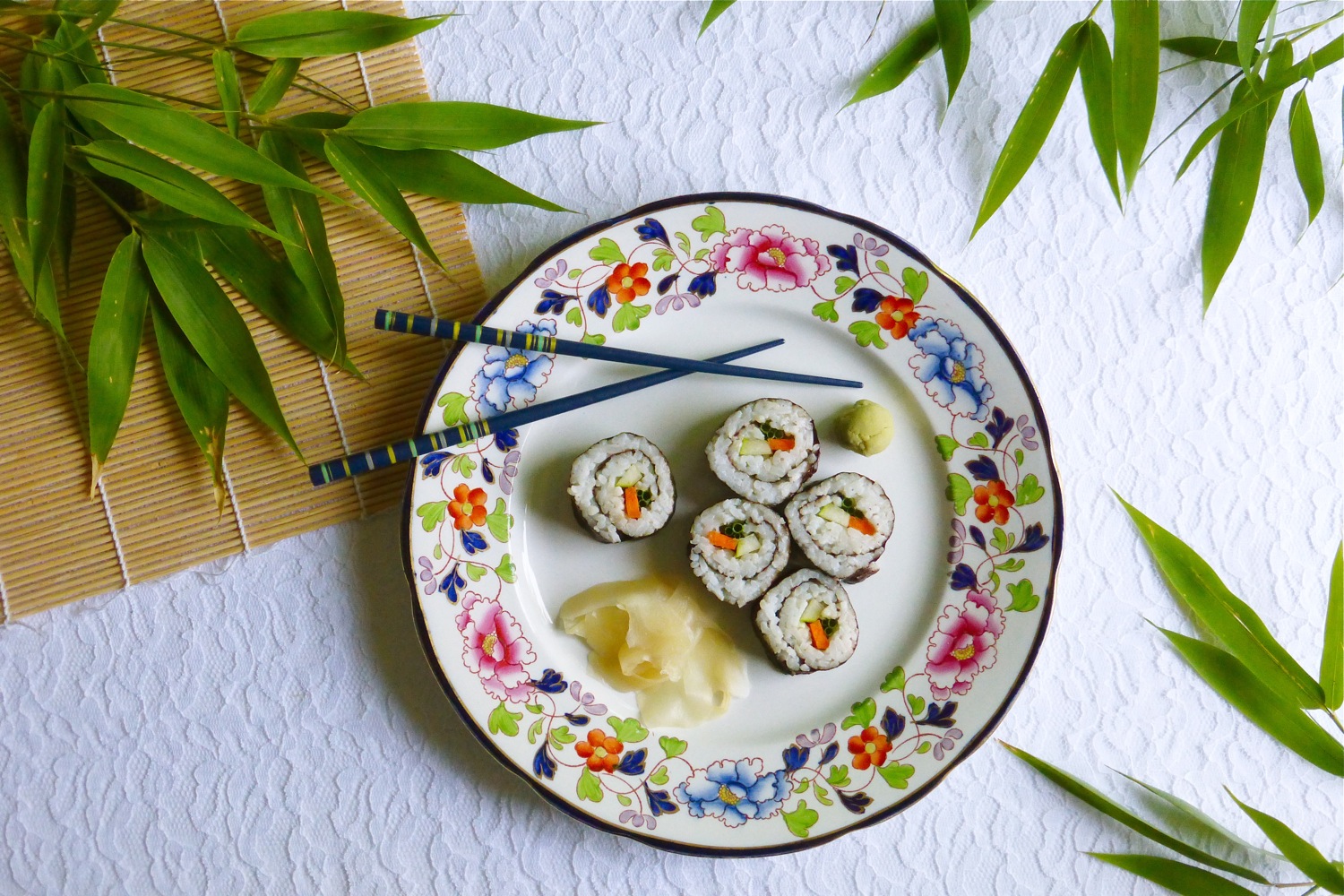
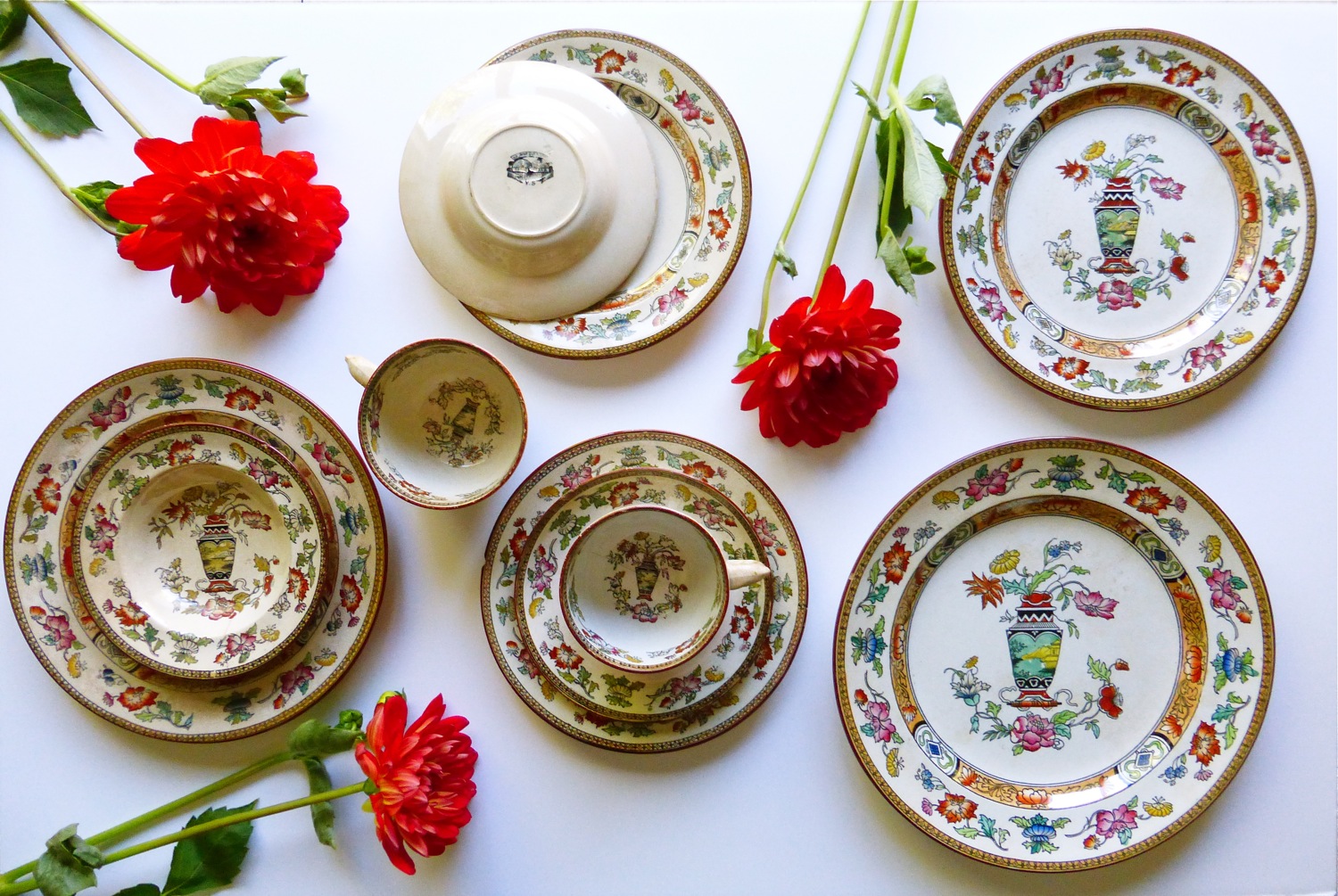
I'm still selling vintage tea ware in my Etsy shop Vintage Tea Treasures. This new endeavor will be on Instagram. I'll be utilizing my Vintage Tea Treasures Instagram account where the name has been changed to Plum Blossom Vintage. Shown above is a sneak peek of the first collection for Plum Blossom Vintage. It is almost ready for a flash sale which will be happening very soon and I will announce it here. 

So wish me luck and I hope you will join me for the sale!

SHARE:

Wednesday, August 29, 2018

Vintage Finds: Booths Ltd Silicon China Plate

Booths Ltd plate, Booths Ltd silicon china plate, Booths Ltd tin-glazed plate, Booths Ltd tin-glazing, silicon china tin glazing, Chinoiserie plate, 1916 Booths Ltd plate, Booths Ltd 1916 plate, tin glazed 1916 plate, tin oxide glaze, tin oxide silicon china, Booths Ltd tin glazed silicon china plate, Chinoiserie revival plate, Booths Ltd floral plate, Booths Ltd dinner plate, Booths Ltd 10" floral plate, Booths Ltd peony plate, silicon china floral plate, early 20th century floral plate

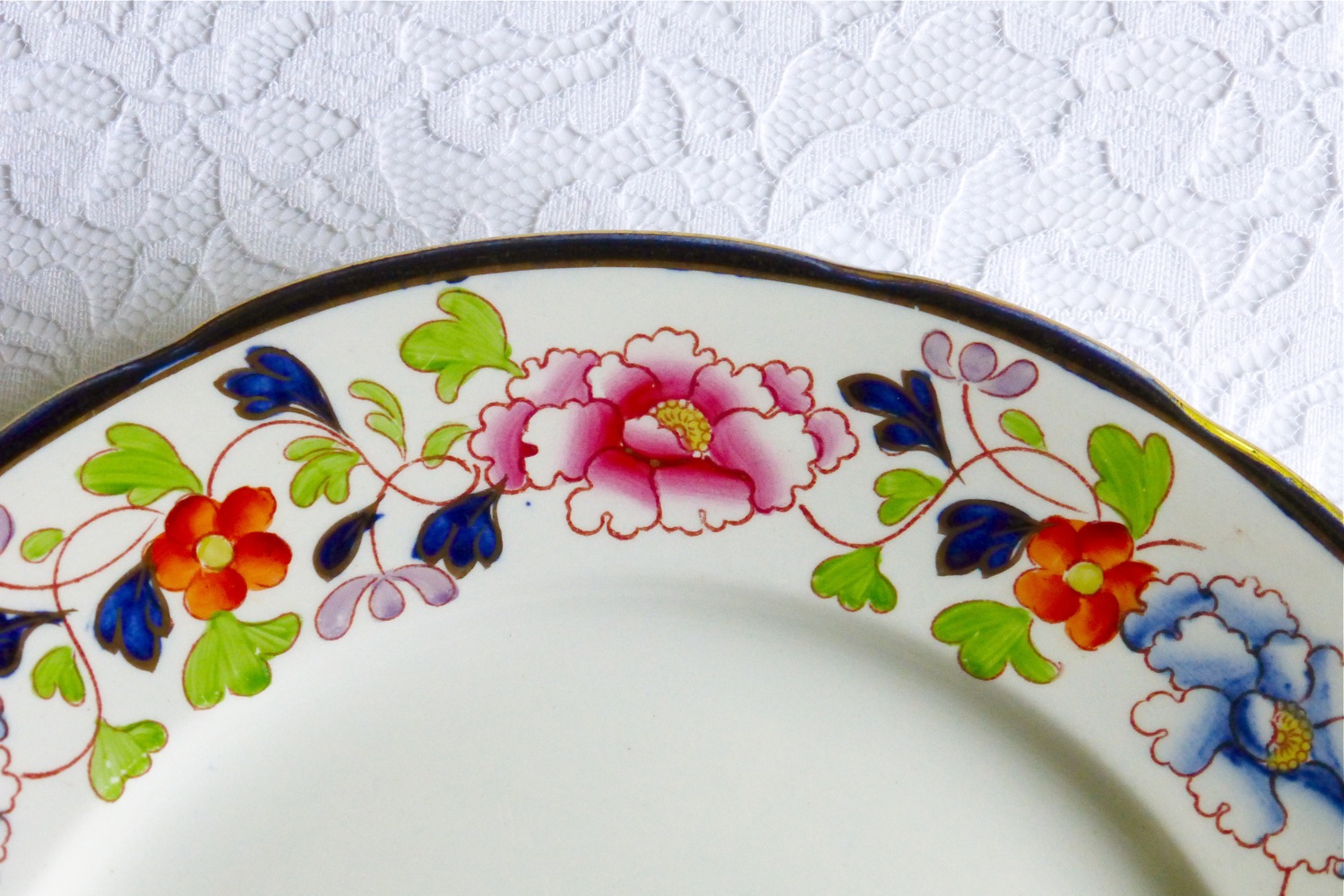
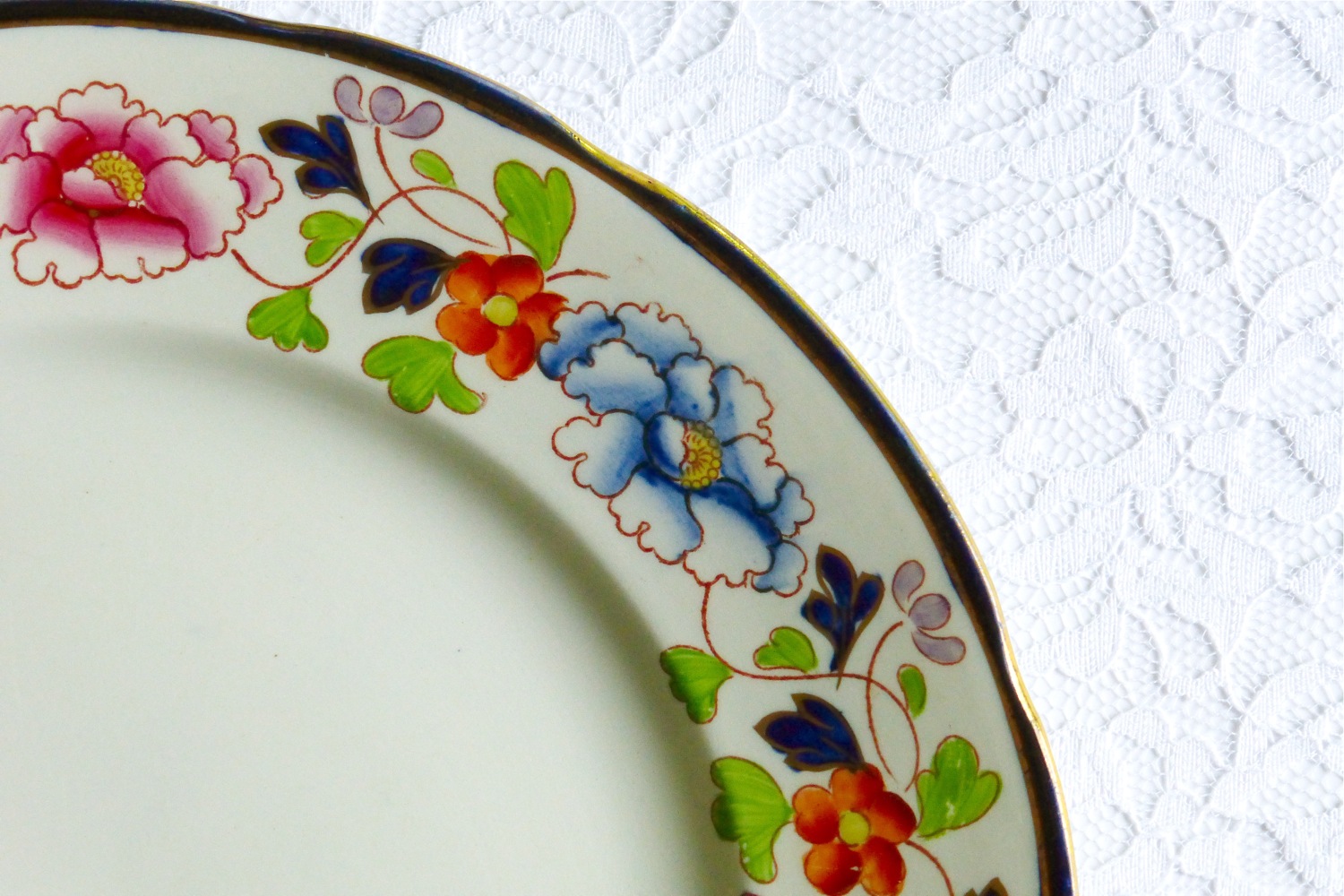
Hi Friends! I have another interesting piece of antique English earthenware to share with you today. This 10 inch 'silicon china' plate was manufactured by Booths Ltd in 1916.

Silicon china was the result of a pottery manufacturing method that utilized a technique called tin-glazing. Tin-glazing was a glaze that contained tin oxide and produced a white, shiny, opaque background surface that imitated Chinese porcelain and supported brightly painted decorations.

Booths Ltd plate, Booths Ltd silicon china plate, Booths Ltd tin-glazed plate, Booths Ltd tin-glazing, silicon china tin glazing, Chinoiserie plate, 1916 Booths Ltd plate, Booths Ltd 1916 plate, tin glazed 1916 plate, tin oxide glaze, tin oxide silicon china, Booths Ltd tin glazed silicon china plate, Chinoiserie revival plate, Booths Ltd floral plate, Booths Ltd dinner plate, Booths Ltd 10" floral plate, Booths Ltd peony plate, silicon china floral plate, early 20th century floral plate

Indeed, the lovely chinese-inspired floral motif of pink and blue stylized peonies, other red flowers, and free flowing vines of 'greenery' have certainly retained their eye-catching bright colors for over one hundred years now!

I'm sure you will agree that the Booths Ltd claim of "Opaque Porcelain of the Finest Quality" was indeed true, especially when considering that their silicon china was used in the catering markets such as in hotels and on sea liners and railways. Surely this high quality earthenware would have greatly enhanced the dining experience of any travelers lucky enough to experience it.

Booths Ltd plate, Booths Ltd silicon china plate, Booths Ltd tin-glazed plate, Booths Ltd tin-glazing, silicon china tin glazing, Chinoiserie plate, 1916 Booths Ltd plate, Booths Ltd 1916 plate, tin glazed 1916 plate, tin oxide glaze, tin oxide silicon china, Booths Ltd tin glazed silicon china plate, Chinoiserie revival plate, Booths Ltd floral plate, Booths Ltd dinner plate, Booths Ltd 10" floral plate, Booths Ltd peony plate, silicon china floral plate, early 20th century floral plate

No doubt the longevity of the colors we are looking at here can be attributed to the meticulousness of the tin-glaze method. Tin-glaze was applied to red or buff-colored earthenware and the decoration was applied to the unfired glaze surface by brush with metallic oxides such as cobalt oxide, copper oxide, iron oxide, manganese dioxide and antimony oxide.

Booths Ltd plate, Booths Ltd silicon china plate, Booths Ltd tin-glazed plate, Booths Ltd tin-glazing, silicon china tin glazing, Chinoiserie plate, 1916 Booths Ltd plate, Booths Ltd 1916 plate, tin glazed 1916 plate, tin oxide glaze, tin oxide silicon china, Booths Ltd tin glazed silicon china plate, Chinoiserie revival plate, Booths Ltd floral plate, Booths Ltd dinner plate, Booths Ltd 10" floral plate, Booths Ltd peony plate, silicon china floral plate, early 20th century floral plate

When I first saw this floral plate at the charity shop I knew right away that it was hand painted but I did not know until I brought it home and researched the Booths Ltd company what a gem of a plate this truly is!

My initial thought was that it is definitely a chinoiserie revival era piece because of the stylized peonies. Upon further investigation, as mentioned above, I discovered that the bright white opaque surface is a Chinese influence. And then I discovered the 1916 date of manufacture impressed into the earthenware, near the inked back stamp which further confirmed my initial thought that this, indeed, was an early 20th century piece.

Booths Ltd plate, Booths Ltd silicon china plate, Booths Ltd tin-glazed plate, Booths Ltd tin-glazing, silicon china tin glazing, Chinoiserie plate, 1916 Booths Ltd plate, Booths Ltd 1916 plate, tin glazed 1916 plate, tin oxide glaze, tin oxide silicon china, Booths Ltd tin glazed silicon china plate, Chinoiserie revival plate, Booths Ltd floral plate, Booths Ltd dinner plate, Booths Ltd 10" floral plate, Booths Ltd peony plate, silicon china floral plate, early 20th century floral plate

Not only have the colors retained their magnificent brightness, but also the overall excellent condition is quite impressive and a result of the loving care its predecessors gave it. There are some normal wear marks from it having been used but no chips, cracks or crazing. I cannot even find a fleabite! There is still a lot of life left in this old plate and I intend to help it in its journey further into the future.

I hope you have enjoyed this edition of Vintage Finds and I'll see you again soon. Thank you! 
SHARE:

Sunday, July 15, 2018

Styling A Vintage Hutch: Antique Chinoiserie Revival Dish ware

Styling a James Mont Midcentury Chinoiserie Limed Oak Hutch with Antique Chinoiserie Revival Dish ware, Midcentury styling, antique chinoiserie dish ware, chinoiserie styling, 1880 Brownfield & Son, 1900 Royal Doulton Pekin, 1917 Wood & Sons Woods Ware Wincanton plate, 1917 Wood & Sons Woods Ware Canton teacup, 1917 Wood & Sons Woods Ware Mayfair platter, Klein ©49 asian Chinoiserie figurine, 1913 Johnson Bros Pareekware plate, 1920 Cleveland China sugar bowl, 1905 Foley Art China Peacock Pottery Indian Tree plate, midcentury asian girl with fan bookend figurine, 1880 Alaska H & R plates, 1950 Ardalt Lenwile China asian girl playing musical instrument figurine, 1862 Burgess & Leigh Indian Tree platter

Hi Friends! As I was browsing through my favorite charity shop two summers ago a box of antique dishes caught my eye. I thought they looked very interesting but I had no idea what they were so I didn't purchase them.

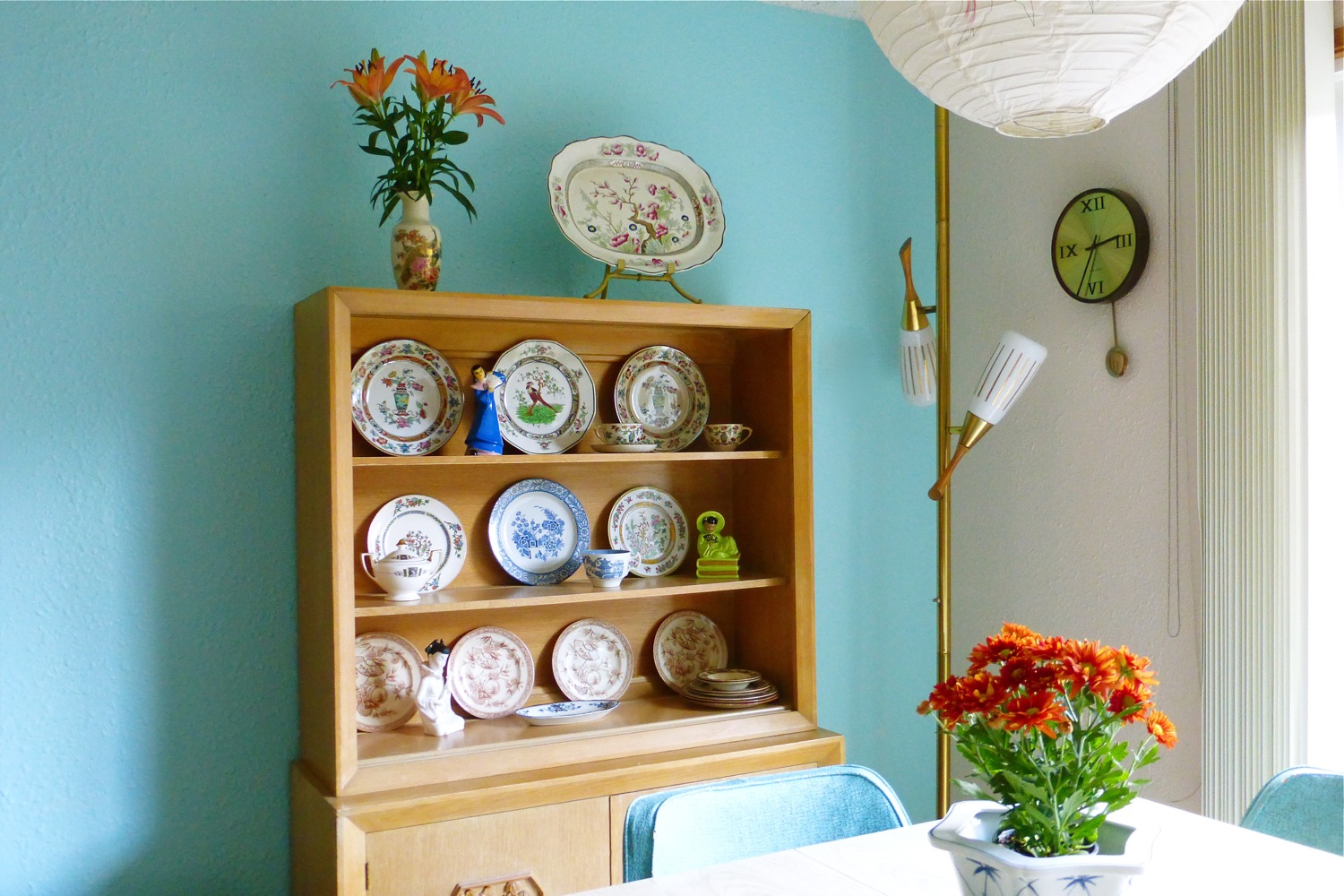
Well, as it turns out, that box of dishes started my obsession with antique Chinoiserie Revival (c. late 1800s - early 1900s) dish ware. Not only did I go back to the shop and buy them, but I have been on the hunt for more Chinoiserie-themed antique dishes ever since. I finally have enough pieces of this incredible English-made tableware to 'sort of' style my midcentury James Mont limed oak hutch and I'm excited to share the result thus far, with you dear reader, here today.

Styling a James Mont Midcentury Chinoiserie Limed Oak Hutch with Antique Chinoiserie Revival Dish ware, Midcentury styling, antique chinoiserie dish ware, chinoiserie styling, 1880 Brownfield & Son, 1900 Royal Doulton Pekin, 1917 Wood & Sons Woods Ware Wincanton plate, 1917 Wood & Sons Woods Ware Canton teacup, 1917 Wood & Sons Woods Ware Mayfair platter, Klein ©49 asian Chinoiserie figurine, 1913 Johnson Bros Pareekware plate, 1920 Cleveland China sugar bowl, 1905 Foley Art China Peacock Pottery Indian Tree plate, midcentury asian girl with fan bookend figurine, 1880 Alaska H & R plates, 1950 Ardalt Lenwile China asian girl playing musical instrument figurine, 1862 Burgess & Leigh Indian Tree platter

As mentioned above, the box of dishes that started this new passion of mine consisted of several pieces of late 1880s Brownfield & Son antique pottery with an unknown pattern name. Two of the dinner plates, two teacups and a saucer are on the top shelf of the hutch. The remainder of the dishes are on the bottom shelf to the right. And here is a photo of all of the items together:

1880 Brownfield & Son dishes, 1880 Brownfield & Son Chinoiserie Revival dish ware, 1880 Brownfiield & Son urn chrysanthemum dishes, 1880 Brownfield & Son stylized urn dish ware, 1880 Brownfiled & Son antique pottery

If you are fond of the distinctive look of Chinoiserie, you might appreciate the whimsically styled decorative urns, the vibrant chrysanthemum outer borders and the highly detailed inner borders that make up this pattern. If so, more details about this Brownfield pottery can be found in the popular blog post Vintage Finds: Antique Brownfield & Son Chinoiserie Revival Pottery.

Also on the top shelf of my hutch, between the two Brownfield plates is this Royal Doulton 9-3/4" plate (c. 1902-22, 1927-36) featuring a formidable bird of prey in a pattern called Pekin:

1900 Royal Doulton Pekin plate, 1900 Royal Doulton antique plate, 1900 Royal Doulton Chinoiserie Revival antique dish ware, 1900 Royal Doulton antique bird plate, antique bird plate, vintage bird plate

Note how similar the style and colors of the chrysanthemum flowers and the inside border on this plate are to the Brownfield pottery and the repetition of a stylized image in the center.

Directly below the Pekin plate, on the middle shelf of my hutch, are two pieces by Wood & Sons from their Woods Ware collection - a 9" plate in the Wincanton pattern, and a teacup in the Canton pattern, both produced around 1917:

1917 Wood & Sons Woods Ware Wincanton plate, 1917 Wood & Sons Woods Ware Canton teacup, 1917 Wood & Sons Woods Ware Blue Willow, antique Blue Willow, 1917 Wood & Sons Woods Ware Antique Chinoiserie Revival dish ware, midcentury Klein ©49 asian girl figurine, vintage Klein ©49 asian girl figurine

Perhaps there has never been any chinaware more timeless or classic than those decorated in various traditional blue and white patterns. The pattern known as Blue Willow is probably the most popular and well known of all. And there are likely hundreds if not thousands of variations on the theme. For instance, while the Canton teacup explicitly bears a version of the quintessential Blue Willow pattern, the Wincanton plate is quieter in its approach to Blue Willow with its abstract representation of it.

Another c. 1917 Wood & Sons Woods Ware piece in my hutch is a small oval platter on the bottom shelf:

1917 Wood & Sons Woods Ware Mayfair platter, 1917 Wood & Sons Woods Ware antique Mayfair platter, 1917 Wood & Sons Woods Ware Antique Chinoiserie Revival dish ware, 1917 Wood & Sons Woods Ware Blue Willow platter

Here we have another strong bird character at the center of attention. At 9 inches wide and 5 inches tall the platter has a different look and feel compared to the Wincanton plate and the Canton teacup. The pattern is called Mayfair and although blue and white is still the predominate color scheme, there is a bit of dark red, yellow and green added to the peonies and to the bird (peacock?). Overall, the glaze is laid on thicker and the top rim, where the dark red pigment has been added, has a bumpy texture.

Oh, and just in case anyone is interested, the figurines you see in my hutch are all 'midcentury' pieces that I feel support the Chinoiserie style and theme. Of course there was yet another asian or oriental themed trend in the 1950s, but that's another story for another time! The figurine shown with my Mayfair platter is a Kleine ©49.

Going back up to the middle shelf of my hutch to the left is a circa 1913 Johnson Bros Pareekware 8" plate and a Cleveland China sugar bowl from about 1920:

1913 Johnson Bros Pareekware plate, 1913 Johnson Bros antique plate, 1913 antique Pareekware plate, 1920 Cleveland China sugar bowl, 1920 Cleveland China antique sugar bowl, 1920 Cleveland China Art Deco antique sugar bowl, 1920 Cleveland China Neo-Byzantine Revival antique sugar bowl, 1920 Cleveland China Greco-Roman antique sugar bowl, 1920 Cleveland China Chinoiserie Revival sugar bowl

Have you found the bird in the tree on the plate yet? I'm thinking it's a woodpecker. What do you think? Again we have a similar theme and style to the Brownfield & Son dishes and the Royal Doulton plate, with the colorful floral border, interesting patterned inner border and of course the stylized image in the center.

The Cleveland China sugar bowl is actually an Art Deco piece. I'm very fond of the shape of the bowl and I especially like the handles. Although its design influences are the Neo-Byzantine Revival and Greco-Roman movements from approximately 1890 through the 1920s I feel it also fits the aesthetic of the Chinoiserie style.

Also on the middle shelf of my hutch, on the far right, is a c. 1905 Foley Art China Peacock Pottery 8" plate in another quintessentially classic pattern called Indian Tree:

1905 Foley Art China Peacock Pottery Indian Tree plate, 1905 Foley Art China Peacock Pottery antique plate, 1905 Foley Art China Peacock Pottery Antique Chinoiserie Revival dish ware, midcentury asian girl with fan bookend figurine, vintage asian girl with fan bookend figurine, chartreuse asian girl with fan bookend, vintage asian girl with fan bookend made in Japan

Like Blue Willow, Indian Tree has stood the test of time and you'll see many different manufacturers having made a variation of the pattern.

Are you starting to see why I am so jazzed about Chinoiserie Revival design? In just the few pieces I've managed to collect thus far, the repetition of style, like strings on a guitar or keys on a piano, is endless. The formality of the border treatments, coupled with the free-form, energetic center designs are like a piece of music that starts in a major key then suddenly changes to a minor key, surprising the listener, yet not sounding out of place. Amidst the rhythmic and ordered events of everyday life and the chaos of unexpected occurrences we are transported to another world of the designer's own making - a dynamic use of yin and yang principles in which harmony is the end result. 

The midcentury figurine of the girl holding a fan next to the Foley Art China plate is one half of a bookend set, made in Japan. And yes, I searched the charity shop shelves high and low for the other half - presumably a boy, but did not find it. And it wasn't until I got it home that I realized the head had been glued back on. But that didn't matter - it's midcentury, of asian or oriental design, and a classic 1950s color - chartreuse!

So now let's look at the four Alaska H & R 7-1/2" plates on the bottom shelf of my hutch:

1880 Alaska H & R plate, 1880 Alaska H & R Antique Chinoiserie Revival dish ware, 1880 Alaska H & R antique plate, 1880 Alaska H & R antique plate Caravel sailing ship, 1880 Alaska H & R antique plate Alaska Gold Rush, 1950 Ardalt Lenwile China asian girl playing musical instrument figurine, midcentury Ardalt Lenwile China asian girl playing musical instrument figurine, Ardalt Lenwile China asian girl figurine made in Japan, midcentury Japanese figurine

Ok, I'm stumped on the identification here! I have found one reference stating the manufacturer could have been either Hall & Read or Hughes & Robinson. Both companies manufactured earthenware in the late 1880s, and apparently 'Alaska' is the pattern name.

This same reference implied that the Alaska Gold Rush had something to do with the manufacture of this dish ware. Indeed, there were two gold rushes in the state of Alaska between 1897 and 1904, but what the connection is between those events and earthenware plates named Alaska is a mystery. Perhaps more investigation is needed...  

The figurine of an asian woman dressed in white and playing a small musical instrument (on the bottom shelf of my hutch with the Alaska plates) was made by the Ardalt Lenwile China company in Japan in about the 1950s. Again, she is one half of a pair and the only one I have. It doesn't bother me that the figurines I've collected thus far are not pairs and exact matches - I enjoy having an eclectic mix of styles and colors within a theme.

And last but not least, sitting on the very top of my hutch, is a large Burgess & Leigh Indian Tree serving platter, measuring 15-1/2" wide and 13" high.

1862 Burgess & Leigh Indian Tree platter, 1862 Burgess & Leigh Antique Chinoiserie Revival Indian Tree platter, 1862 Burgess & Leigh Indian Tree antique platter, 1862 Burgess & Leigh chinoiserie platter,

This second example (c. 1862 - 1907) shows us another variation of the Indian Tree pattern which has a completely different color palette. Again we have the thematic repetition of an outer floral border, inner detailed border and a stylized image in the center. Shortly after I wrote the blog post about the box of Brownfield & Son dish ware, I wrote another, also quite popular, blog post about this Burgess & Leigh platter entitled Vintage Finds: Antique Burgess & Leigh Chinoiserie Revival Indian Tree Platter.

Well, if you've made it this far, (even if you've only scrolled through and looked at the photographs) I can't thank you enough! I enjoy both collecting and digging into the history of this dish ware and sharing it here with you, dear reader.

If you are interested in styling your own hutch and are wondering where to start, the best place to begin is with something you love. As you can see here, I stuck with one type of antique dish ware and built a collection around that one theme. You might have a piece handed down from a relative or something you just purchased. It could even be the dishes you use everyday. Gather together items that resonate with you and play around and see what you come up with. And most of all, have fun with it.

Oh, and if you would like to know more about the history of my hutch, you can read about it in the post Vintage Finds: c. 1950 James Mont Chinoiserie Limed Oak Hutch.

1880 Brownfield & Son dish ware, 1900 Royal Doulton Pekin plate, 1917 Wood & Sons Woods Ware Wincanton plate, 1917 Wood & Sons Woods Ware Canton teacup, 1917 Wood & Sons Woods Ware Mayfair platter, Klein ©49 asian girl figurine, 1913 Johnson Bros Pareekware plate, 1920 Cleveland China sugar bowl, 1905 Foley Art China Peacock Pottery Indian Tree plate, midcentury chartreuse asian girl with fan figurine made in Japan, 1880 Alaska H & R plates, 1950 Ardalt Lenwile China midcentury asian girl playing musical instrument figurine

Thank you!
SHARE:

Wednesday, March 14, 2018

Little Yellow Couch Style Manifesto

June Anderson Style Manifesto, On The Little Yellow Couch blog, Style Matters podcast, Do YOU show up in your home?, self improvement essay questions, styling, vintage styling, style manifesto, learn to style, how to style your home

Hi Friends! Do you listen to podcasts? I listen to several, and one of my favorites is Style Matters, hosted by Karen June Grant and Zandra Zuraw of the interiors blog Little Yellow Couch. When I first heard Zandra say "we believe that your style comes from knowing who you are" and that their mission on the podcast is to "get to the substance behind the style" I was immediately hooked.

On the weekly podcast Karen and Zandra interview designers and stylists to find out why style matters to them. And each week I am continually amazed by how much I learn about style as I listen to stories from people who are passionate about not just decorating their homes, but how their homes are a reflection of their personality, interests and lifestyle.

My own journey of home decorating and styling is a fairly recent one but my passion for collecting vintage home wares has been going strong for years. The truth is that my home has been more 'junk store chic' than purposefully collected and aesthetically decorated or styled. Life has been so busy with work and the raising of children that I just never had the energy, brain space or 'know-how' for anything more.

But life is different now, changing. My children are grown and I strongly feel that it's time to get serious about style and why it matters to me. I found a great place to start is Karen and Zandra's Style Manifesto, a discovery tool designed to identify how your personal values align with how your home looks and functions. It's rather scary to realize that the clutter in your home can be considered a reflection of the clutter in your head! But face it, I must...

Through a series of five essay questions, Karen and Zandra take you through an inspection tour, so to speak, of your home. I have always felt that being self analytical is one of the harder tasks in life, but what I have also discovered is that journaling is the key to working out issues. The first part of the writing exercises take you through identifying your values and where your personality shows up in your home. Then you will be asked to pinpoint the elements of your personality that are missing in your home and encouraged to brainstorm ideas that will bring those characteristics you would like to make visible into the foreground.

Once you have finished answering the questions the fun part is creating your own manifesto - an actionable plan for how you will achieve your newly found style goals! And since a manifesto is a public declaration, I'm sharing mine here with you:

June Anderson Style Manifesto, On The Little Yellow Couch blog, Style Matters podcast, Do YOU show up in your home?, self improvement essay questions, styling, vintage styling, style manifesto, learn to style, how to style your home

And of course, I'm always in for a fun art project and the blank space at the top and bottom of the manifesto were just begging for a little bit of collage.

I hope you will consider listening to the Style Matters podcast and signing up to get your own Style Manifesto. I'm sure Karen and Zandra will be delighted if you did!

Thank you for letting me share.
SHARE:

Thursday, September 22, 2016

Vintage Finds: Antique Burgess & Leigh Chinoiserie Revival Indian Tree Platter

Indian Tree pattern, Burgess & Leigh Indian Tree Platter, antique pottery, chinoiserie, Chinoiserie Style, Burgess & Leigh Indian Tree antique transferware, antique transferware, decorated transferware, handpainted transferware, antique handpainted transferware, Indian Tree transferware

Greetings vintage and antique lovers, and welcome to another edition of Vintage Finds! Today, I am pleased to share with you a beautiful antique Burgess & Leigh transferware platter, in the well loved and timeless Indian Tree pattern, that I recently purchased at my favorite charity shop. It was manufactured by Burgess & Leigh in the late 19th or early 20th century, which, as I've mentioned in a previous blogpost, falls within that time period known as the Chinoiserie Revival Period.

The Indian Tree pattern was created by Coalport China in 1801, and, not surprisingly, was one of their most popular patterns. Its distinctive feature is an Asian inspired tree situated in a still life floral setting. The Indian Tree motif has its origins in textiles from India; the typical colors found in this transferware pattern theme were green, blue, pink, and orange, which were often hand painted over a monochrome transferred pattern. Over time Indian Tree earthenware was manufactured by other companies besides Burgess & Leigh, such as J & G Meakin and Johnson Bros, in varying degrees of quality.

If you look closely at the painted colors in this particular platter, you'll notice that the greens are faded and the turquoise is nearly gone, while the pink, red, dark blue and brown have remained quite bright. Furthermore, the glaze on the entire piece is crazed, and a patina continues to weave and wind its way into and onto the aged surface. It is just these qualities that most interest me, and appeal to my curiosity about antiques. They add what feels like a timeless charm, making this piece even more unique, since no two will ever age in exactly the same manner!

And speaking of timeless, that is exactly the right term to describe the tradition of Burgess & Leigh earthenware. Their primary place of manufacture, the Central Pottery, located in the town centre of Burslam, Stoke on Trent, England, began as an earthenwares business in 1851 by a Mr Hulme and a Mr Booth. Although Frederick Rathbone Burgess & William Leigh established a partnership in 1862 which took over Central Pottery's works and changed its name to Burgess & Leigh, 1851 is still considered to be the official establishment of their business.

Various backstamps used from these early beginnings are identified by a 'Burgess & Leigh' inkstamp, while later wares, beginning around 1907, became known as 'Burleighware' (a combination of Burgess and Leigh's names) and were stamped as such. Thus the platter pictured is from Burgess and Leigh's earlier days, between 1862 and 1907.

Here's a detail shot of the backstamp:

Indian Tree, Burgess & Leigh, English pottery, English pottery backstamp
Don't you just love the way the tree branch curls around the names?

In addition to this backstamp, there is an impressed 'B & L England' stamp on the back - another indication that this is a very early 20th century piece.

Over the years there were moves to other facilities (Hill Pottery, followed by another to Middleport Pottery), always improving and refining their crafting of underglaze transfer decorated tableware. And the good news is that Burleigh continue making beautiful English earthenware to this very day, and still at the Middleport Pottery!

Burgess & Leigh Indian Tree, Burgess & Leigh antique pottery, antique Indian Tree pottery, antique Indian Tree earthenware, Indian Tree pattern, Indian Tree earthenware, antique earthenware, Indian Tree transferware, Burgess & Leigh Indian Tree transferware, Burgess & Leigh Indian Tree antique transferware

My new platter will join other antique Chinoiserie pieces purchased over the last few months, alongside other vintage items in a more modern style. My plan is to style my c. 1950s James Mont Chinoiserie Limed Oak Hutch with an interesting variety of Asian inspired ceramics and collectables. While researching Burgess & Leigh, I found a very interesting article on the Burleigh website; "Achieving The Dresser Look, The Art Is In The Detail", is a step by step guide on how to style a kitchen dresser (also called a hutch or china cabinet).

Thank you for joining me for another Vintage Finds post!
SHARE:

Monday, August 8, 2016

Vintage Finds: Antique Brownfield & Son Chinoiserie Revival Pottery

Brownfield & Son, Brownfield & Son dishes

On a recent weekday trip to my favorite downtown charity store, the Assistance League Thrift Shop, I discovered a small box of dishes tucked away on a shelf in the back of the shop. A sign on the box said "Brownfield and Son dishes, pattern number 8909, introduced 1879. Dishes are as found. Use for crafts? Priced as a set, $5.00." I suppose someone who knew anything about antiques would have scooped up the box and happily paid the five dollars.

Not me.

Although I've become quite familiar with the 'vintage scene', and comfortable in my knowledge and expertise in buying pieces that I'm attracted to, I know next to nothing about antiques, so I passed up on the purchase. 

But that evening I found myself thinking about those Brownfield dishes, recalling the pattern, the colors, and the crazing on the glaze. What was especially interesting was the very wide range of wear and use amongst the pieces, from chipped, cracked and color-worn, to almost perfectly preserved, and all had a gorgeous aged patina. Clearly these varying levels of wear show how the items were individually used and cared for during their lifetime over the past century and a half. From a favorite teacup used each and every morning for many years, to the one dinner plate that sat reserved for a special guest, just imagine the stories that each piece could tell!  

As well, I realized that the pattern, with its graceful chrysanthemum-like flowers and the interestingly shaped urn with a depiction of a tiny Asian style building with mountains and a tree in the background, were in fact, the very Chinoiserie style I have recently come to love.

So, when Saturday morning came around, I went back to the shop to see if the box of antique dishes was still there, and if so, that I would buy them. And I did.

Brownfield & Son, W. Brownfield & Son, W. Brownfield & Sons, Chinoiserie pottery, Brownfield & Son Trademark VS, Brownfield & Son 4773, Brownfield & Son 8909, Brownfield & Son 8908, Cobridge Works, Cobridge Factory, Cobridge on Waterloo, Cobridge 1808

Although the Chinoiserie style was fashionable worldwide during the 17th and early 18th centuries, it fell out of favor by the 1760s. Then in the mid-nineteenth century there was a renewed interest in Asian themed decor, and it has continued in popularity into the modern era.

My 'new' old box of dishes were made during the 19th century revival period of the Chinoiserie style. A few of the pieces are back stamped 'Brownfield & Son, No. 115', and I've been able to confirm that this particular back stamp was used between 1871 and 1891. Each of the pieces has the number '4773' hand painted in red, as well as 'Brownfield' and dates of manufacture impressed into the clay. These dates are 1878, 1879, and 1880.

Brownfield & Son, W. Brownfield & Son, W. Brownfield & Sons, Chinoiserie pottery, Brownfield & Son Trademark VS, Brownfield & Son 4773, Brownfield & Son 8909, Brownfield & Son 8908, Cobridge Works, Cobridge Factory, Cobridge on Waterloo, Cobridge 1808

Curious to know the history behind these lovely dishes, I did some research, and here's what I found:

According to an 1886 advertising pamphlet, William Brownfield & Son were successful manufacturers of  'Useful and Ornamental Goods in China, Earthenware, Stoneware, Majolica, and Parian'. From about 1850 until 1891, their Cobridge Works factory, at Stoke-on-Trent, England, made these house wares, and employed about 500 men, women, and children.

William Brownfield (1812-73), the son of an earthenware potter, began his own career in earthenware manufacturing at the Cobridge Works pottery factory, which was built in 1808 and located on Waterloo Road. The factory was occupied by a succession of producers over the years, including Brownfield, until November of 1850 when Brownfield started working on his own there, producing his signature earthenwares, blue-printed and iron-stone ware, hand-painted wares, and one of the firm's specialties: moulded stoneware and Parian jugs. In 1871 the business became a partnership, when Brownfield's eldest son, William Etches Brownfield, joined his father. Porcelains were introduced that same year. In 1876 another of Brownfield's sons joined the business. W. Brownfield and Son(s), as it became known, grew into a successful large home and export trade business, with about 600 employees, into the 1880s.

In 1893 Brownfield's Guild Pottery Society Ltd. was formed to carry on the work of William Brownfield, until 1900 when the Cobridge Works was closed down and demolished. The Myott brothers rebuilt on the site in 1901, establishing yet another pottery factory - but that's another story in the great tradition and historical timeline of pottery manufacturing in the United Kingdom!

As mentioned, I've become very fond of the Chinoiserie style and a recent purchase of a c.1950 James Mont Chinoiserie Limed Oak Hutch brought the historic aspects of Asian themed house wares into focus for me. Since then I've been actively researching it, as well as going through my vintage collections looking for similar items with which to style my hutch.

I'm very pleased with the purchase of these historic pieces of Brownfield and Son pottery. These new old dishes will certainly enhance the variety of Chinoiserie style items in my collection, and I look forward to adding my story to such beautiful old relics.

  
SHARE:
© Under The Plum Blossom Tree | All rights reserved.
Blogger Template Created by pipdig